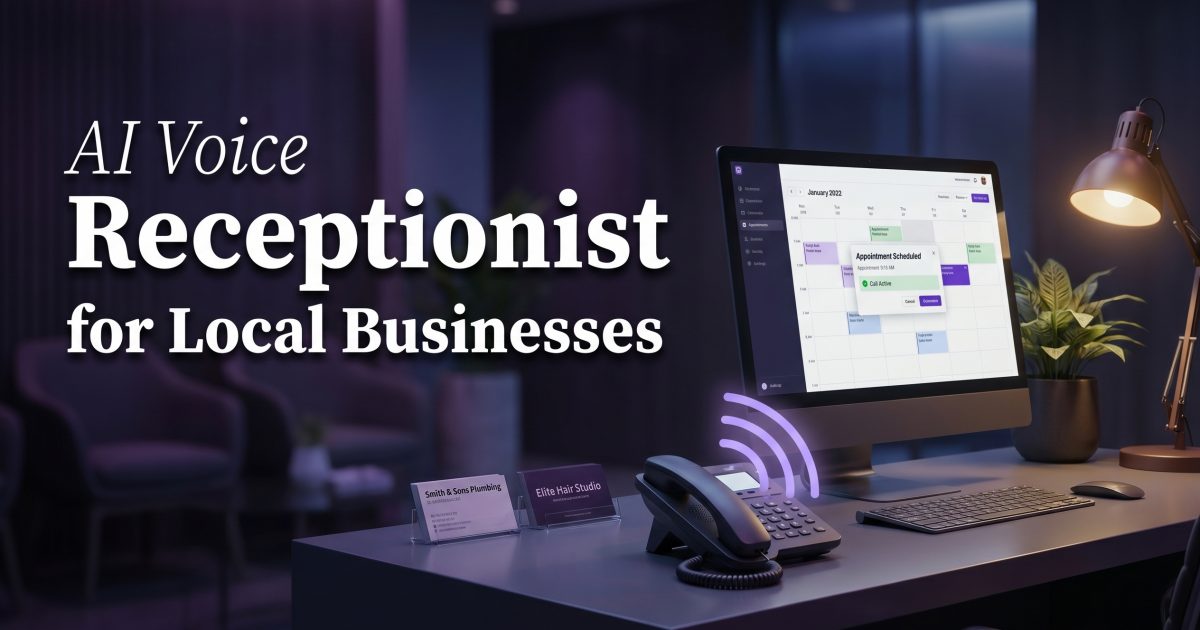
AI voice receptionist for local businesses is not a gimmick category. It solves a blunt problem. Calls come in while staff are with customers, on another line, or already closed. The caller wants help now. If nobody answers, the sale or booking often disappears.
That is why local teams see the value fast. A missed call is not abstract. It is lost revenue, a weaker first impression, and more front-desk stress the next day.
The right setup does not replace staff. It protects the hours when staff cannot pick up.
- What an AI voice receptionist for local businesses does
- Where it helps most
- How Wiro fits
- How to choose the right starting scope
- FAQ
What an AI voice receptionist for local businesses does
An AI voice receptionist for local businesses answers calls, handles repeat questions, captures caller details, and routes the next step. That can mean sharing opening hours, explaining services, screening urgency, or moving a caller toward a booking.
The real value is consistency. Phone coverage does not depend on who is free at that second. The business stays reachable even when the floor is busy.
This matters most for businesses where phone calls are still the first touchpoint. Barbers, clinics, repair shops, restaurants, and home service businesses all fit that pattern.

Where it helps most
The strongest use cases are easy to spot.
- After-hours call coverage
- Basic booking intake
- Opening hours and service questions
- Urgent call routing
- Lead capture when staff cannot answer
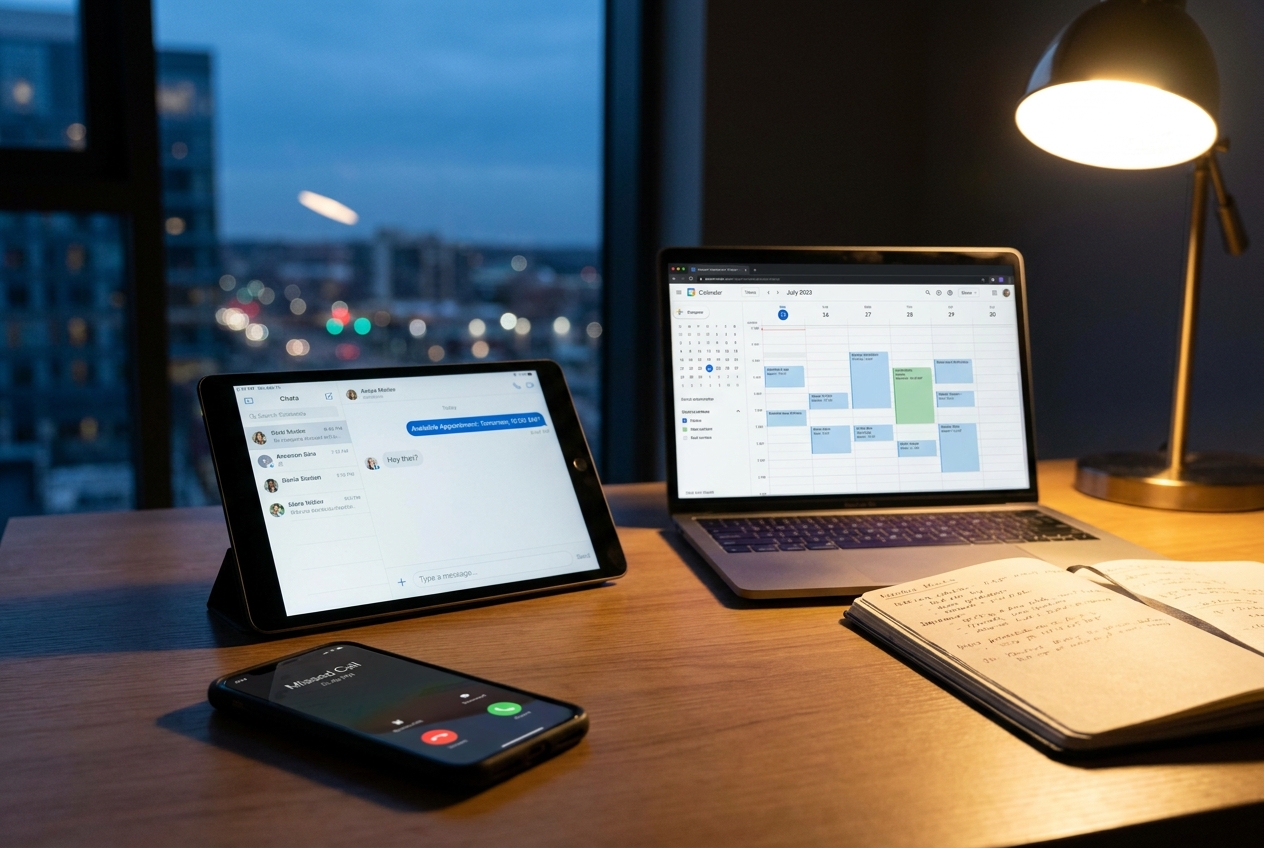
- Calendar handoff after the call ends
Those workflows sound simple. They are still where many local businesses leak demand.
The operational side matters too. The NIST AI Risk Management Framework is a useful reminder that systems making real customer-facing decisions need clear rules, escalation paths, and review boundaries.
That is one reason voice work should be defined in business terms, not treated like a novelty demo. A local team needs coverage, clean handoffs, and a usable recap after the call.
How Wiro fits
Wiro’s Voice Receptionist is built around live reception work. That is the right framing. The job is not to sound clever. The job is to keep the business responsive.
The Anatomy page explains why the product fits this category well. Reasoning matters when a caller asks for something unusual. Memory matters when the system needs to capture details and hand them off cleanly. Recap matters because staff need a clear summary, not a messy transcript.
Wiro also fits because voice coverage is rarely enough on its own. A phone call may need to turn into a calendar hold, a CRM update, or a follow-up task. That broader workflow is where connected agents start to matter.
A local business can pair the voice layer with the Lead Generation Manager when a caller should move into a follow-up sequence after the first conversation. That is useful for clinics, home services, and any team that books higher-value work.
How to choose the right starting scope
Start with the narrowest repeat call pattern that already costs money.
- If most missed calls are booking requests, start there.
- If the problem is after-hours coverage, start there.
- If urgent calls need triage, build that first.
- If the business mainly loses leads after the call, connect the handoff before expanding the script.
The wrong move is trying to automate every conversation at once. The better move is owning the first few moments that decide whether the caller stays.
Wiro works well for local teams that want ready-made voice coverage, connected workflows, and rules they can edit as the business changes. That makes it a strong fit for front desks, clinics, salons, repair shops, and service businesses that depend on fast call response.
Related Wiro agents
FAQ
Is an AI voice receptionist only for large businesses?
No. Small local teams often benefit faster because every missed call costs more.
Can it help with bookings?
Yes. Booking intake is one of the clearest use cases for local businesses.
Does it replace staff?
No. It handles repeat intake and first response. Staff still handle exceptions and service quality.
Who should start first?
Businesses with repeated missed calls, appointment demand, or thin front-desk coverage should start first.
Final CTA
Explore the Voice Receptionist agent here: https://wiro.ai/agents/voice-receptionist