
AI agents for follow-ups work best when they treat a form, a call, and a demo as different starting points. This test set checked one practical question: can a workflow preserve the context from the first event, choose the correct next action, and leave a clean record for the person who takes over?
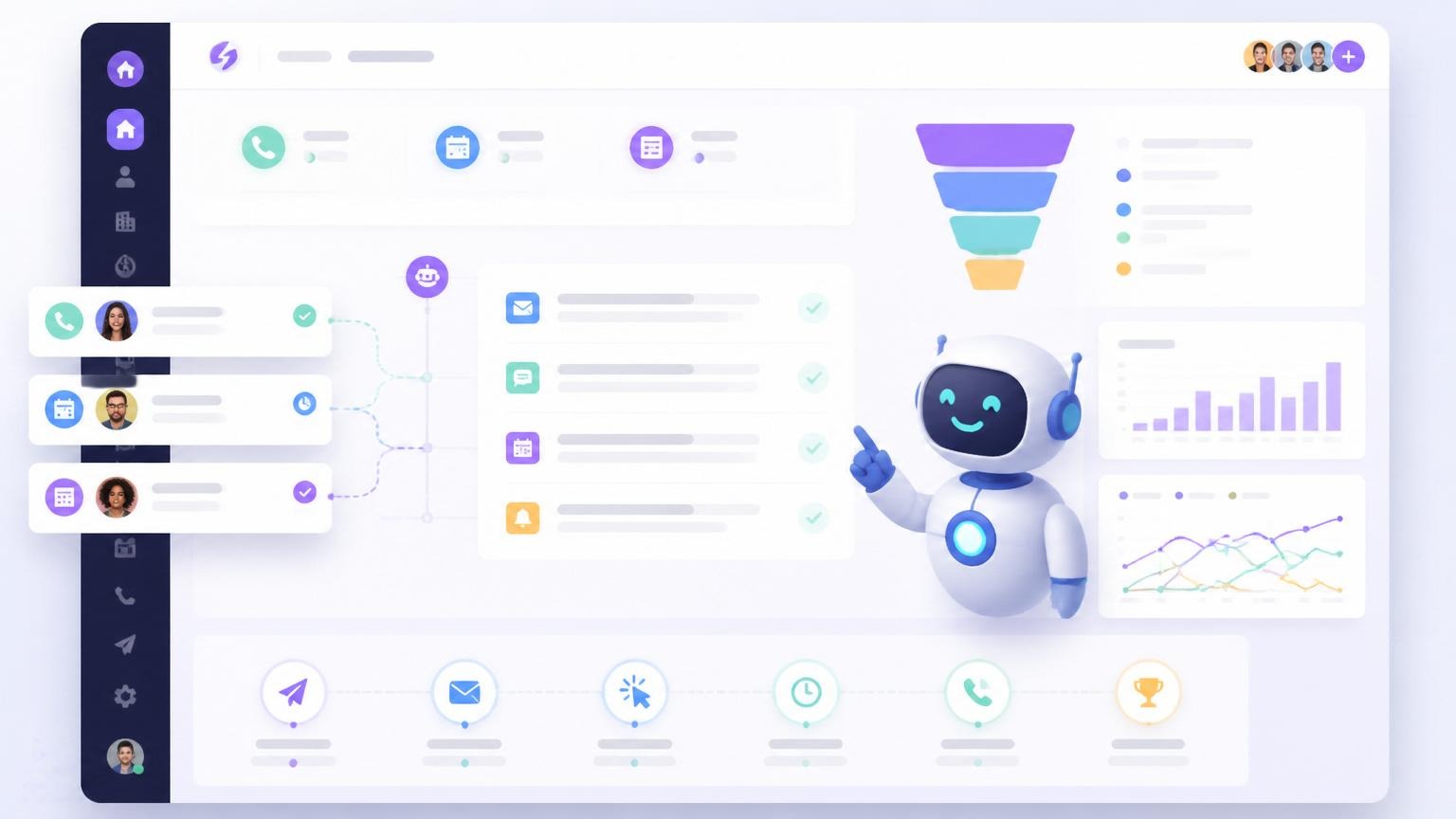
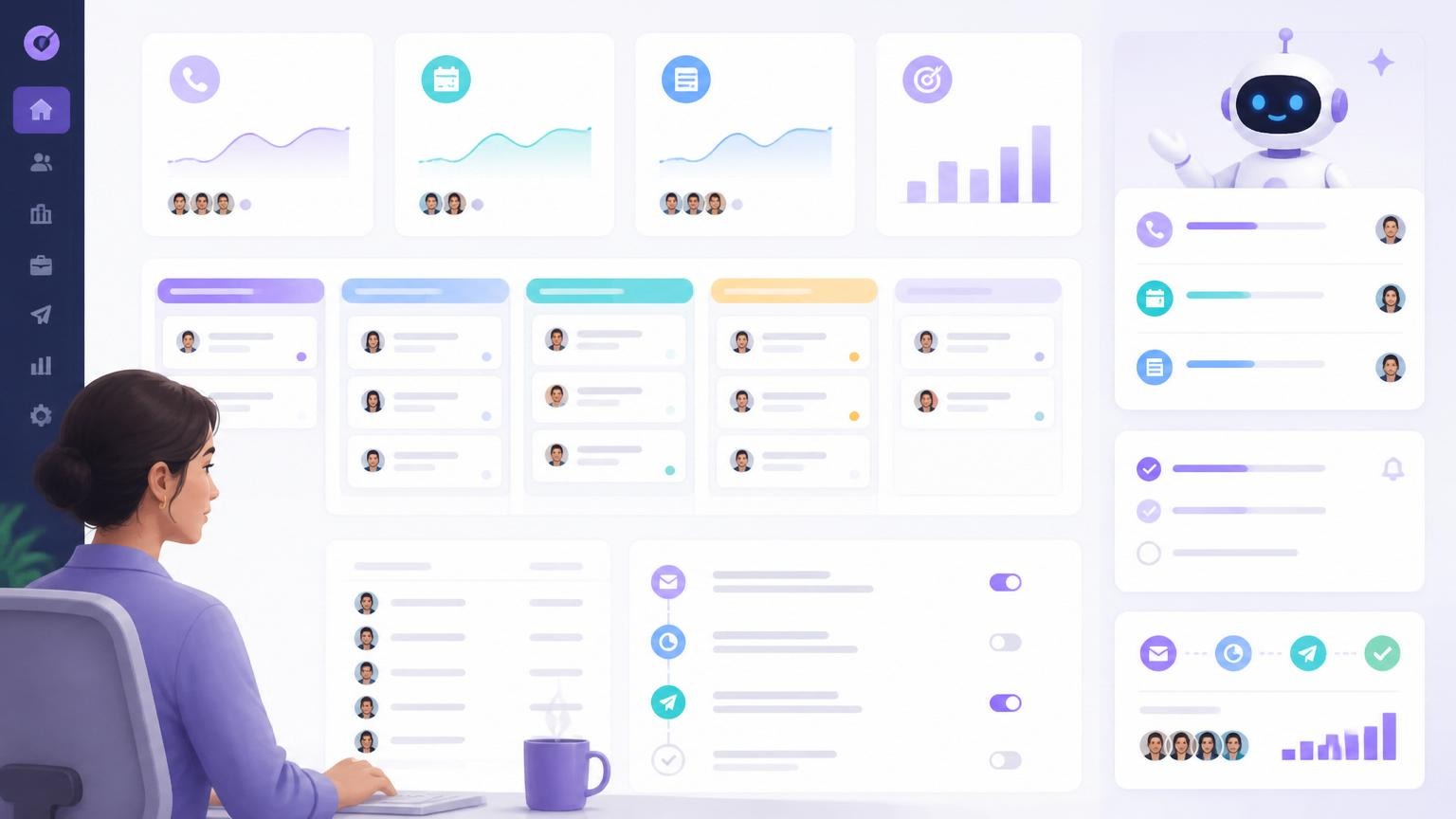
This is not a model bake-off. The two inline outputs below are existing, blog-hosted workflow visuals. They show the operating pattern being tested rather than a named model result, and their media records do not retain a model ID, generation parameters, run time, or cost. No per-output cost or speed has been claimed where that evidence does not exist.
What the AI agents for follow-ups test set checked
The test set uses six common triggers: a high-intent form, a low-detail form, a missed inbound call, a completed demo, a first follow-up with no reply, and a human-reviewed handoff. Each case asks for the same basic outcome: a useful next action, a short record update, and an escalation path when a message should not send automatically.
The important parameters are workflow parameters, not hidden model settings. Each test supplies an event type, timestamp, source, contact identity, available notes, owner, consent or channel status, and a clear rule for what counts as a next step. It also sets a send mode: automatic only for low-risk acknowledgements, draft for personalized commercial outreach, and human handoff for pricing, complaints, sensitive data, or unclear intent.
That distinction matters. An agent can write a polished message and still fail the real task if it sends on the wrong channel, loses the call summary, duplicates a CRM task, or follows up after the lead already replied. The test therefore checks the sequence around the text: trigger, context retrieval, decision, draft or send, record update, and reminder.
What the two existing outputs actually show
The first output is a broad map of the job. It shows that forms, calls, and demos enter the same follow-up system but should not receive the same treatment. A form may have declared intent and a preferred topic. A missed call may only have a phone number, time, and a short reason. A demo has richer notes, objections, stakeholders, and a proposed next step. The useful output is a structured action, not a long message.
The second output focuses on the chain after that action. It links the message, reminder, and CRM record. That is the point where many automations break. A message can send successfully while the owner is never notified, the stage remains unchanged, or a later reminder repeats the same request. In the test set, a completed step must write the outcome, owner, next due time, and any reason for suppression before the workflow is allowed to continue.
Six smart workflows after forms, calls, and demos
1. High-intent form follow-up
Use this when a form includes a requested demo, product interest, company details, or a concrete problem. Pass the declared intent and source into the prompt or decision step, then create a short acknowledgement and a task for the assigned owner. The message should confirm the request and offer one clear next move. Do not invent needs that the form did not state.
2. Low-detail form qualification
A name and email are not enough context for a sales pitch. This workflow should ask one or two useful questions, retain the acquisition source, and avoid pretending the lead has evaluated a product. Pick a draft-first setting if qualification answers might affect routing. The success condition is better information, not a forced meeting.
3. Missed-call recovery
Run this from the call log with caller number, call time, routing queue, and any available voicemail transcript. The first follow-up should be short: acknowledge the missed connection and give a direct way to continue. If the call relates to support, billing, or a complaint, route it to a person instead of sending a sales-style sequence. For a deeper missed-call design, see AI Receptionist for Missed Calls.
4. Post-demo recap
Use structured notes, not a vague meeting label. Capture the attendees, problems discussed, agreed next step, owner, and due date. The output should separate facts from proposed follow-up. A strong recap names what was requested and makes it easy to correct; it does not manufacture enthusiasm, a timeline, or a commitment that was never made.
5. No-response sequence
Set a stop condition before the first message goes out. The workflow needs a maximum number of touches, a delay rule, reply detection, and a suppression path for unsubscribe, bounce, or manual ownership changes. Each later message should add a reason to reply or close the loop. Repeating the original message with different wording is not a sequence.
6. Handoff and CRM sync
When a person changes the plan, that decision becomes the new source of truth. The agent should read the latest approved note before it drafts anything else. Then it should update the stage, owner, due date, and next action in one transaction where the connected system allows it. Related operational detail appears in AI Agents for CRM Updates and AI Agent Audit Trails.
When to pick which model or automation setup
This post does not compare named Wiro models, so there is no honest model-level runtime or cost table to publish. Choose a fast text model when the action is a bounded acknowledgement, a short qualification question, or a structured CRM summary. Choose a stronger reasoning-oriented model when the workflow must reconcile long demo notes, conflicting handoff comments, or several policy rules. In either case, keep the final send behind approval when the message could create a commercial promise, disclose sensitive context, or change an owner's relationship with a customer.
The model should not be the only control. Put deterministic rules around channel permission, timing windows, deduplication, retry limits, and stop conditions. The OpenAI Agents documentation is a useful official reference for the broader pattern: tools, state, and orchestration are part of agent behavior, not an afterthought.
For teams building the front of the pipeline as well as the follow-up layer, AI Agents for Lead Generation Teams covers the earlier sourcing and routing work. The practical choice is simple: use automation for repeatable, low-risk motion; use a draft and review step where the context is incomplete or the stakes are higher.
What to measure before scaling
Measure time to first response, the share of leads with a recorded next action, task completion, reply rate by trigger, duplicate-message rate, and the number of handoffs that needed correction. Also sample the messages themselves. A workflow that improves speed but turns every prospect into a generic sequence has not passed the test. The goal is consistent follow-through with enough context for a human to trust the record.
AI agents for follow-ups earn their place when they reduce the gap between intent and action without removing judgment from moments that need it. Start with one trigger, define the stop rules, inspect the record after every action, and expand only when the workflow stays accurate.