AI receptionist for missed calls needs more than a friendly voice. It needs a reliable way to turn an interrupted conversation into a callback, booking request, or human escalation. This update tests the visual briefing side of that workflow, then separates what an image can communicate from what a live receptionist must still prove in production.
The two new images below were generated with Alibaba Qwen Image 3.0 Pro on Wiro. They are illustrations of the intake process, not evidence that an agent completed a phone call, booked an appointment, or updated a CRM. That distinction matters. A good demo asset can explain a workflow; it cannot replace call logs, calendar results, or staff review.
What the AI receptionist for missed calls test checked
The test had one narrow goal: create two readable editorial visuals for a missed-call intake article without pretending that image generation evaluates a voice system. Each prompt asked for a visible handoff: caller details enter, a structured record forms, and a person can review the result. That makes the assets useful for explaining the operating model to a local-business team.
A working receptionist needs a much broader test. It should be given real business rules, a set of normal and difficult caller scenarios, a calendar or callback route, and a review process. The Wiro Voice Receptionist page describes a real-time setup that can answer calls, look up connected data, check available slots, and stream a transcript. Those capabilities should be tested with the business’s own policies before callers depend on them.

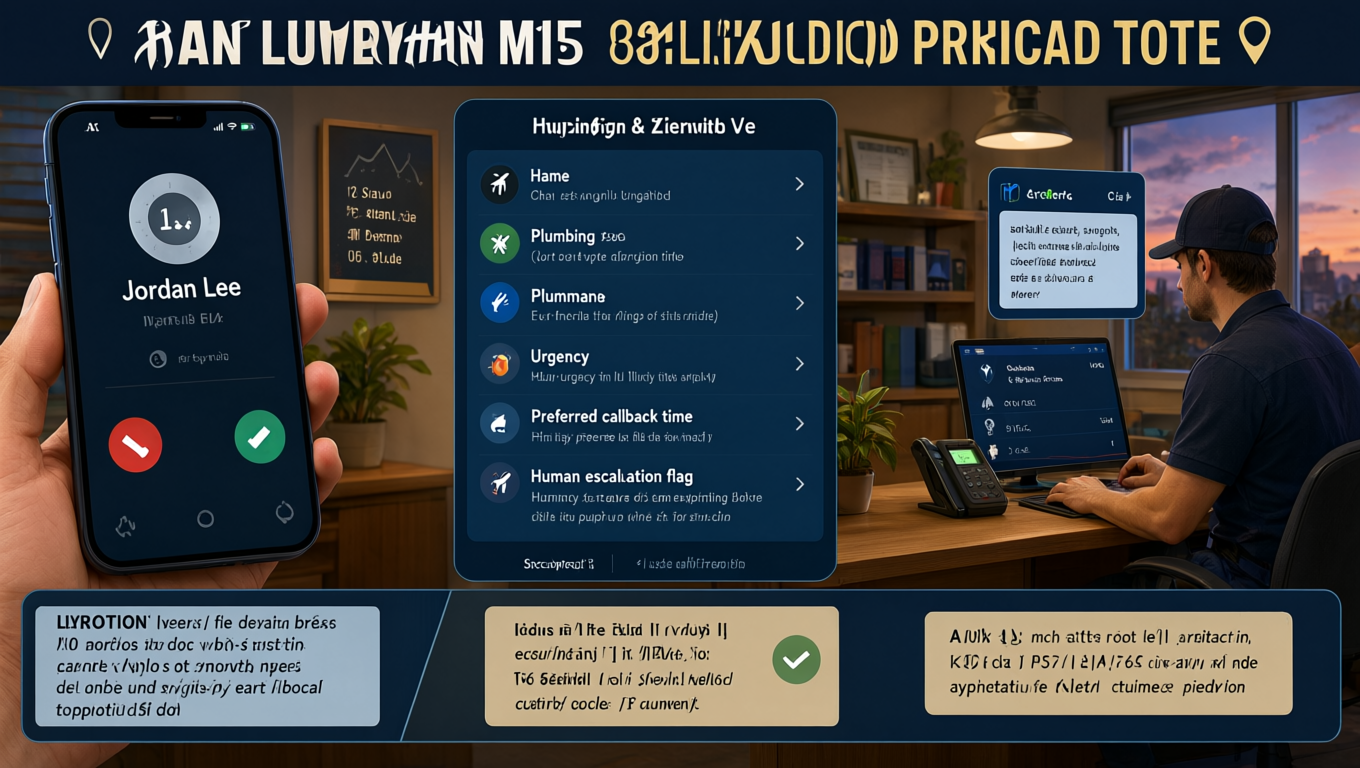
Output 1: an after-hours intake handoff
The first new output shows a local plumbing office at dusk. A caller, intake dashboard, and technician are arranged as one handoff. The dashboard presents the fields that a missed-call workflow should preserve: caller name, issue, urgency, callback time, and an escalation cue. It succeeds as an explanatory visual because the three roles are easy to scan from left to right.
It does not show a real customer’s information, a CRM schema, or a completed dispatch. The field labels are conceptual, and small interface text in generated images should never be treated as a production UI specification. Use it to discuss the handoff with staff, then define the actual required fields in the phone workflow.
Output 2: a human-reviewed callback record
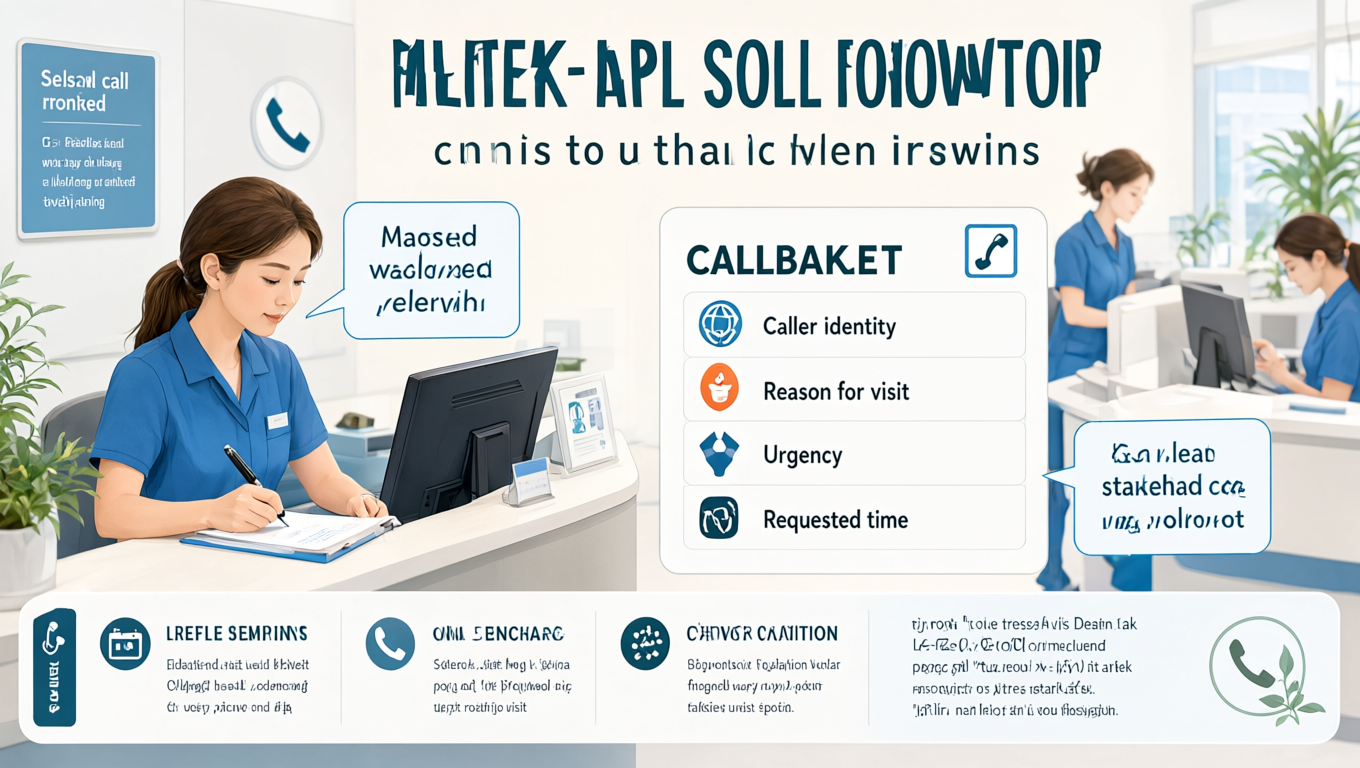
The second output moves the setting to a busy dental front desk. It depicts a callback record split into identity, reason for visit, urgency, and requested time. The useful choice in the prompt was the explicit human review step. A receptionist should not silently turn uncertain speech into a promise, appointment, or emergency decision.
This output is strongest as a reminder that a captured lead needs a clear owner. It is weaker as a literal interface mock-up: generated iconography and tiny labels can drift, and the picture does not validate medical intake, consent, or scheduling rules. For a clinic, a reviewer should confirm the record and decide what the agent may say before any booking action occurs.
Parameters, run time, and cost
Both new outputs used Qwen Image 3.0 Pro with a text-only prompt, 1K resolution, a 16:9 ratio, one image per run, a fixed seed, prompt extension disabled, direct prompt-extension mode, and thinking enabled. The prompts excluded watermarks, brand logos, and dense unreadable text. No reference image was supplied. The first seed was 270601; the second was 270602.
Wiro’s model documentation lists the available controls: 1K or 2K resolution, common aspect ratios, up to six images per run, optional negative prompts, prompt extension, thinking mode, and a seed. It states that thinking can improve quality while taking longer, but that it does not change price. The completed-run responses for these two outputs returned the finished PNGs but did not report elapsed seconds or a charge. The documentation read for this update also did not publish a per-output price. There is therefore no invented run-time or cost number here.
The underlying Qwen Image project is documented by its makers on Hugging Face and in the Qwen-Image GitHub repository. Those are useful for model background; they do not turn an editorial illustration into a voice-agent benchmark.
Six intake wins that are worth measuring
- After-hours acknowledgement: confirm the call reached a path that can respond, without promising immediate service when none exists.
- Contact capture: record a callback number and name, then give the caller a chance to correct them.
- Reason capture: collect the minimum useful description so a staff member does not start from zero.
- Urgency routing: define which phrases must reach a person or an emergency instruction, rather than letting the agent improvise.
- Time preference: capture when a caller can talk or which appointment window they want, while treating availability as tentative until the connected calendar confirms it.
- Clean recap: send the team a short, attributable record with the transcript or source details available for review.
These are operational wins, not vanity metrics. Measure answer rate, completed contact records, staff-corrected records, routed urgent cases, callback completion, and confirmed bookings. Keep a small test set that includes accents, background noise, incomplete requests, repeat callers, and requests the business must decline. Review failures weekly. The NIST AI Risk Management Framework is a useful reference for putting governance, measurement, and human oversight around that work.

When to pick Qwen Image 3.0 Pro
Pick Qwen Image 3.0 Pro when the task is to turn a detailed brief into an explanatory image, especially when the brief needs a clear sequence of people, objects, and interface-like concepts. The two results here show why it fits article visuals: both preserve the requested setting and make the handoff idea legible at a glance. It is not the model to pick for voice transcription, live call handling, calendar access, or CRM write-back. Those are separate parts of a receptionist system.
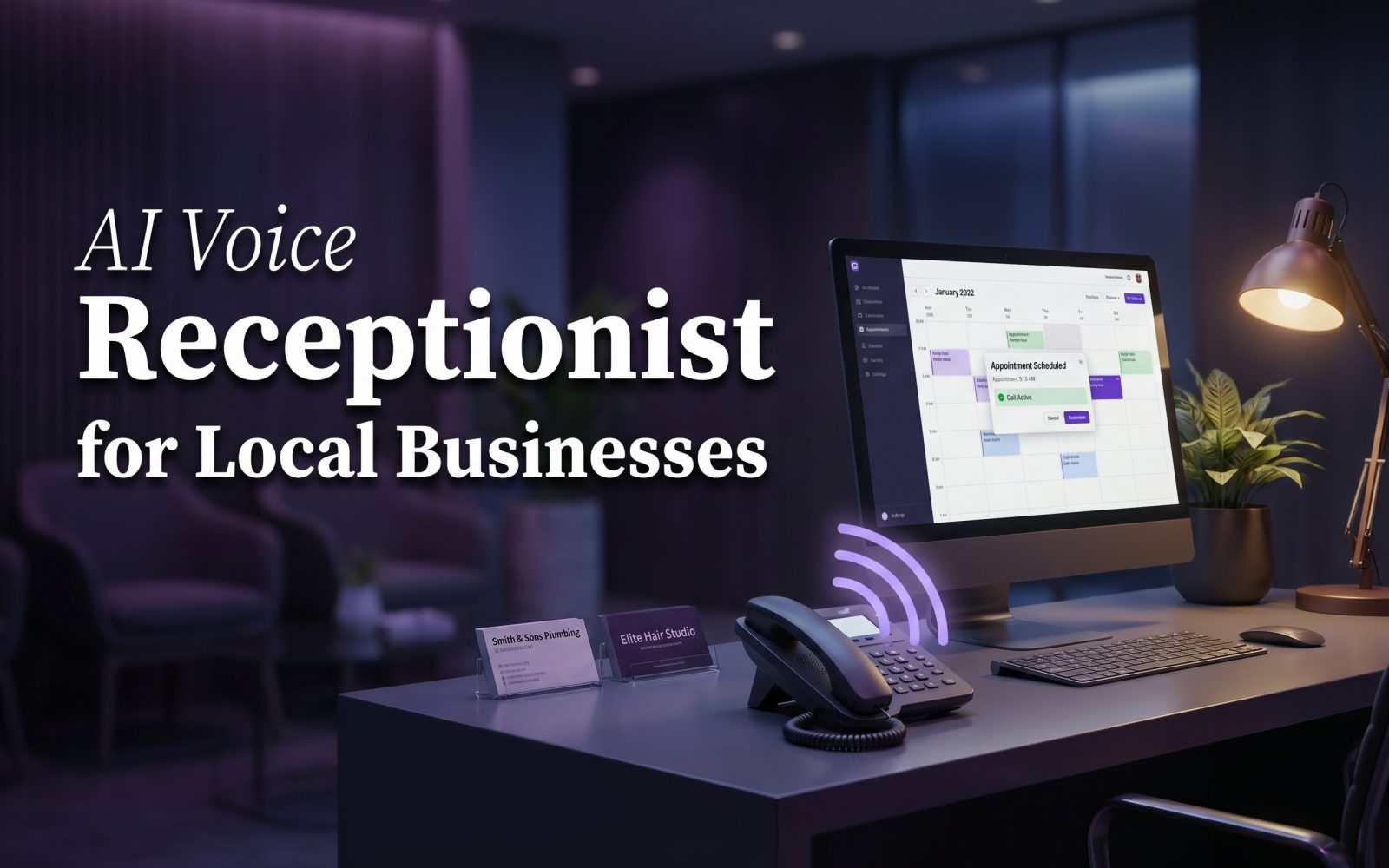
For a business evaluating the actual phone layer, start with a scenario test instead: after-hours booking, an urgent service request, a caller who wants a human, an unknown customer, and a caller whose requested time is unavailable. The related guides on AI Voice Receptionist for Local Businesses, AI Agents for Appointment Booking, and Realtime Voice Conversation provide useful next reading.
Use the visual brief, then test the real workflow
AI receptionist for missed calls works when it creates a trustworthy next action: a verified callback, a confirmed booking, or a timely human handoff. The generated outputs help explain that sequence, while the production test must prove it with real policies and reviewed outcomes. Explore Qwen Image 3.0 Pro on Wiro for the visual briefing work, and use the Voice Receptionist flow for the live intake layer.