AI agents for lead generation teams work best when they remove a specific delay: the gap between a signal and the next useful action. A form fill, a call, a target-account list, or a reply should create a clear task with enough context for a person to act. If it only creates another draft or another spreadsheet row, it has not fixed the pipeline.
This post looks at seven practical pipeline plays and the evidence a team should require before putting them into production. It is deliberately not a named-model benchmark. The original post contains no Wiro model run records, prompt logs, or model URLs, so it would be misleading to attach invented model names, runtimes, costs, or parameters to the two existing visuals. Those visuals remain here as workflow illustrations, not scored model outputs.
- What to test before rollout
- Seven pipeline plays
- What the existing outputs show
- Model and workflow choice
- Measurement and guardrails
What AI agents for lead generation teams should be tested to do
The test should not ask whether an agent can write a convincing email. Almost any capable language model can draft one. It should ask whether the system moves a lead from an incomplete event to a usable, reviewable next step without changing facts, losing ownership, or contacting the wrong person.
Use a small, permissioned set of recent-but-closed examples: inbound forms, target accounts, stale CRM records, replies, and missed-call summaries. For each example, provide only the fields the workflow would have at runtime. Record the source fields, the requested action, tool permissions, output, reviewer decision, elapsed time, and any handoff. That gives the team something it can audit.
For a sourcing test, the expected output is a ranked account list with a reason for fit and a source for every factual claim. For enrichment, it is a structured record that separates verified facts from missing data. For outreach, it is a draft tied to approved evidence, with no invented customer story or unsupported personal detail. For routing, it is an owner, priority, reason, and deadline that match the operating rules.
Run time and cost need the same treatment. Capture them from the Wiro run record for every real run, including retries and tool calls. Do not publish a single average that hides slow or expensive exceptions. The source material for this post does not retain those records, so no runtime or cost figure is claimed here.
7 smart pipeline plays
1. Turn inbound intent into a complete brief
When a form or chat arrives, the first job is not to write a reply. It is to make the request usable. An agent can pull the submitted fields into a brief, identify the company and stated need, flag missing routing details, and assign an owner. The useful output is a concise brief with links back to the original signal. A reviewer should be able to answer: who asked, what did they ask for, and what happens next?
2. Research accounts with an evidence trail
Account research should produce facts a rep can check, not a wall of prose. Ask for a defined set of fields: company description, relevant product area, hiring or expansion signal, likely stakeholder role, source URL, and confidence. Keep uncertainty visible. If a website does not support a claim, the output should say unknown instead of filling the gap with plausible language.
3. Repair CRM records without overwriting truth
CRM cleanup is a strong early use case because the result has a clear schema. Let the agent propose missing fields, normalize titles, merge duplicates for review, and flag stale data. Do not give it silent authority to overwrite a source-of-record field. The accepted output is a proposed change set, not an unexplained rewrite of the database.

4. Draft first touches from approved context
A good first-touch workflow takes approved account facts and a campaign rule, then returns a short draft plus the facts that support it. The reviewer checks relevance, tone, compliance, and claims before sending. This is safer than asking a model to search freely and send autonomously. Keep the prompt narrow: audience, approved sources, product value, banned claims, CTA, and maximum length.
5. Classify replies before a rep loses the thread
Reply handling needs fewer words and better labels. A useful output marks a reply as positive, objection, referral, timing, unsubscribe, or unclear; extracts any date or request; and creates the matching next action. The test passes when the right owner gets a readable summary and no unsubscribe or objection is misrouted into another sequence.
6. Route high-intent signals with explicit rules
Define what counts as high intent before the agent sees a lead. A booked-demo request, pricing question, or response from a named target account may qualify. The output should name the rule it matched, the assigned owner, and the service-level deadline. Escalation rules should be deterministic where possible. A language model can explain the context, but it should not invent the commercial policy.
7. Reopen stale opportunities with a reason
Old records deserve a different test. Ask the system to find a concrete change since the last touch, draft a relevant re-entry note, and suppress records with opt-outs, active contracts, or unresolved issues. If no new reason exists, the correct output is no action. That restraint protects sender reputation and makes the work queue more useful.
What the existing outputs actually show
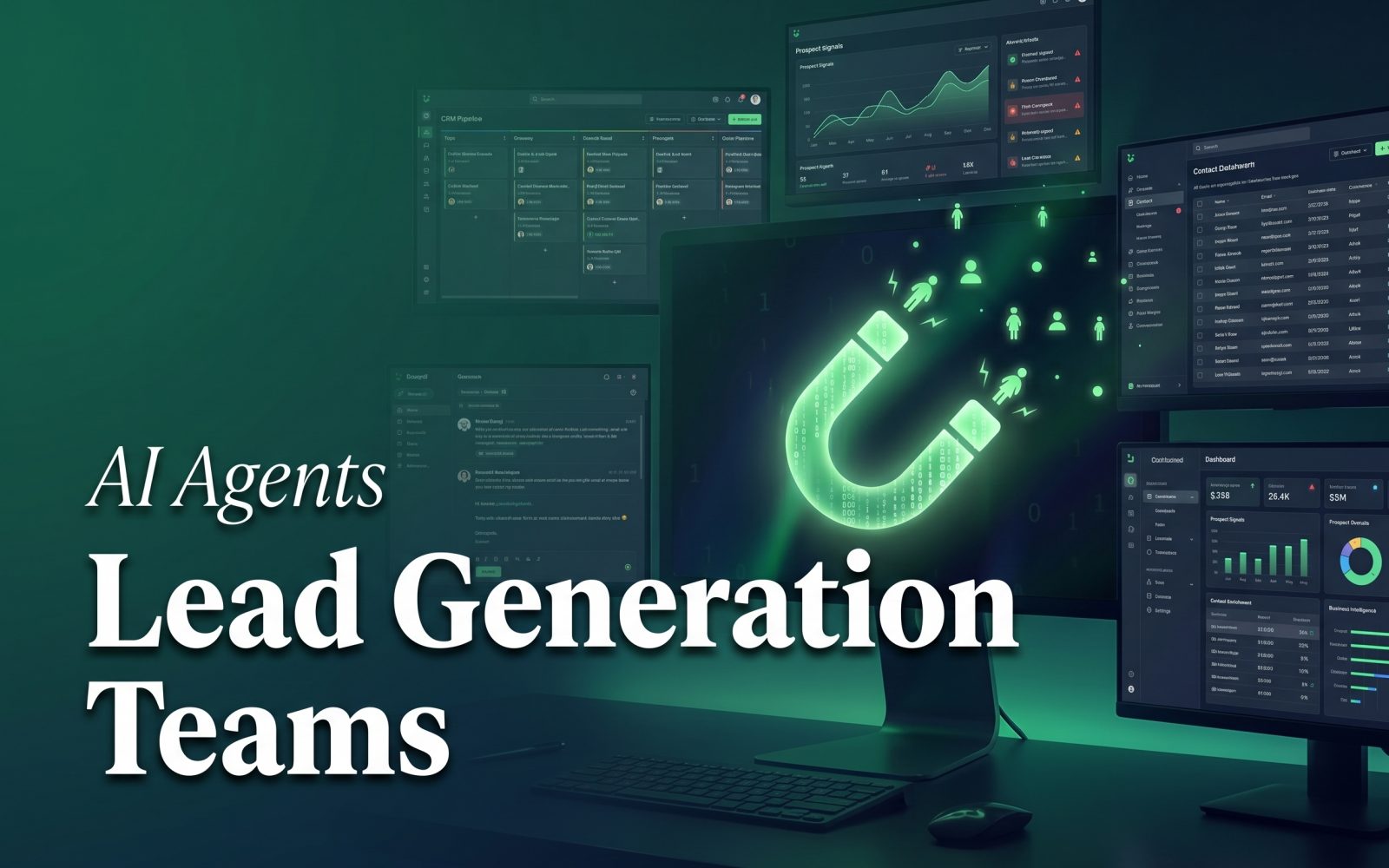
The first inline image depicts a three-stage sequence: discovery, enrichment, and outreach planning. It helps explain why handoffs matter, but it is not proof that a named model completed those stages. The second depicts reply analysis and CRM next steps. It illustrates the review-and-routing loop rather than a measured model result. Both are hosted on this blog and retained because they support the workflow explanation.

That distinction matters. A publishable model comparison needs reproducible prompts, a known model version, parameters, output files, and run records. Without them, a polished image can create false confidence. Future tests should publish those details beside each output, including the run time and Wiro cost shown by the completed run.
When to pick a model versus a fixed workflow
Pick a fixed workflow for repeatable, policy-heavy work: lead assignment, field validation, duplicate checks, suppression, and due dates. Predictability beats creativity there. Pick a language model for unstructured inputs: summarizing a call, extracting a buying signal from a reply, turning approved research into a draft, or explaining why a record needs human review.
Start with the smallest setup that meets the task. Anthropic’s guidance on effective agents makes the same useful distinction: workflows fit well-defined paths, while agents earn their extra flexibility when the task needs model-led decisions. OpenAI’s agents documentation also separates managed agents, SDK-led workflows, and direct model calls. The choice should follow the amount of judgment and tool control required, not a desire to automate everything.
On Wiro, retain the model page and the completed run record whenever a model is added to this workflow. That is where a team should verify the available parameters and any displayed run cost. No Wiro model is named in this post because the original content did not document one. Naming one now would turn an operational guide into an unrepeatable endorsement.
Measure the handoff, not just the draft
Track time to first qualified action, reviewer acceptance rate, correction rate, routing accuracy, records completed, meetings created, and opt-out or complaint events. Compare those results with a manual baseline from the same lead type. A faster draft does not count as a win if a rep has to rewrite it or if it reaches the wrong owner.
Guardrails should be concrete: approved data sources, no-send states, owner rules, a human approval point for external outreach, and logs that preserve the input and decision. Teams that need a follow-up design can also read AI Agents for Follow-Ups, use AI Agents for CRM Updates for the data layer, and compare the operating model in Pre-Built vs Custom Agent.
The practical goal is simple: every lead should leave the workflow with a clear owner, an evidence-backed next action, and a record a manager can inspect. Start with one leak in the pipeline, measure it carefully, and expand only when the review data supports it.
Explore the Lead Generation Manager to map that first workflow.