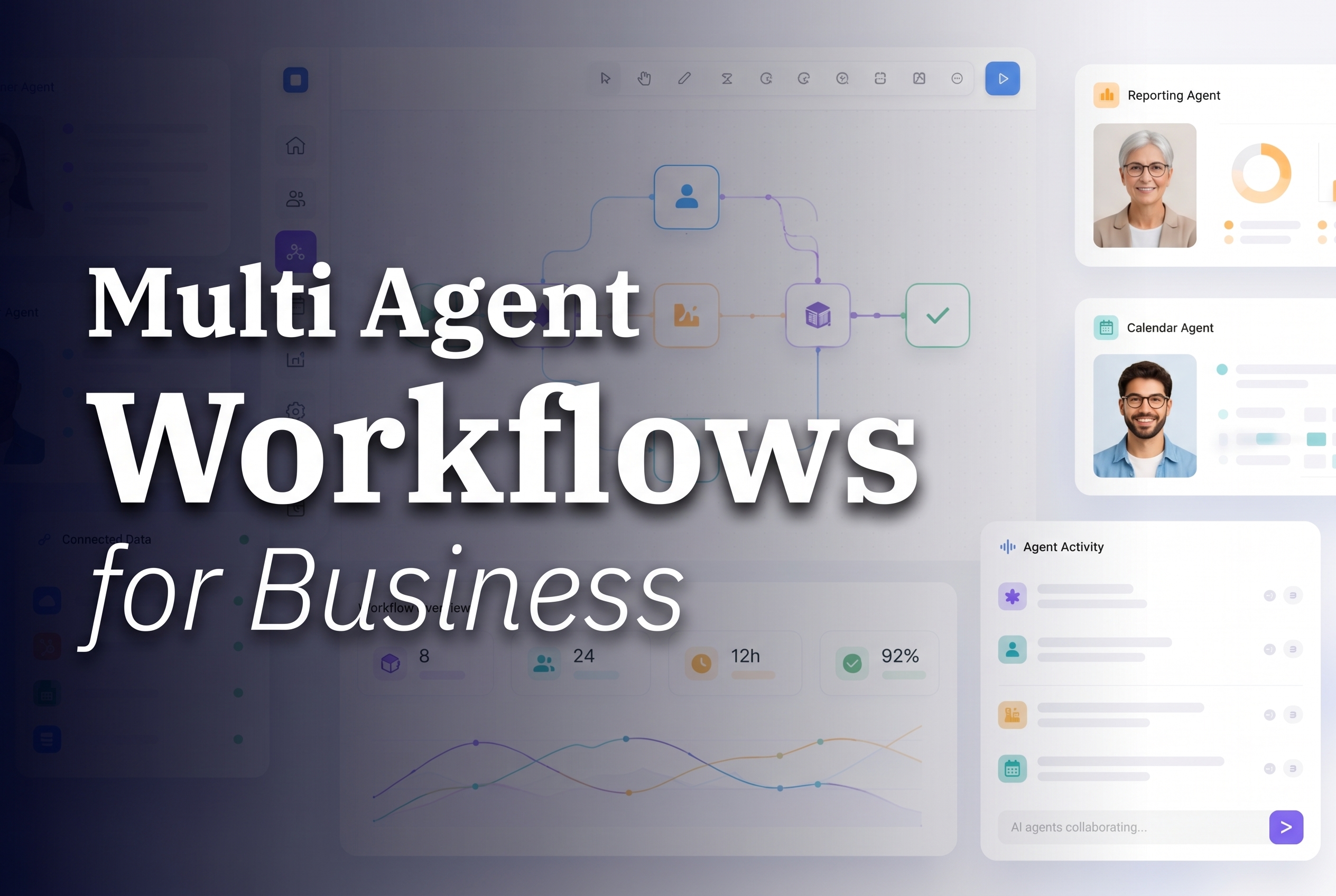
Multi-agent workflows make sense when one agent would otherwise become a messy generalist. That usually happens in complex operations. One part of the workflow gathers context. Another updates systems. Another checks quality. Another reports the result. Splitting those jobs can make the whole system easier to trust.
The trick is not adding more agents for the sake of it. The trick is deciding which roles deserve their own agent and which steps should stay inside one bounded workflow. When teams miss that line, they create a busy diagram instead of a better product.
- When multi-agent workflows help
- 7 smart patterns
- How multi-agent workflows fit Wiro
- The trap to avoid
When multi-agent workflows help
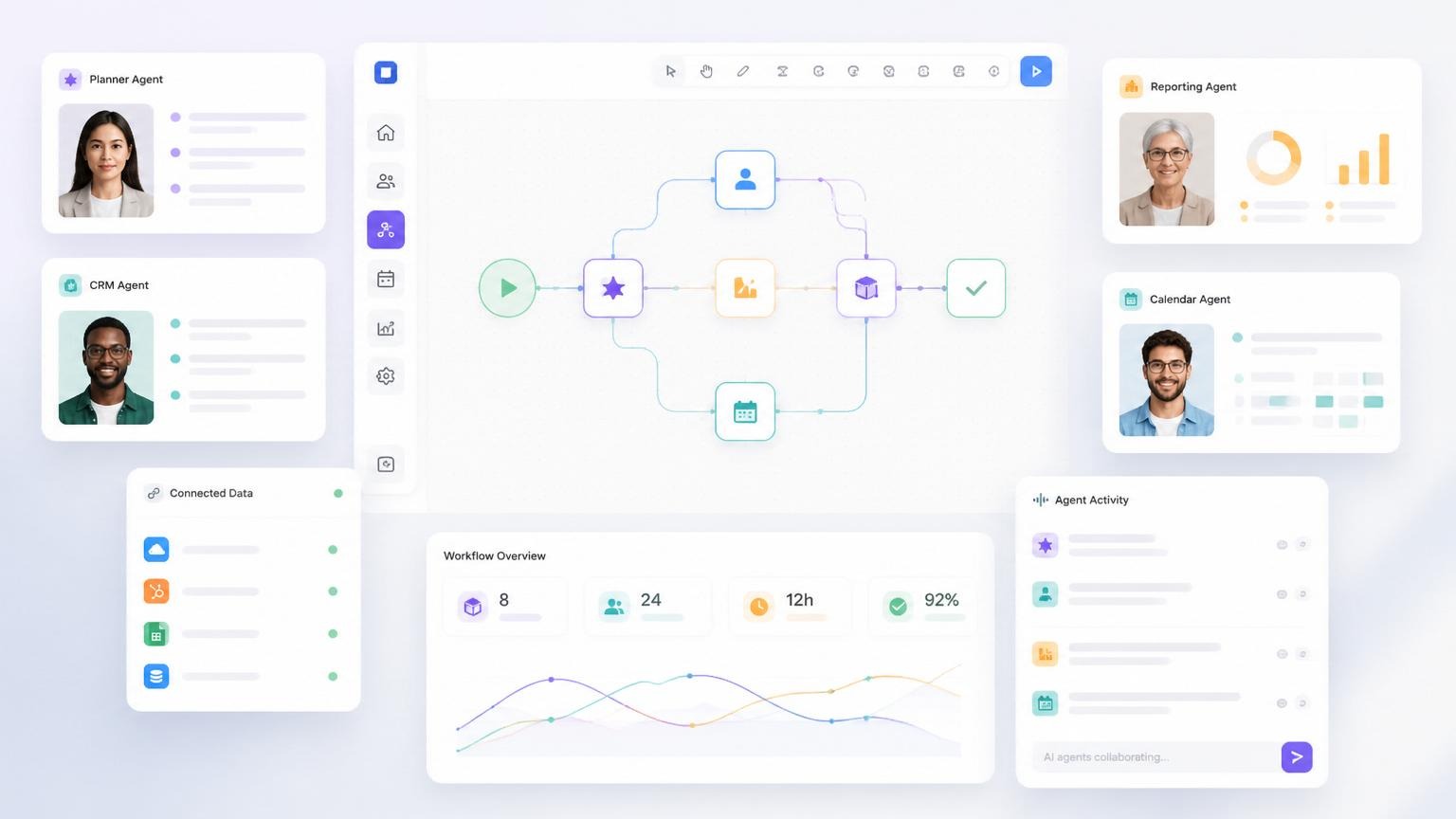
Multi-agent workflows are useful when the work naturally breaks into roles with different rules. A planner can decide the sequence. A browser or research agent can collect source material. A CRM agent can update records. A QA agent can check outputs before anything is sent. That is easier to reason about than one giant prompt trying to do all four jobs at once.
This pattern also helps when the workflow crosses tools with different failure modes. Search might be fast but messy. CRM writes might be strict. Reporting may need a summary instead of a raw log. Splitting the work gives each agent a narrower task and a simpler success condition. Microsoft highlights the same idea in its agent design patterns guidance.
7 smart patterns
1. Planner and executor. One agent decides the path. Another agent performs the actual steps.
2. Research and synthesis. One agent collects sources. Another turns them into a final summary or draft.
3. Intake and routing. One agent classifies incoming work. The next sends it to the correct pipeline.
4. Action and QA. One agent drafts or updates. A second agent checks structure, tone, or required fields before release.
5. Specialist per system. One agent speaks CRM. Another handles calendar logic. Another handles review or messaging channels.
6. Fast path and slow path. Routine work stays in a light agent. Complex exceptions route to a heavier reasoning agent.
7. Worker and reporter. One agent runs the workflow. Another turns logs and outcomes into an operator-ready summary.
How multi-agent workflows fit Wiro
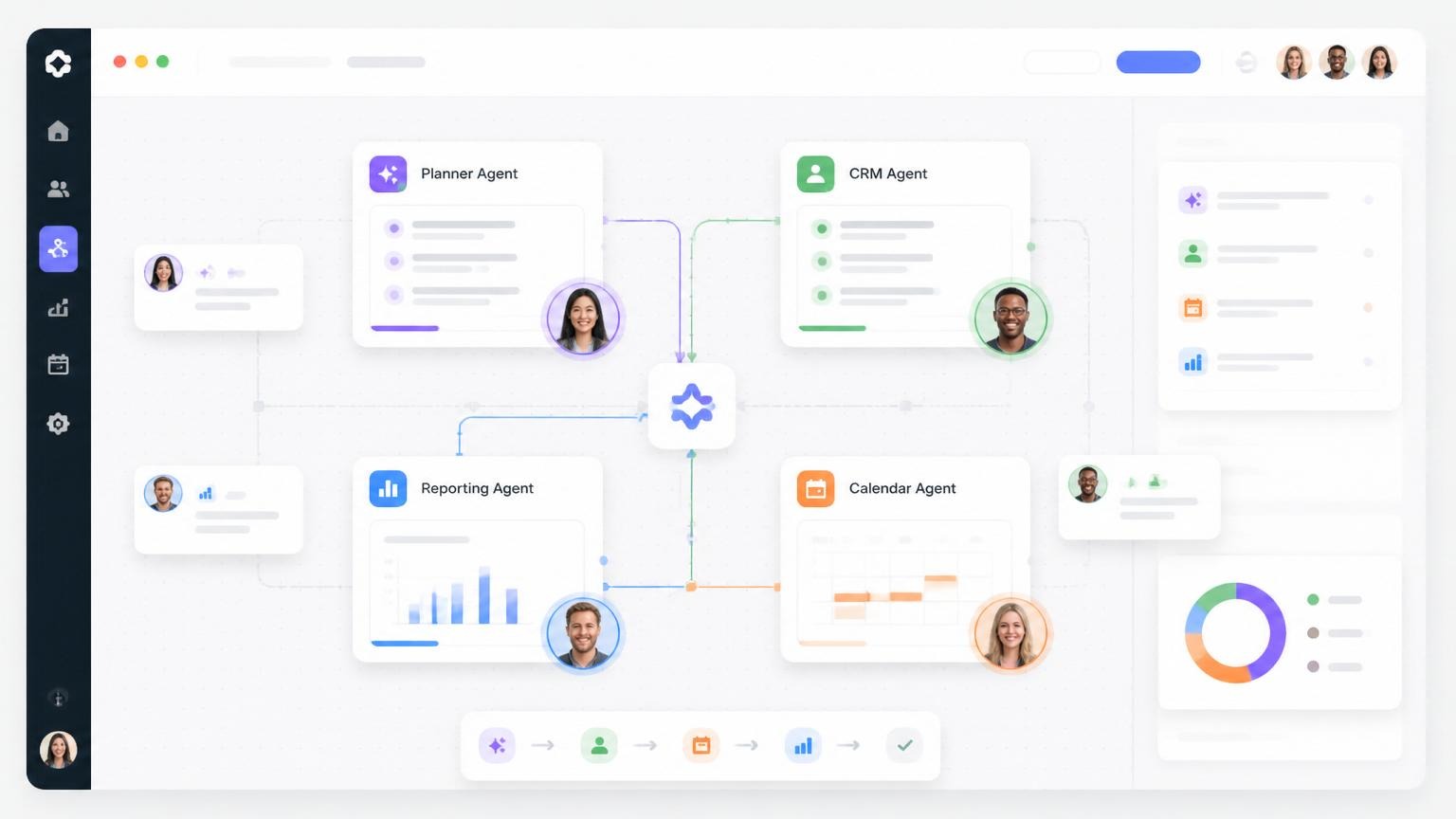
Wiro already gives the right mental model for this. The platform is not only about one giant agent. It is about skills, boundaries, scheduled work, and specialized behavior. The agent anatomy page shows reasoning, memory, self-review, and heartbeat as separate strengths. The build flow lets teams shape those strengths around the job instead of hoping one prompt can carry everything.
That is why multi-agent workflows fit well on Wiro for complex ops. A lead-gen workflow can have one agent enrich leads, another clean the CRM, and another prepare operator summaries. A local business setup can have one agent manage intake, another handle appointment logic, and another escalate exceptions. Anthropic makes a similar case in its tool-use and workflow material: composition is often more reliable than forcing one context window to do every role.
If you want a Wiro-side example, compare AI agents for lead generation teams with mobile growth AI agents. The pattern is the same. One workflow, several roles, different success checks.
The trap to avoid
The trap is over-splitting. If two agents share the same tools, same logic, and same success condition, they probably should be one agent. More handoffs add complexity. More state passing creates more ways to fail. The right question is simple: does this step need a different policy, different skill set, or different review rule?
Multi-agent workflows earn their keep when they make failure easier to isolate and success easier to measure. If they only make the architecture diagram look advanced, they are doing the opposite. For a good baseline, read why AI agents fail in real workflows before you decide how many agents the workflow really needs.