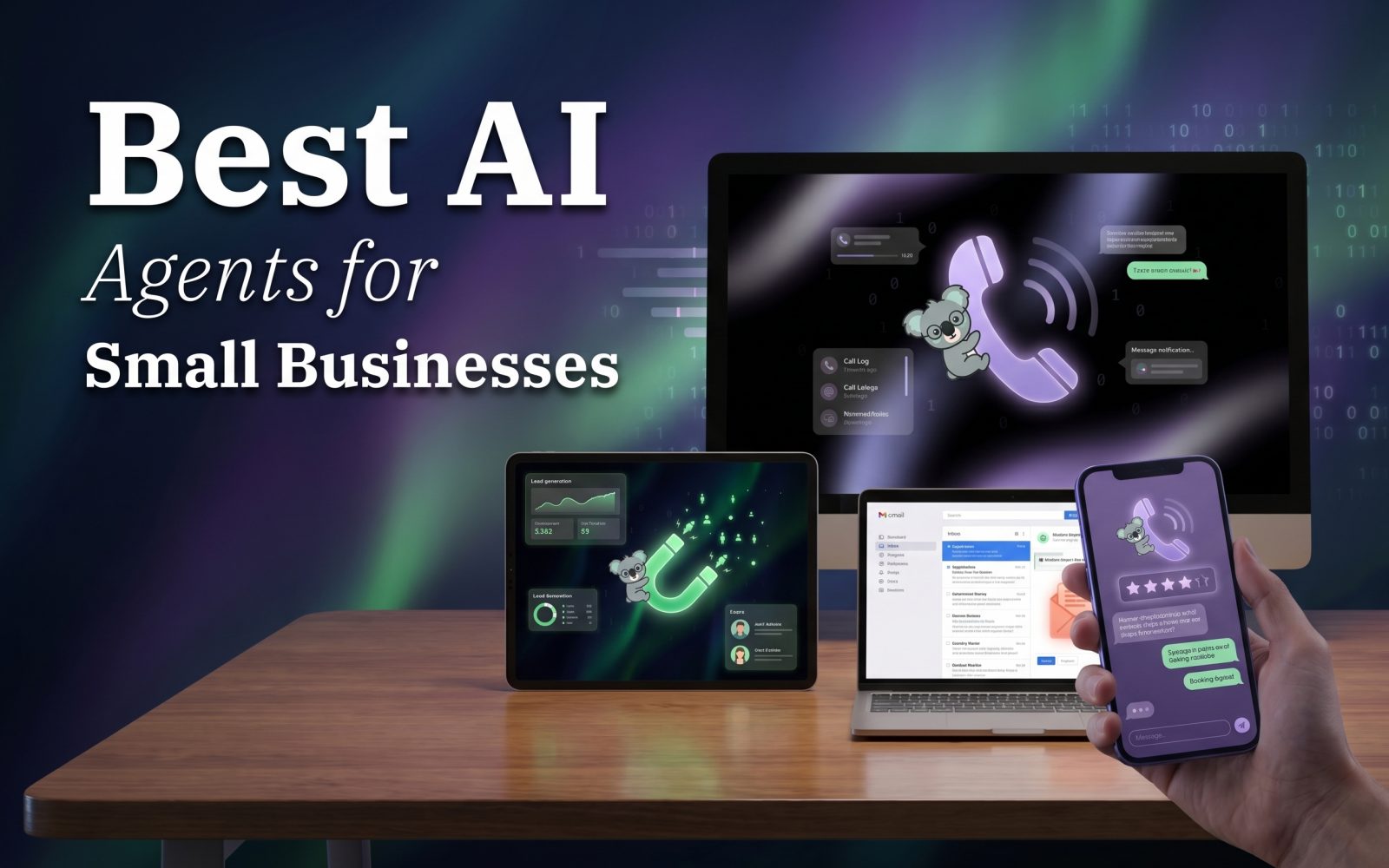
Best AI agents for small businesses is not a question about the most advanced demo. It is a question about which workflow leaks money every week. For most small teams, that leak shows up in missed calls, slow lead follow-up, public reviews, content backlogs, or campaigns that never quite ship on time.
That is why the best AI agents for small businesses are usually the ones tied to a single stubborn queue first. Small teams do not need one giant system on day one. They need the first useful one.
Once that first workflow works, adding the second one gets much easier.
- What the best AI agents for small businesses actually handle
- Seven smart starting points
- How Wiro fits small teams
- How to choose the right first agent
- FAQ
What the best AI agents for small businesses actually handle
The best AI agents for small businesses handle work that repeats, follows clear rules, and still burns too much staff time. That often means intake, follow-up, response, publishing, or retention work.
They are not useful because they sound smart. They are useful because they keep motion alive when a small team is short on time.
That matters more for a three-person business than for a fifty-person one. Delays hit harder when there is nobody else to catch the dropped task.

Seven smart starting points
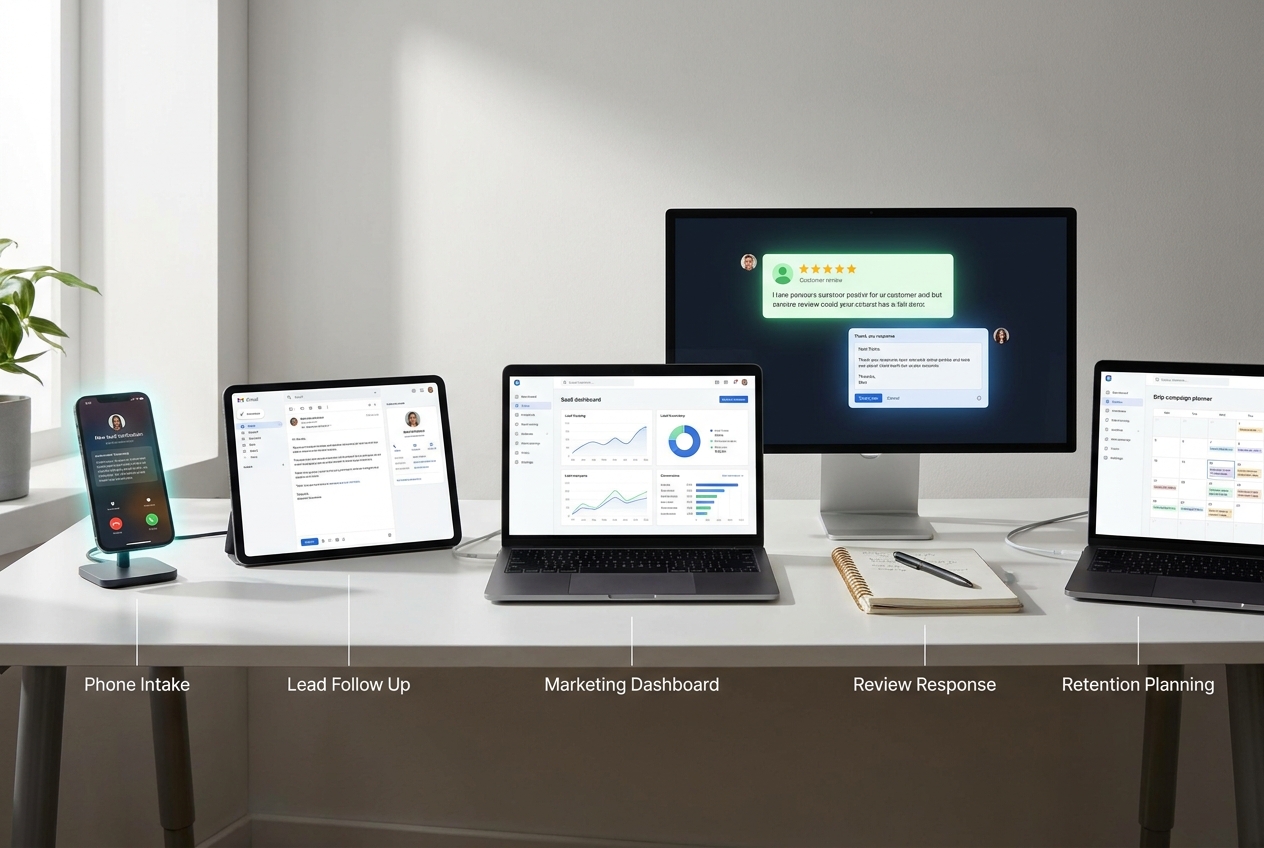
Small businesses usually see value fastest in one of these seven lanes.
- Phone coverage: missed calls and booking requests
- Lead follow-up: faster outreach after interest shows up
- Review response: public feedback that needs a steady reply rhythm
- Blog and newsletter work: owned media that keeps slipping
- Paid media support: repeat campaign checks and reporting
- Lifecycle messaging: reminders, pushes, and event-based follow-up
- Winback motion: reactivating dormant customers with better timing
Teams working from web forms can see practical handoff patterns in AI Agents for Follow-Ups. For calls, AI Receptionist for Missed Calls shows why fast intake matters. The guide to AI Agents for Restaurants explains a review-response loop.
Those are practical workflows, not trend categories. That is why they are a better way to choose.
Clear operating rules still matter in every case. The NIST AI Risk Management Framework is a useful reminder that once software starts taking customer-facing actions, guardrails and review boundaries need to be part of the design.
Anthropic’s guide to building effective agents makes a similar case for simple, composable patterns before adding more complexity.
How Wiro fits small teams
Wiro fits small teams because the platform is organized around real jobs instead of vague agent labels. A business can browse the lineup, start with one workflow, and add the next one later.
That matters when the first goal is not transformation. It is relief.
The product map makes the starting points clear:
- Voice Receptionist for calls, intake, and booking coverage
- Lead Generation Manager for prospecting and follow-up
- App Review Support for review response and issue routing
- Newsletter Manager and Blog Content Editor for owned media workflows
- Browse for the wider lineup across business functions
The Anatomy page matters here too. Reasoning, skills, memory, and recap are useful because small businesses often need one system to handle the messy middle between first touch and final outcome.
That could mean a missed call turning into a booking, a public review turning into a clean response, or a lead turning into a follow-up task instead of a forgotten spreadsheet row.
For teams that later build custom workflows, the LangGraph repository documents an open-source framework for long-running, stateful agents.
How to choose the right first agent
Start with the workflow that already costs money every week.
- If the business misses calls, start with voice coverage.
- If leads go cold, start with follow-up.
- If reviews pile up, start with review response.
- If content never ships, start with blog or newsletter work.
- If retention is weak, start with event-based messaging or winback.
The wrong move is chasing the broadest use case. The right move is fixing the clearest queue.
That is why the best AI agents for small businesses are usually the ones tied to one broken handoff, not the biggest feature list. Small teams benefit fastest when the first workflow is narrow, measurable, and close to revenue.
Wiro works well in that environment because it gives small teams ready-made agents, connected workflows, and room to expand without forcing a platform restart each time the next bottleneck shows up.
Related Wiro agents
- Voice Receptionist
- Lead Generation Manager
- Newsletter Manager
- Blog Content Editor
- App Review Support
- Browse all agents
FAQ
What is the best AI agent for a small business?
The best AI agent solves the most expensive repeated task. For many small teams, that starts with calls, leads, or reviews.
Do small businesses need one agent or several?
Most teams should start with one. More agents make sense after the first workflow proves useful.
Are AI agents the same as chatbots?
No. Chatbots mainly answer messages. Agents can also plan steps, use tools, and finish a workflow.
Which small businesses benefit first?
Local services, ecommerce teams, mobile apps, and review-driven businesses usually have the clearest early use cases.
Final CTA
Explore the full Wiro agent catalog here: https://wiro.ai/agents/browse