How AI agents work becomes clearer when a team stops judging them as chat windows and starts judging them as a chain of decisions. This explainer tests that chain at a practical level: can a system take a business request, keep the relevant context, choose the next action, use a permitted tool, check its own work, and leave a usable record? The answer depends less on a clever first reply than on whether all seven parts stay connected.
This is not a model benchmark. No single foundation model, temperature setting, token limit, runtime, or per-run cost was used for the two workflow diagrams below. They are illustrations of the operating pattern, not measured model outputs. That distinction matters: a team should not read a diagram as evidence that a particular model will meet a latency or cost target.
- What this test checks
- The seven parts of an agent workflow
- What the two outputs show
- Choosing the right setup
- Related reading
How AI agents work in a business workflow test
The test starts with one ordinary request: a prospect submits a form asking for a product demo. A useful agent must do more than draft a friendly reply. It needs to identify the trigger, read allowed CRM context, decide whether the lead meets routing rules, call the right tools, confirm the result, and report what happened. If one link fails, the workflow should stop safely or ask for review rather than pretend the work finished.
There are no hidden parameters to report for this conceptual test. It does not compare prompts, model weights, context windows, or API prices. In production, those parameters belong in an implementation record alongside the chosen model and tool permissions. The Anthropic guide to building effective agents makes a similar distinction between simple workflows and systems that dynamically select tools. The implementation details affect both speed and reliability.
The 7 parts business teams should know
1. Trigger
Every agent needs a clear start. That may be a form submission, an inbound call, a support ticket, a scheduled report, or a direct request. A vague trigger creates vague work. Define what event starts the job and what information arrives with it.
2. Context
Context is the information the agent may read before acting: the request, account history, availability, approved policies, and prior handoffs. It should be selective. Sending an entire database into every run increases cost, slows the run, and raises the chance that irrelevant information changes the outcome.
3. Planning
Planning turns a request into a short sequence. For a demo request, that might be: validate the email, check owner rules, look for open slots, draft a reply, and create a CRM task. Planning does not require a long internal monologue. It requires a visible, testable order of operations.
4. Tools and skills
Tools let the agent affect a real system. A CRM lookup, calendar search, knowledge-base query, or ticket update is a tool call. A skill packages the instructions, access limits, and expected output for a repeatable job. Keep access narrow. An agent that only needs to create a follow-up task should not also be allowed to edit billing records.
5. Execution
Execution is where the plan meets the systems of record. Good workflows make each action observable: which tool was called, what input it received, whether it succeeded, and what ID or result came back. That record is more useful than a polished summary when someone has to troubleshoot an exception.
6. Checks and recovery
An agent should verify a critical write before claiming success. If a calendar action fails, it should not send a confirmation that implies a meeting exists. Recovery rules also need limits: retry transient failures, route missing information to a person, and stop after a defined number of attempts. For a closer look at that layer, see AI Agent Retry Logic: 6 Rules for Jobs That Fail Mid-Workflow.
7. Recap and handoff
The final response should say what happened, what did not happen, and who owns the next step. A good recap can include a booked time, CRM record, draft response, or escalation reason. It gives a person enough information to continue without reconstructing the run from scratch.
What the two outputs actually show
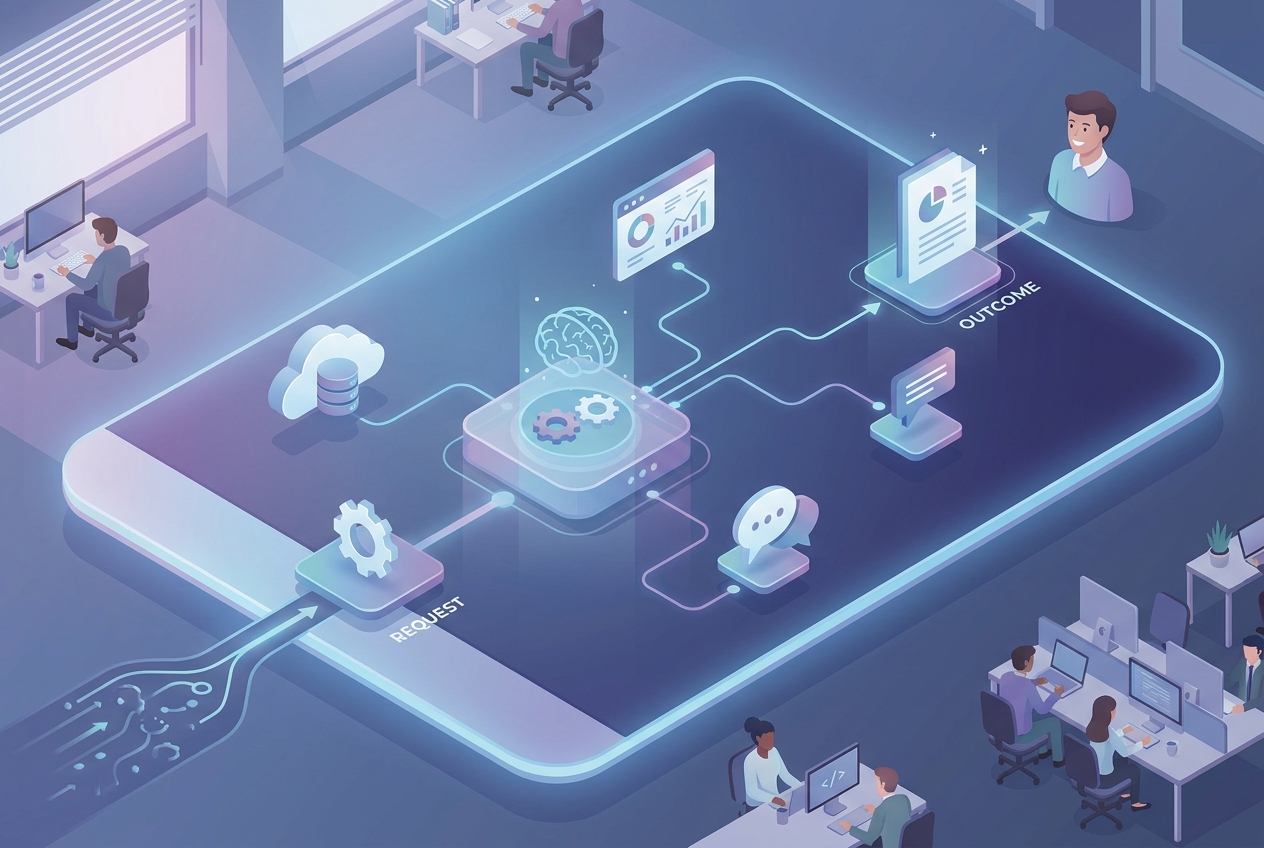
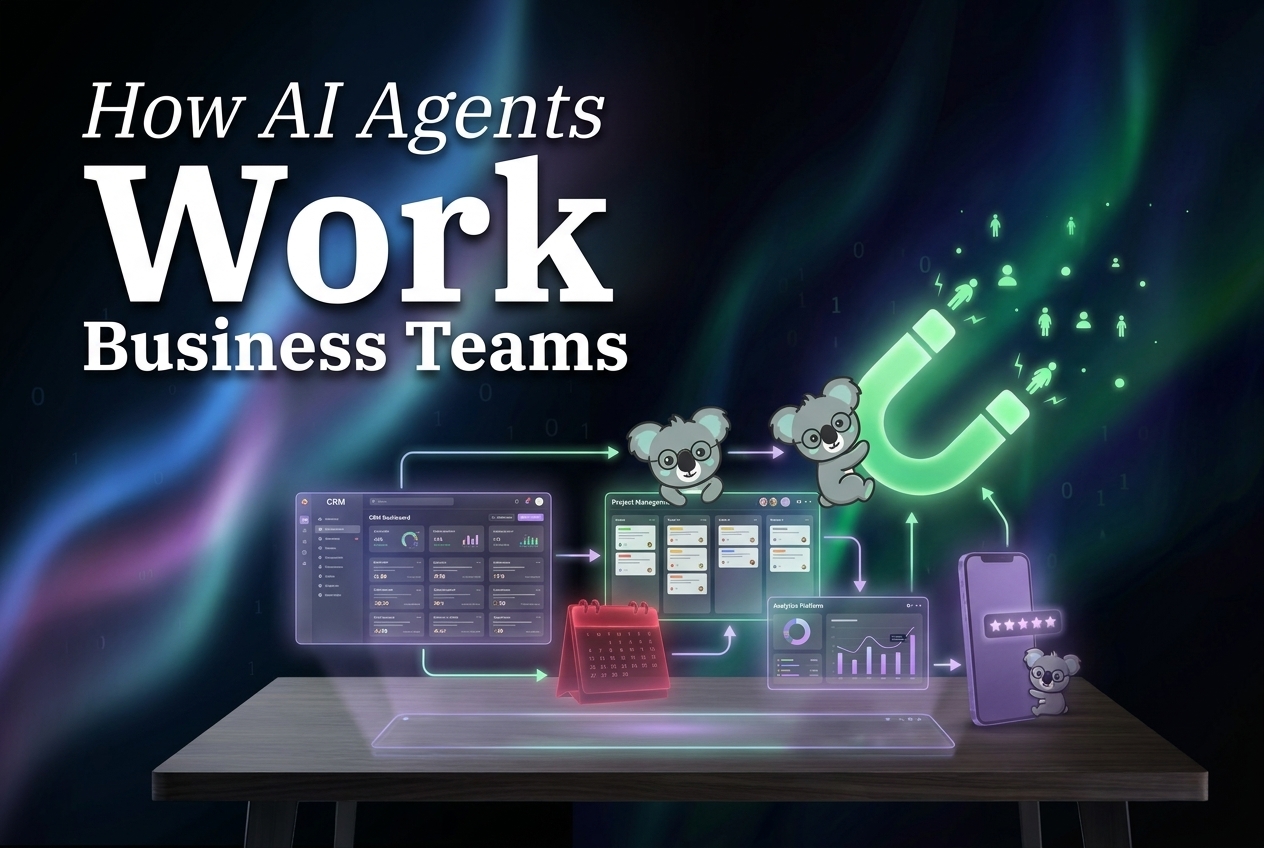
The first output is useful because it makes one point visible: the work does not end at text generation. The request flows into planning and then into tools. That is the right shape for a narrow, repeatable job such as intake routing, meeting preparation, or a CRM update. It does not prove that every connected tool will succeed, and it should not be used to estimate an SLA.
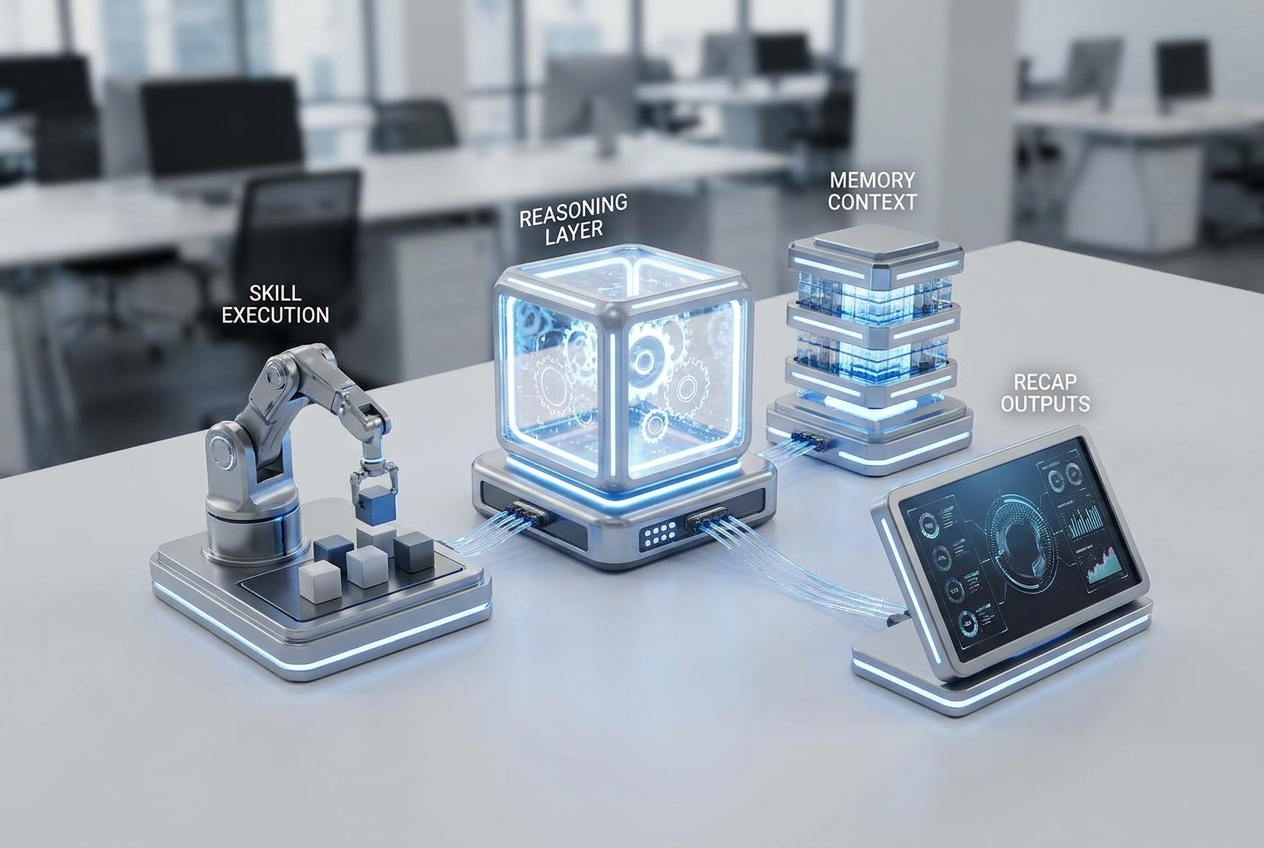
The second output adds the operating layers that the first leaves implicit. Reasoning chooses the next step. Skills constrain how a repeat job is done. Execution touches the connected system. Memory carries only the context the next step needs. Recap returns control to a person. The output also exposes the risk: a failure at any layer can produce a wrong or incomplete result unless the workflow checks it.
For production use, record runtime and cost per completed run from the actual platform logs for the model and tools selected. Costs can change with input length, output length, retrieval, tool calls, retries, and the model provider. Publishing a number without a matching configuration and timestamp would mislead readers, so this article does not invent one.
When to pick which agent setup
Pick a simple workflow when the path is known. A form-to-CRM assignment, status reminder, or appointment confirmation often needs fixed rules, a small set of tools, and an approval point. This is easier to test and cheaper to operate than an open-ended agent.
Pick a tool-using agent when the request varies but the allowable actions are still clear. Lead qualification, support triage, and account research fit here. The agent can decide which approved lookup to use, but it should still have a defined handoff when confidence is low or data conflicts.
Pick a multi-step or multi-agent setup only when the job has distinct roles or long-running dependencies. A sales workflow might separate enrichment, outreach drafting, and CRM hygiene so each part has its own permissions and audit trail. The added coordination has a real cost, so it should solve a problem that a single workflow cannot.
Teams comparing chatbots and agents should start with the work, not the label. AI Agents vs Chatbots: What Business Teams Should Choose covers that boundary. Teams that need a concrete routing pattern can also read AI Agents for Follow-Ups: 6 Smart Workflows After Forms, Calls and Demos.
Related reading
Final takeaway
An agent earns its place when it can move a bounded business task from trigger to verified handoff. Start with one workflow, limit its tools, log each action, and keep a human decision point for exceptions. That is how AI agents work in a way a business team can inspect and improve.