
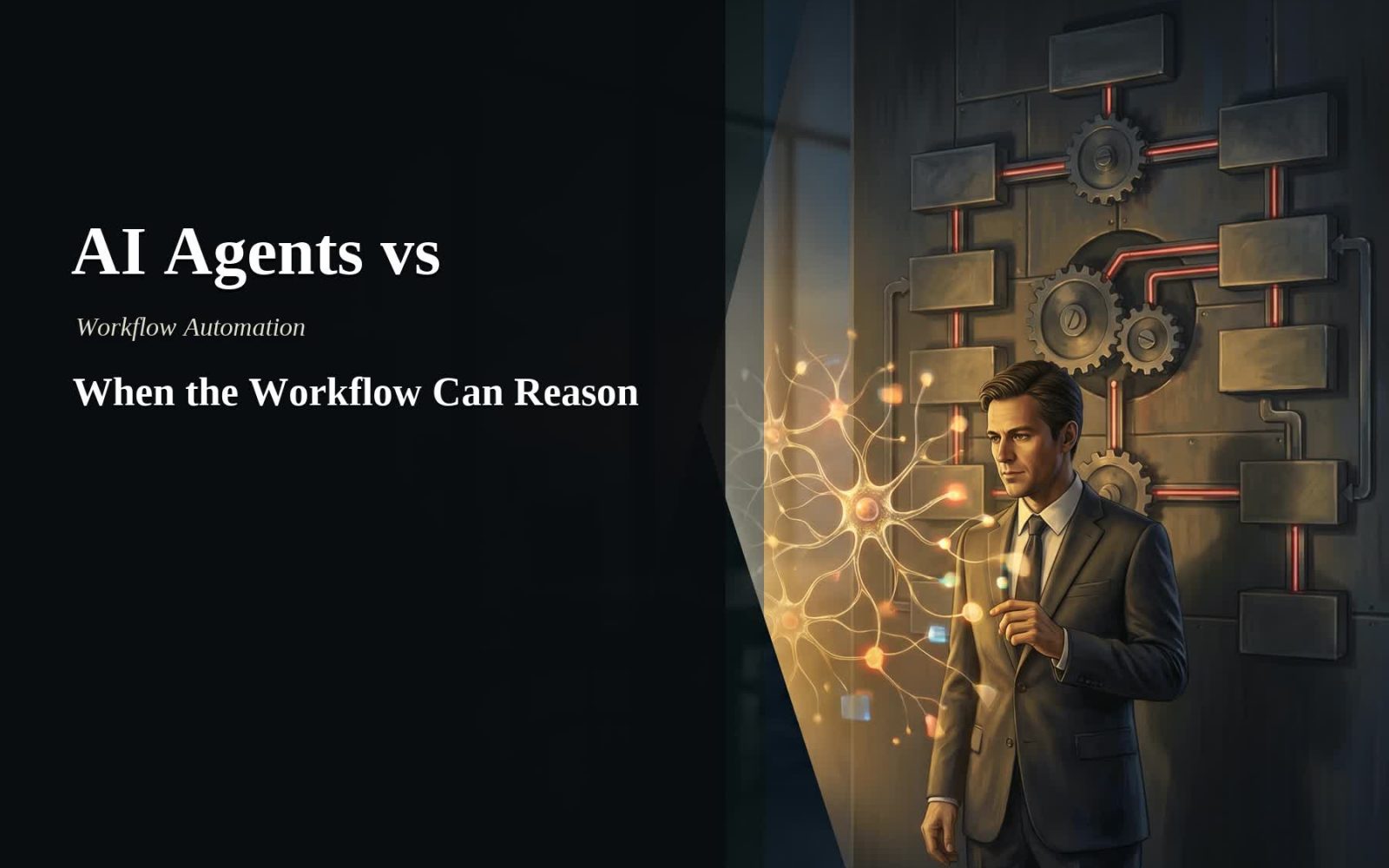
Workflow automation reasoning is the real line between a fixed system and an adaptive one. Traditional automation can move data from step to step, but it falls apart when the next move depends on context, timing, or a messy input. That gap is where many teams start looking at agents.
The question is not whether automation still matters. It does. The better question is where rules stop being enough. Once the workflow has to interpret a message, choose a path, or recover from an odd case, reasoning starts to matter more than another branch in a flowchart.
What workflow automation reasoning means
Workflow automation reasoning means the system can judge the next action inside a controlled workflow. It can read context, compare options, and pick the right next move without the team hard-coding every branch in advance. That does not mean it acts without limits. It means the system has room to interpret within clear guardrails.
This is the practical difference between a brittle if-then stack and a workflow that survives real business inputs. Lead messages are messy. Support tickets mix urgency with ambiguity. Campaign actions depend on live performance. Fixed automation handles the clean cases. Reasoning handles the messy middle.

Where fixed automation still wins
Fixed automation is still the best answer when the input is stable and the path is known. File routing, clean form submissions, routine alerts, and simple record updates do not need an agent. Teams should not reach for reasoning when a few dependable rules already solve the problem.
That point matters because some workflows are overbuilt. If every branch is clear, the extra reasoning layer only adds cost and complexity. Good teams keep fixed automation where it belongs and use agents only where the workflow actually changes.
Where agents create the jump
Agents pull ahead when the next step depends on meaning, not only structure. A review reply may need empathy plus escalation logic. A lead workflow may need account context before deciding whether to book, nurture, or pause. A monitoring job may need to decide whether a change is noise or a real issue worth waking someone for.
- Lead follow-up that changes by reply intent
- Support routing that weighs urgency and history
- Campaign checks that react to live performance
- Restaurant review recovery that turns feedback into action
- Scheduled ops work that compares fresh state with the last recap
This is where Wiro has a cleaner story than generic automation alone. The platform combines skills, memory, recap, and runtime controls, so the workflow can reason while still staying inspectable.
How teams should decide
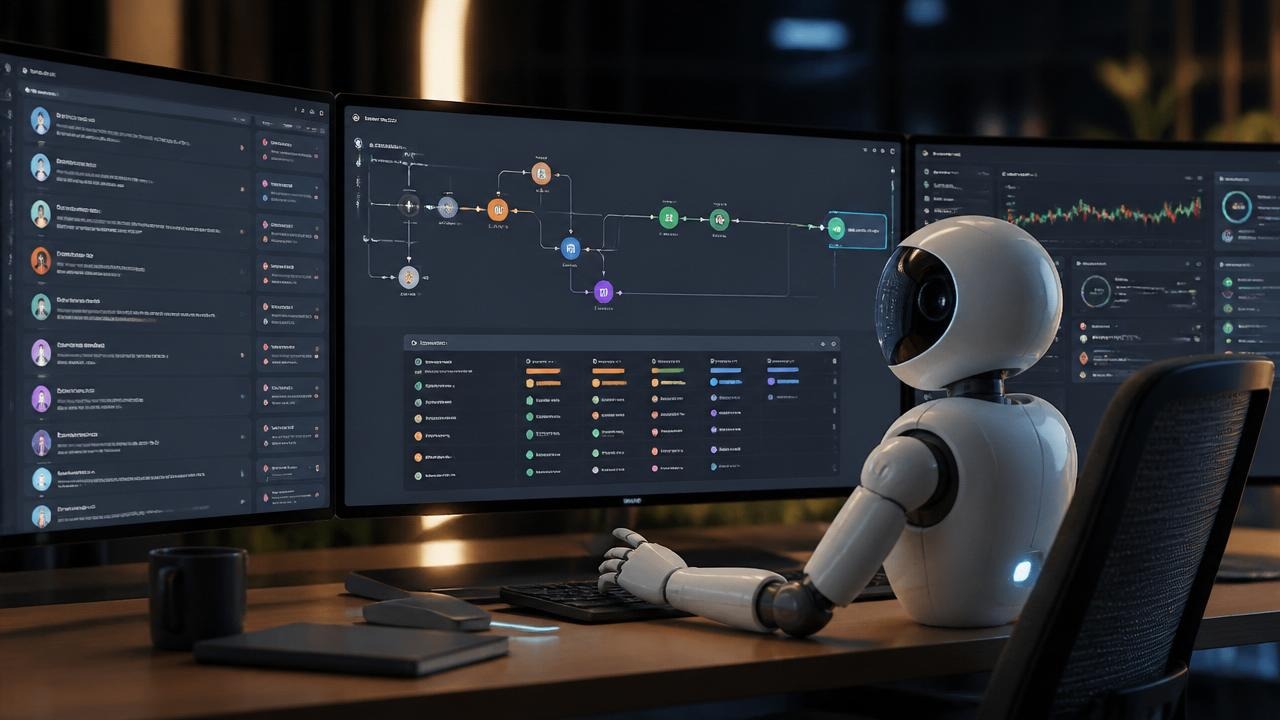
Start with one question: does the workflow need interpretation inside the path? If the answer is no, use fixed automation. If the answer is yes, the team should look at an agent design with clear rules, scoped actions, and review points.
That is also why the strongest agent platforms talk about more than prompts. Wiro frames the loop through planning, execution, recap, and controlled skills. Agents and Anatomy both show that the workflow is not just a chat box with tools attached.
What to avoid
The biggest mistake is treating every workflow like it needs full autonomy. Most teams need a mixed system. Stable pieces stay deterministic. Messy steps get a reasoning layer. Human review stays in place for expensive or sensitive actions. The NIST AI Risk Management Framework is a useful outside reference because it pushes teams to balance capability with control.
Another mistake is pretending a giant branch tree can scale forever. It usually cannot. Once conditions multiply, maintenance becomes the real bottleneck.
Bottom line
Workflow automation reasoning is what makes agents useful in the middle layer where rules are not enough but full human handling is too slow. Teams do not need to replace all automation. They need to know where interpretation adds real value. That is the point where agents stop sounding like a buzzword and start working like infrastructure.
For a closer look, compare Wiro Agents with the system view in Agent Anatomy, then use NIST AI RMF as the outside check for safe deployment.