Image to Song YuE
Turns a picture into a finished song: the app writes lyrics about the image, then YuE sings them over an accompaniment in the genre, instruments, mood and voice you pick.
Overview
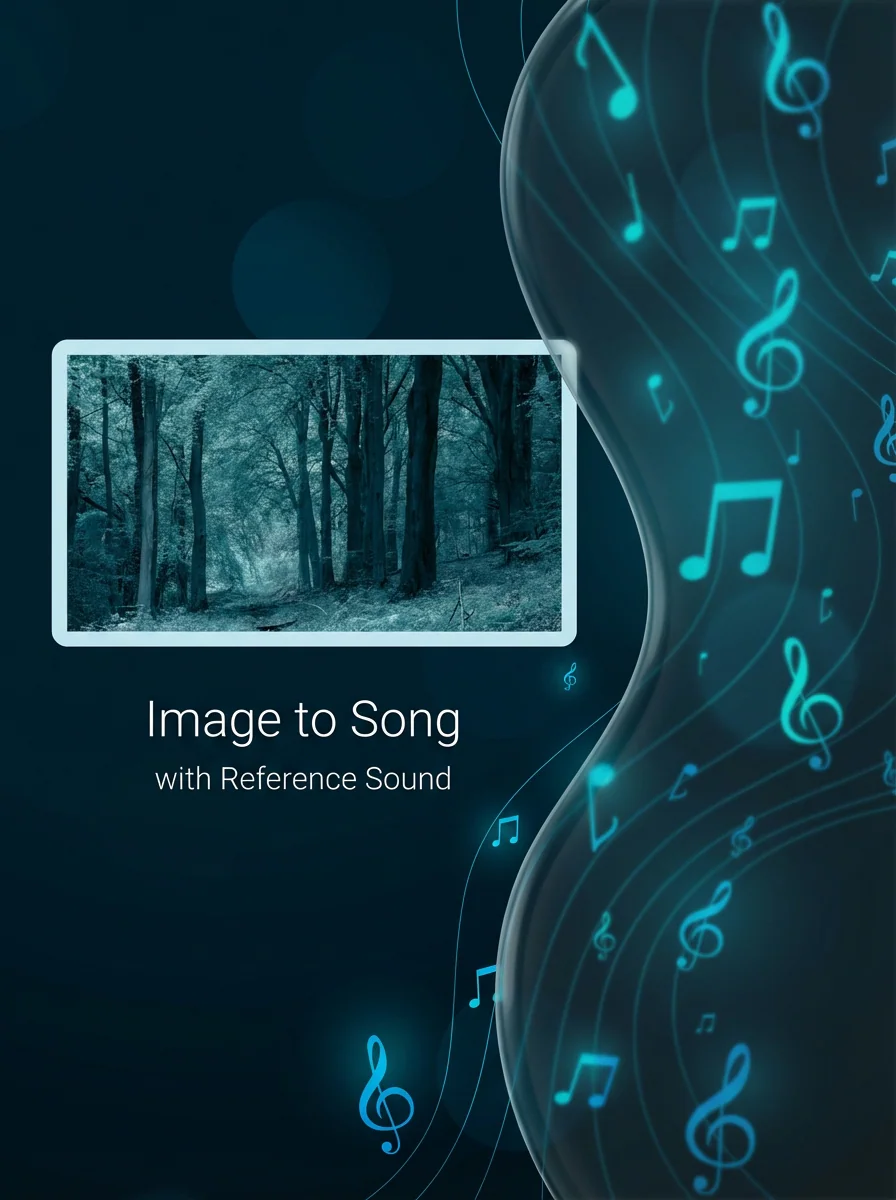
Image to Song YuE chains two models. A vision-language model looks at your picture and writes lyrics about it, split into labeled sections such as [verse], [chorus], [bridge] and [outro]. YuE, the open lyrics-to-song model from HKUST and M-A-P, then generates a vocal track and an accompaniment track for those lyrics, and the app mixes the two into one song.
There is no lyrics box. The image supplies the words, and five style fields decide how they are sung.
What you can build
- Photo-to-song buttons in social or photo-memory apps.
- Greeting-card and party apps where a guest uploads a picture and gets a song about it.
Inputs
- The picture itself, by file upload or link.
- Five required multi-select style fields in YuE's tag vocabulary: genre (135 choices, from Pop to Bossa Nova), instrument (102, including sitar and 808 bass), mood (over 100), gender (17 voice options such as tenor or rapping) and vocal timbre (over 100, such as airy or raspy). Defaults are Pop, guitar, happy, female and bright vocal.
- An optional seed, default 42.
Outputs
Each run returns the mixed song as an MP3, separate vocal and instrumental stems, and a text file with the lyrics. In the page sample, the default forest photo becomes a song of about one and a half minutes.
Recommended settings
YuE's authors say a stable tag prompt usually covers genre, instrument, mood, gender and timbre, which the required fields already enforce. To hear what one field does, fix the seed and change only that field.
Limitations
- The forest sample's lyrics are English, and the stage-1 checkpoint is YuE's English-tuned one, so plan for English songs.
- Length is not a setting. The authors put each lyric section at around 30 seconds, so length follows the number of sections the app writes. The app sings at most 10 of them and always skips the last one in the lyrics file, which is where an outro usually sits.
Safety & compliance
YuE is released under the Apache License 2.0, and its authors encourage crediting "YuE by HKUST/M-A-P", especially for public and commercial use. They place responsibility for avoiding plagiarism of existing music on the creator and recommend labeling shared songs as AI-generated.
API quick start
Run image-to-song-YuE with a single API call.
{
  "genre": "Pop",
  "instrument": "guitar",
  "mood": "happy",
  "gender": "female"
}
curl -X POST "https://api.wiro.ai/v1/Run/wiro/image-to-song-yue" \
-H "Content-Type: application/json" \
-H "x-api-key: YOUR_WIRO_API_KEY" \
--data-binary @- <<'JSON'
{
"genre": "Pop",
"instrument": "guitar",
"mood": "happy",
"gender": "female"
}
JSONOther models you might like
Explore similar music generation models.