
App review backlog AI agents help mobile teams solve a problem that looks small until it compounds. Unanswered reviews hurt store trust, hide product signal, and create support drag at the same time. Once volume climbs, the team needs more than faster typing. It needs a system that can sort, draft, escalate, and keep context.
That is why app review work fits agents so well. The workflow repeats every day, but the content changes with every release, bug, and region. Fixed replies alone are not enough. The team needs speed without flattening every complaint into the same answer.
Why app review backlog AI agents matter
Review backlogs create three problems at once. First, users see slower replies in public. Second, support issues stay buried inside the app stores instead of reaching the right queue. Third, product teams lose pattern visibility because feedback never gets summarized well.
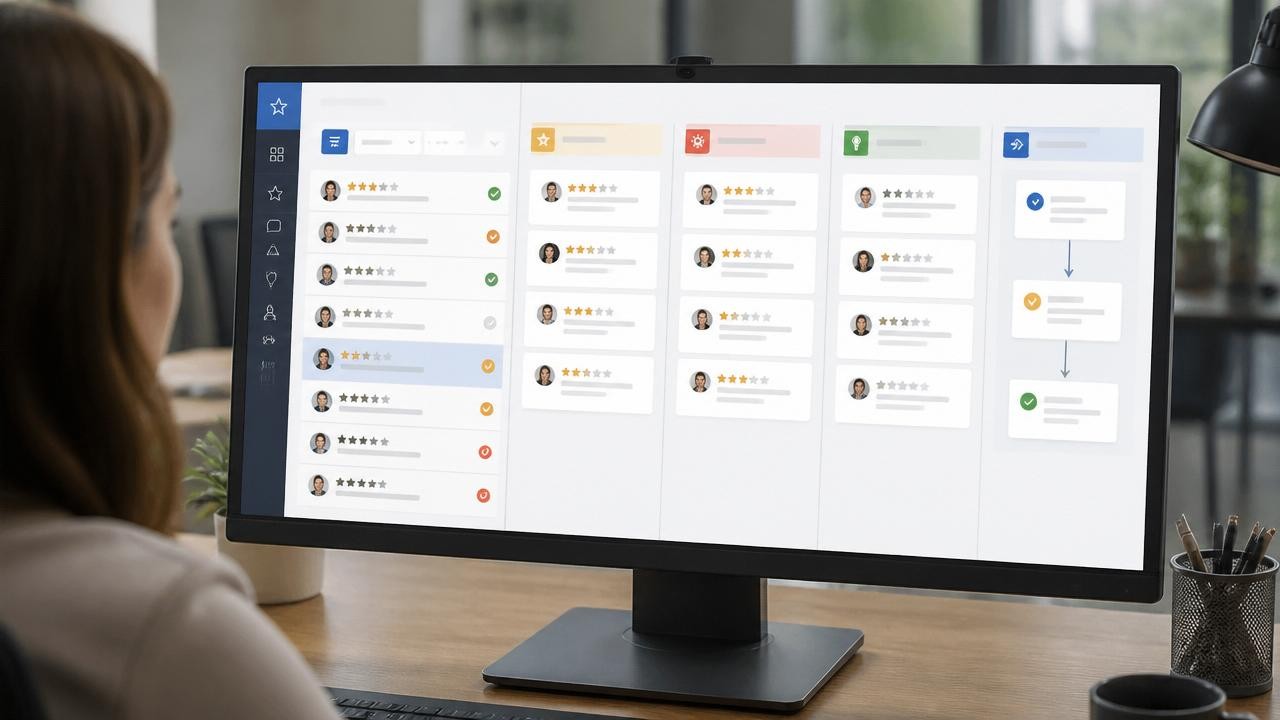
App review backlog AI agents reduce that drag by classifying reviews, drafting first-pass responses, and surfacing issues that deserve a real human answer. That gives the team a faster public response loop without losing the product insight hidden inside the queue.

What should be automated first
The best first step is not full autonomy. It is triage. The agent should group reviews by intent, urgency, and likely route. That includes bug reports, billing complaints, feature requests, praise, and generic frustration. Once those paths are clear, the system can draft replies for common cases and escalate the sensitive ones.
- Detect likely support issues that need a ticket
- Separate feature feedback from one-off complaints
- Draft fast replies for common positive and neutral reviews
- Route severe complaints for human review
- Summarize recurring patterns after each release
That workflow is where most of the value shows up. The queue gets smaller, and the team learns more from it.
How to keep product signal intact
The risk in automation is sanding off the useful detail. If the system only replies faster, it can still fail the product team. Good app review backlog AI agents should preserve the why behind the review. Was it a crash. A broken login. A pricing complaint. A bad onboarding step. Those details matter more than the sentiment label.
This is why memory and recap help. The workflow should remember recent patterns, connect reviews to release windows, and feed clean summaries back to support or product. That is also why mobile teams benefit from a setup that can connect reviews to event and retention workflows instead of isolating them.
How Wiro fits the workflow
Wiro has a good shape for this because the platform does more than generate text. App Review Support gives teams a focused entry point, while App Event Manager and Push Notification Manager make it easier to connect review patterns with release timing and re-engagement work.
That matters because mobile teams rarely run one isolated queue. Public feedback, app events, and retention usually feed each other. Wiro’s combination of scheduled work, recap, and agent control is a better fit for that loop than a simple reply bot.
What to measure after launch
Start with response time, queue size, escalation rate, and the share of reviews that turn into clear product or support actions. Then watch whether the team learns faster after releases. Apple and Google app stores are still public trust surfaces, so faster replies matter. The better win is that the backlog becomes a cleaner source of truth.
App review backlog AI agents are worth it when they help teams move faster and understand more at the same time. That is when review automation stops feeling cosmetic and starts acting like infrastructure.
See how Wiro approaches this in App Review Support and compare the workflow against the outside governance lens in NIST AI RMF.