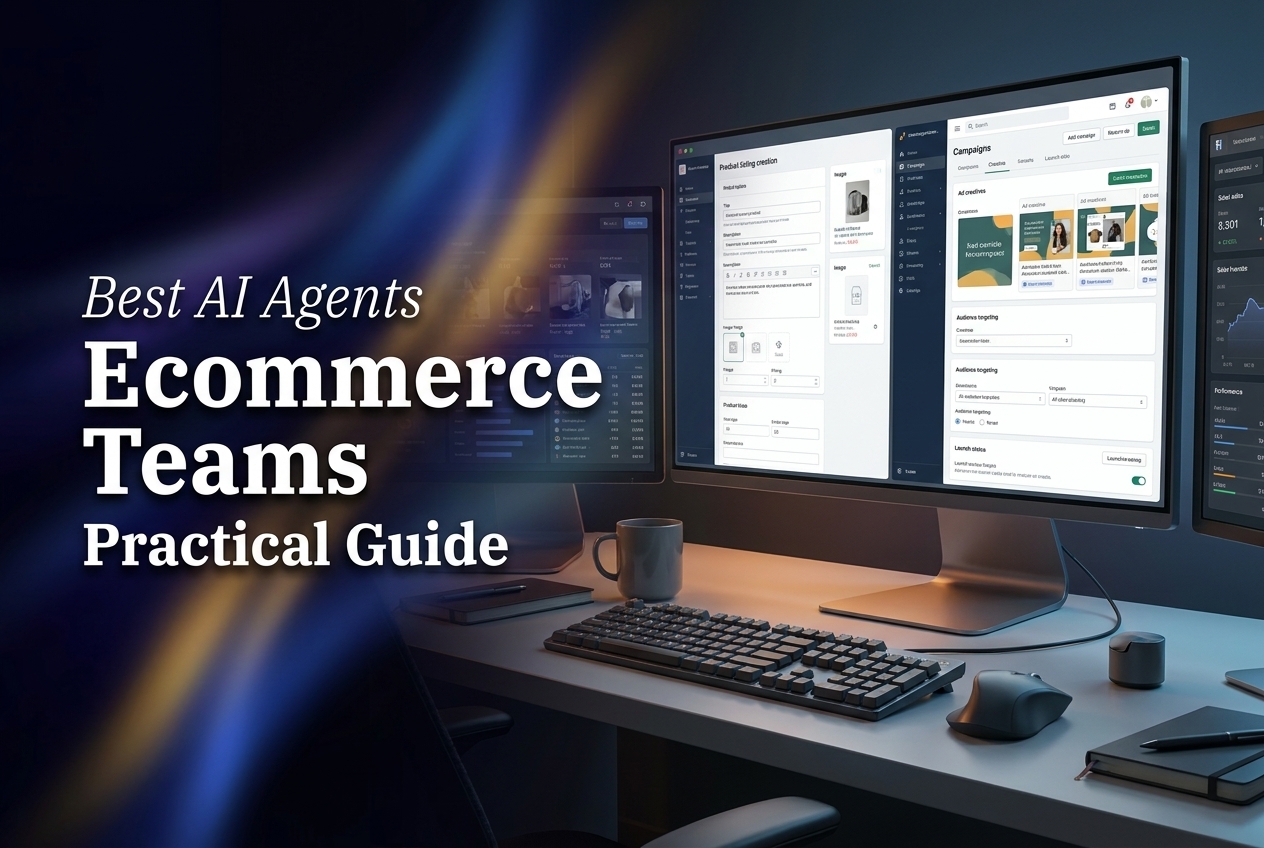
Ecommerce launch AI agents matter because launches break when teams treat them like a content problem instead of a workflow problem. The real bottleneck is usually handoff speed: product assets turn into listings, listings need channel copy, campaigns need timing, and every delay leaves revenue on the table.
An agent helps because launch work is repetitive, cross-channel, and deadline-driven. The team still owns the strategy. The agent reduces the drag between approval and distribution.
Why ecommerce launch AI agents matter
Launch work touches more than the store page. Teams often need listing copy, channel variants, paid support, social support, and timing checks across several systems. Even when each task is small, the chain becomes slow.
Ecommerce launch AI agents reduce that wait by moving one approved asset into several launch-ready outputs. That keeps the workflow compact and lowers the chance that one stale description or missed channel update slows the whole release.

What to automate first
The best first automations are the pieces that repeat across every launch. Product descriptions, listing updates, channel summaries, and campaign support are ideal starting points. These steps are structured enough to automate, but messy enough that manual work keeps piling up.
- Create listing drafts from approved product inputs
- Adapt the same messaging for paid and social channels
- Check that launch assets stay consistent across destinations
- Prepare launch summaries for operators and stakeholders
- Trigger follow-up tasks once the product goes live
That workflow keeps the team focused on decisions instead of copy-pasting through launch week.
Where launches usually stall
Most stalls happen between systems, not inside one tool. The catalog is ready, but the campaign copy is late. The ads are ready, but the social queue is empty. The landing page changed, but the product listing did not. Ecommerce launch AI agents help because they can keep these moving pieces tied to one operating thread.
That thread also matters after launch. If the first performance signals come in weak, the workflow should be able to react instead of waiting for a separate reporting cycle. This is where launch work starts to blend into marketing operations.

How Wiro supports launch workflows
Wiro fits here because the platform already frames ecommerce work as more than isolated content generation. The ecommerce listing workflow gives teams a product-content entry point, while the broader marketing agents on Wiro help extend that work into ads and social support.
That matters because launch speed depends on connected execution. A team does not need five disconnected AI tools. It needs one setup that can move approved assets through the rest of the launch chain with less friction.
What to measure after launch
Measure time from asset approval to live listing, channel readiness, launch error rate, and how often the team misses a launch window because one step lagged. Then look at how quickly the team can adjust after launch when early signals change the plan.
Ecommerce launch AI agents pay off when they reduce delay, cut rework, and make launches easier to repeat. That is when the workflow becomes a growth asset instead of a weekly scramble.
Start with Wiro’s ecommerce listing workflow and compare the launch system against the controls in NIST AI RMF.