HiDream I1 Full vs Dev vs Fast comes down to a practical question: how much visual control is worth trading for a shorter generation path? This comparison keeps the subject matter constant across two familiar but demanding text-to-image prompts, then reads the six saved outputs rather than treating a model label as a result.
The three variants belong to the same HiDream-I1 family. The maker’s repository lists 50 inference steps for Full, 28 for Dev, and 16 for Fast. Those settings describe the upstream reference workflow, not measured Wiro run times. No Wiro run-time or per-output cost was recorded with these saved generations, so this article does not invent either figure. The useful comparison here is what the finished 1024 by 1024 PNGs show: subject fidelity, scene coherence, style drift, and detail.
What this HiDream I1 Full vs Dev vs Fast test checks
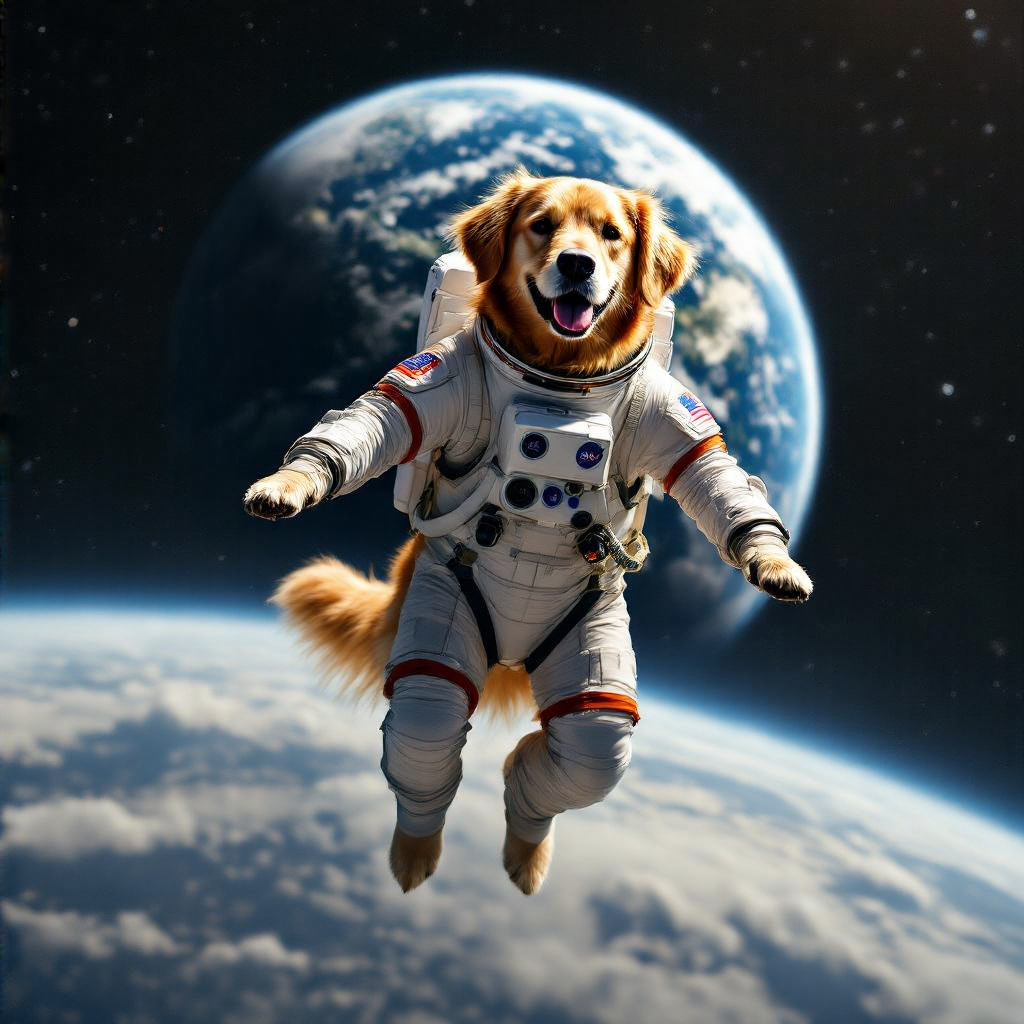
Both prompts ask for a recognizable main subject plus a specific visual world. The first prompt was: Golden retriever astronaut – photorealistic space scene. It tests whether the model can keep a dog readable inside a spacesuit while making the surrounding planet, suit hardware, and lighting feel like one shot. The second was: Futuristic cyberpunk city – neon-lit nightscape. It tests depth, wet-street reflections, vehicles, architectural density, and the model’s tendency to turn signage into decorative noise.
Each variant received the same prompt wording. The saved outputs are square PNGs at 1024 by 1024 pixels. The post does not claim a fixed seed, guidance value, sampler, or negative prompt because those parameters were not preserved with the original assets. That matters: a two-prompt sample can show useful behavior, but it cannot prove that one variant wins every seed or every art direction.
The variants can be run on Wiro at HiDream I1 Full, HiDream I1 Dev, and HiDream I1 Fast. Upstream, the project describes Full alongside distilled Dev and Fast options. Its published step counts provide a sensible expectation: Full spends the longest on refinement, Dev sits in the middle, and Fast is the shortest reference path. They are not a billing table.
Prompt 1: golden retriever astronaut
Full produces the most literal reading of the request. The golden retriever floats front and center in a white suit, with an Earth-like globe behind it and a clouded horizon at the bottom of frame. The suit has seams, tubes, patches, and chest controls that read as equipment rather than random texture. The dog’s face remains the focal point, and the light on the fur fits the bright rim-lit space scene. There are tiny markings that do not resolve as meaningful text, which is normal for this kind of generated detail, but the overall image stays photorealistic.
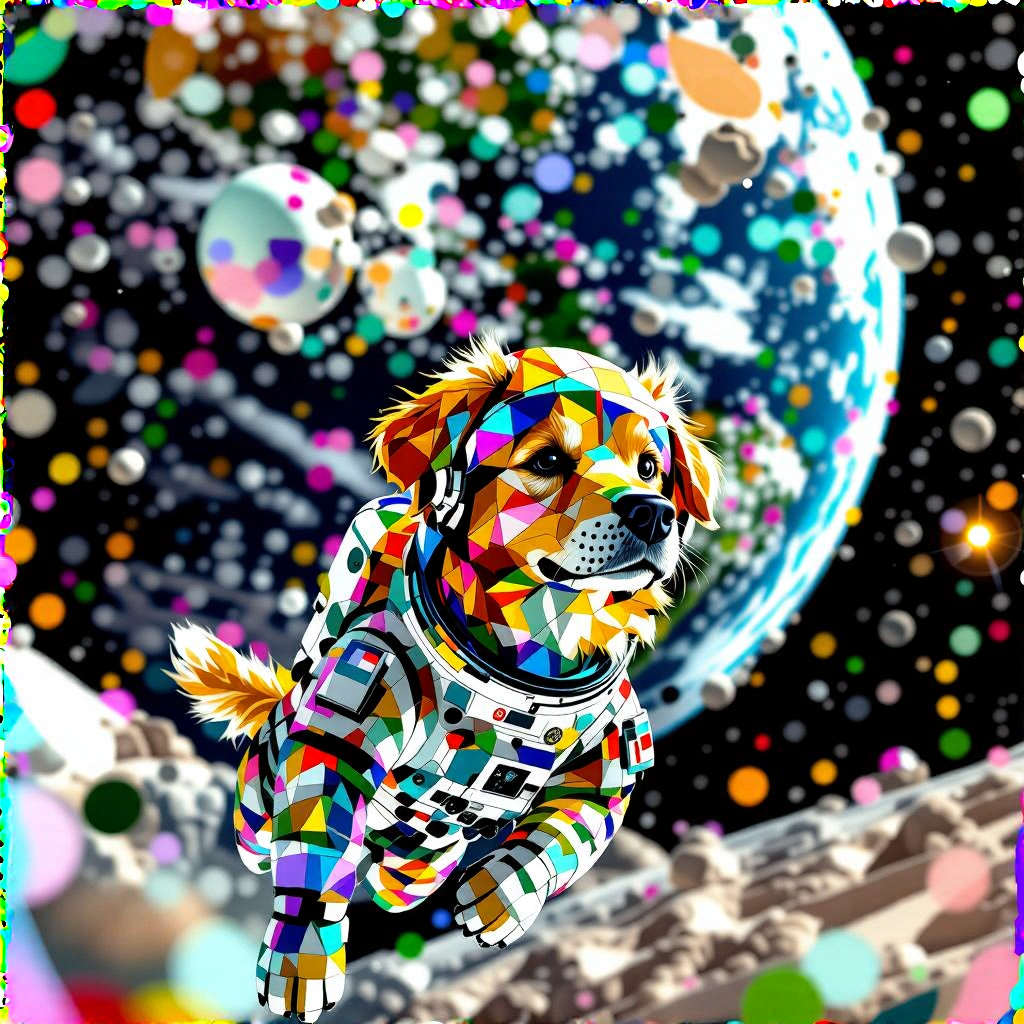
Dev keeps the astronaut concept, but it chooses a very different visual language. The dog and suit become a colorful faceted illustration surrounded by large floating circles. It is energetic and the subject remains easy to identify, yet it does not follow the requested photorealistic treatment. This is a good reminder that a valid subject is not the same thing as a complete prompt match. For a poster, album art, or playful campaign image, the surprise could be useful. For a realistic product mockup, it would need another attempt.
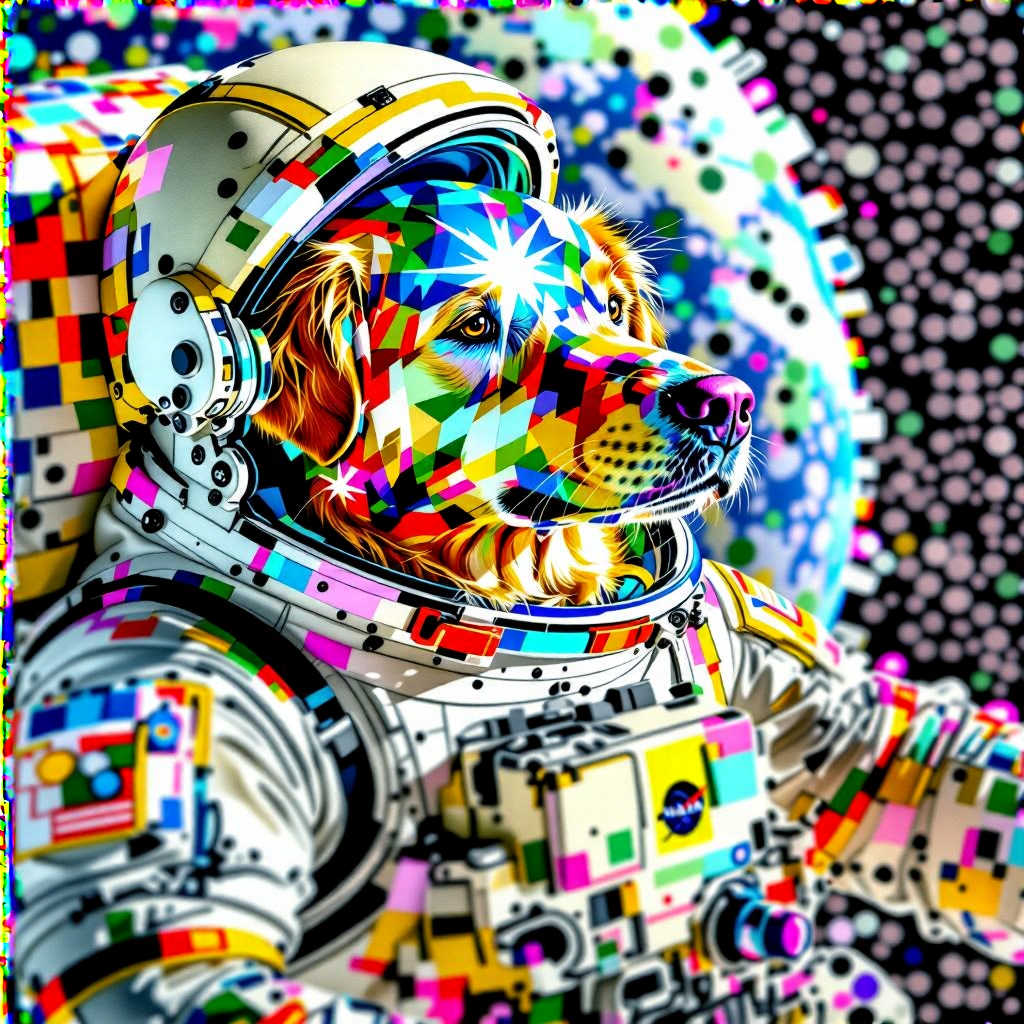
Fast also preserves the dog-in-space idea, but it pushes even harder into a close, graphic portrait. The face, helmet, and suit dominate the frame. Bright mosaic-like color blocks and bokeh replace the restrained space photograph look. The close crop gives it impact, while making the broader space scene secondary. The output is lively, but it is the least literal match for the photorealistic instruction of the three.
Prompt 2: futuristic cyberpunk city
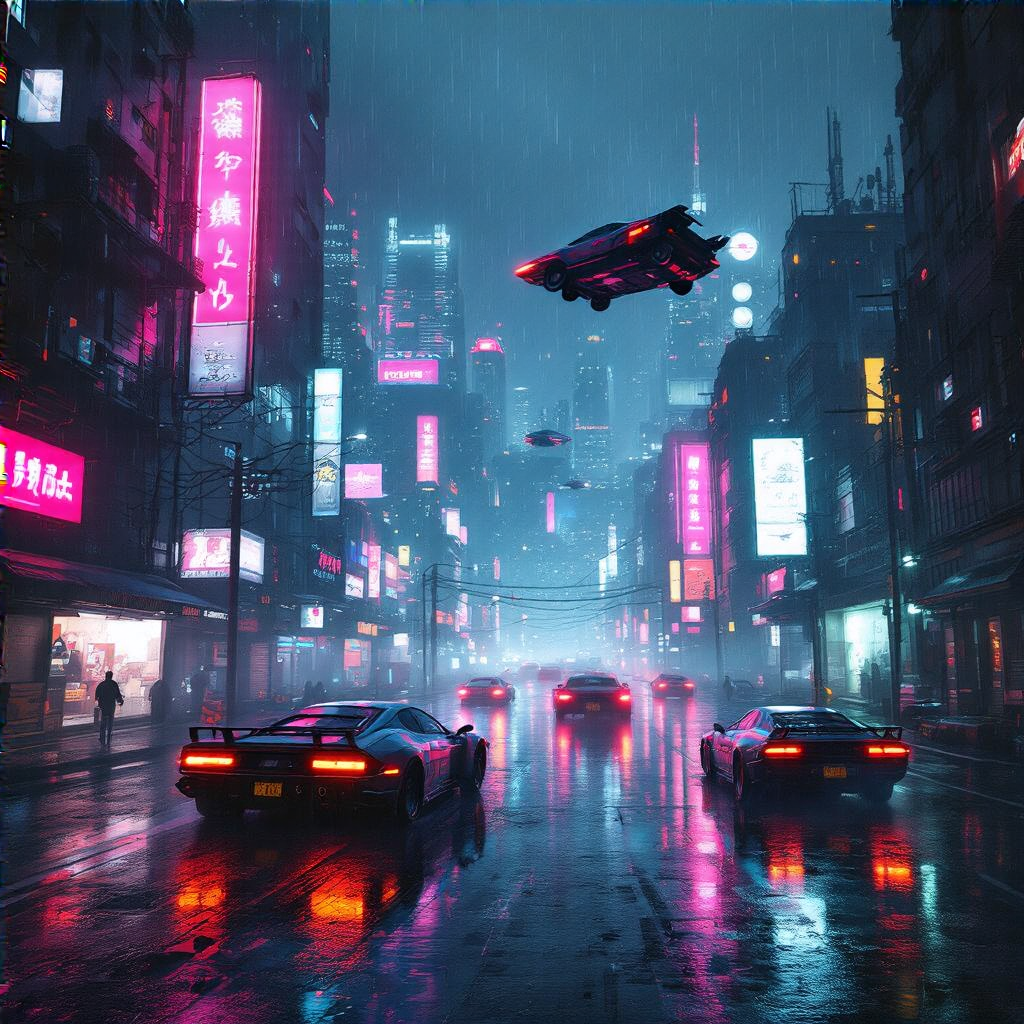
Full again delivers the most restrained result. Its rainy street has believable depth: cars occupy the foreground, smaller traffic recedes into the distance, and a hovering vehicle sits above the avenue. Cyan and magenta reflections work with the wet pavement rather than flattening it. The tall signs sell the setting, though their characters should be treated as image texture, not readable copy. The scene has a distinct camera position and a useful amount of negative space, which makes it the easiest version to adapt for an editorial hero or cinematic concept.
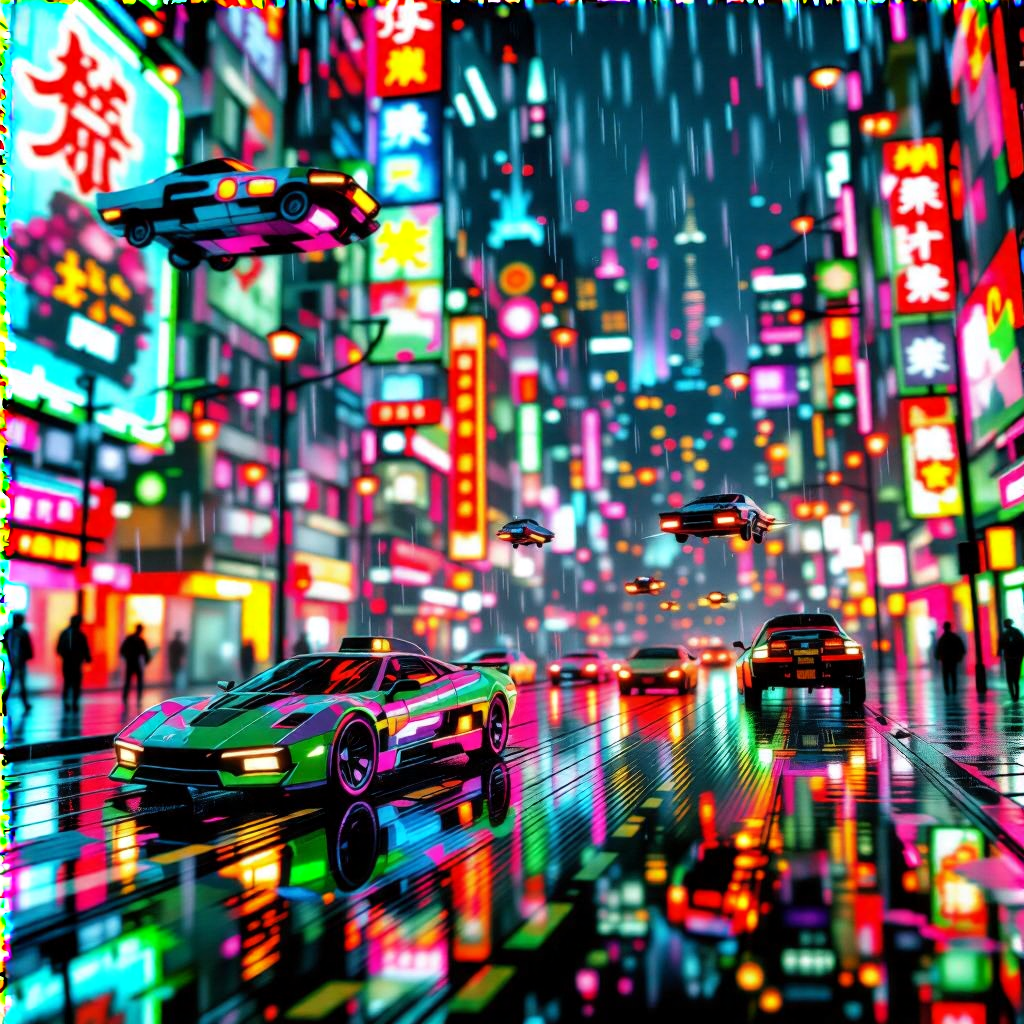
Dev takes the same ingredients into a brighter, more illustrative city. It keeps rain, flying cars, neon, and reflections, but the palette is louder and the street is packed with signs. The large foreground car adds an immediate focal point. That makes the image useful when a prompt calls for energetic key art, while reducing the grounded atmosphere seen in Full. It also shows that Dev’s middle position in the documented step count should not be mistaken for a guaranteed middle position in style.
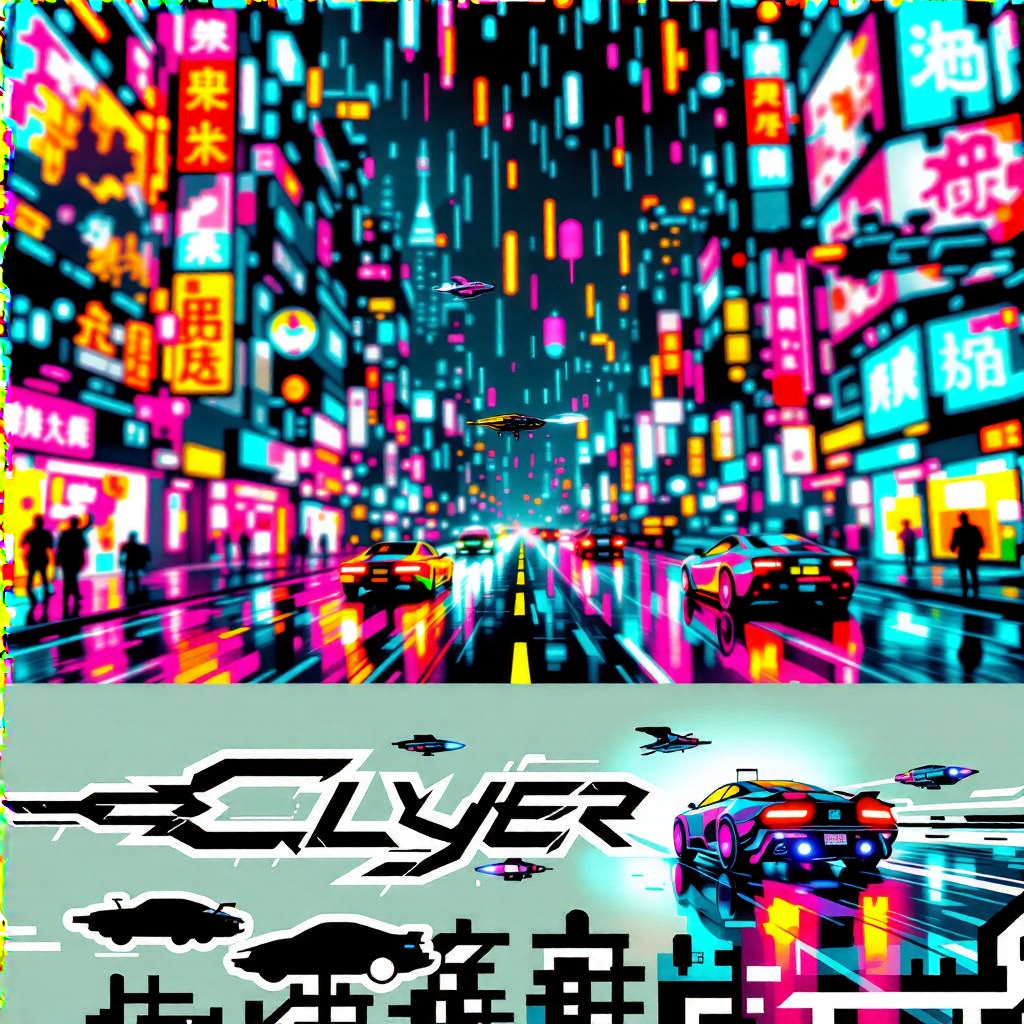
Fast generates the most graphic city result. The upper street scene has strong neon contrast, but the lower portion introduces a large banner-like zone with distorted lettering and vehicles. That makes this output a useful stress case: the prompt asks for a city, not typography, and Fast adds an element that changes the composition. The colors and road perspective are compelling, but the unexpected lower panel means it is less ready to use without iteration.
Parameters, speed, and cost
The recorded test parameters are the two prompt strings and 1024 by 1024 PNG output. The original generation records do not expose seed, sampler, guidance, Wiro queue time, run duration, or cost. Those values are therefore left blank rather than estimated. The project documentation gives one comparable upstream parameter: 50 inference steps for Full, 28 for Dev, and 16 for Fast. In a like-for-like setup, fewer steps normally means a shorter reference inference path, but hosted execution time can also depend on hardware, queueing, and platform configuration.
| Variant | Published reference steps | What these samples show | Wiro run time and cost |
|---|---|---|---|
| Full | 50 | Most literal photorealistic reading in both tests | Not recorded |
| Dev | 28 | Recognizable prompts with a stronger illustrative drift | Not recorded |
| Fast | 16 | High-impact graphic results with more composition drift | Not recorded |
When to pick Full, Dev, or Fast
Pick Full when the brief needs a realistic image, a controlled cinematic scene, or a first render that stays close to a detailed art direction. In this small test, it was the safest choice for the astronaut’s photographic lighting and the city’s spatial structure.
Pick Dev when speed matters but the project can welcome an illustrated or high-saturation result. It retained the requested subjects in both prompts, yet its visual decisions were more assertive. That can be a feature for posters and social artwork, not a flaw to hide.
Pick Fast for early ideation, mood exploration, and rapid visual branching. Its examples are memorable, but they also make the case for reviewing composition before calling an image final. If a layout must avoid invented lettering or preserve a specific style, allow room for retries.
For more focused tests, see HiDream I1 Full: 5 Prompt Tests for Structured Layouts, HiDream I1 Fast: 6 Prompt Tests, and FLUX.2 Klein Base 4B vs 9B: 5 Prompt Image Test.
Primary sources
The HiDream team publishes the family overview and reference inference modes in its GitHub repository. The HiDream-I1-Full model card on Hugging Face describes the open model and its intended capabilities. For the underlying method, read the HiDream-I1 technical report.
The short version: Full was the most dependable match for the requested realism in these six outputs. Dev made more stylistic decisions of its own. Fast produced the quickest reference configuration and the most adventurous compositions. The right choice depends on whether the next job needs predictability, graphic character, or fast iteration.