AI in Human Resources is useful when it removes repetitive production work without pretending that hiring, performance, or wellbeing decisions can be delegated to a model. This update tests a narrower, practical question: can an image model create a credible editorial visual for an HR workflow while keeping the message about human review and data minimization visible?
What this test set out to check
HR teams often need a visual for a job post, policy page, onboarding deck, or internal training session. The test was not a benchmark of candidate scoring or employee surveillance. It was a prompt-following check for one editorial scene: a diverse hiring panel reviewing anonymized profiles, with the phrases HUMAN REVIEW and DATA MINIMIZATION on a wall display. Those constraints matter because they make the image communicate an operating principle rather than a generic office meeting.
We ran the same core prompt once through Alibaba Qwen Image 3.0 Pro and once through GPT Image 2.5 Sunburst. Both images below are new model outputs uploaded to this blog; neither is linked from an expiring delivery address.
Output 1: Qwen Image 3.0 Pro

Parameters used: 2K resolution, 3:2 ratio, one image, prompt extension off, direct extension mode, thinking on, seed 41231, and a negative prompt excluding logos, watermarks, and misspelled text. The output presents five people around a table with resumes and laptops. It places both requested headings on a dark screen: “HUMAN REVIEW” and “DATA MINIMIZATION.” The smaller screen copy is not reliable prose; it reads like decorative pseudo-text. That is a useful limitation to keep in mind for policy artwork.
Qwen Image 3.0 Pro accepts a long prompt, up to three reference images, a selectable aspect ratio, a seed, optional prompt extension, and a thinking mode. In this single run, it produced the warmer, more editorial photograph-like scene and handled the two large headings. Pick it when the image needs a natural meeting-room atmosphere or when you want a repeatable direction via a seed. Do not use it as a source of legible policy copy: compose final text in your design tool after generation.
Output 2: GPT Image 2.5 Sunburst
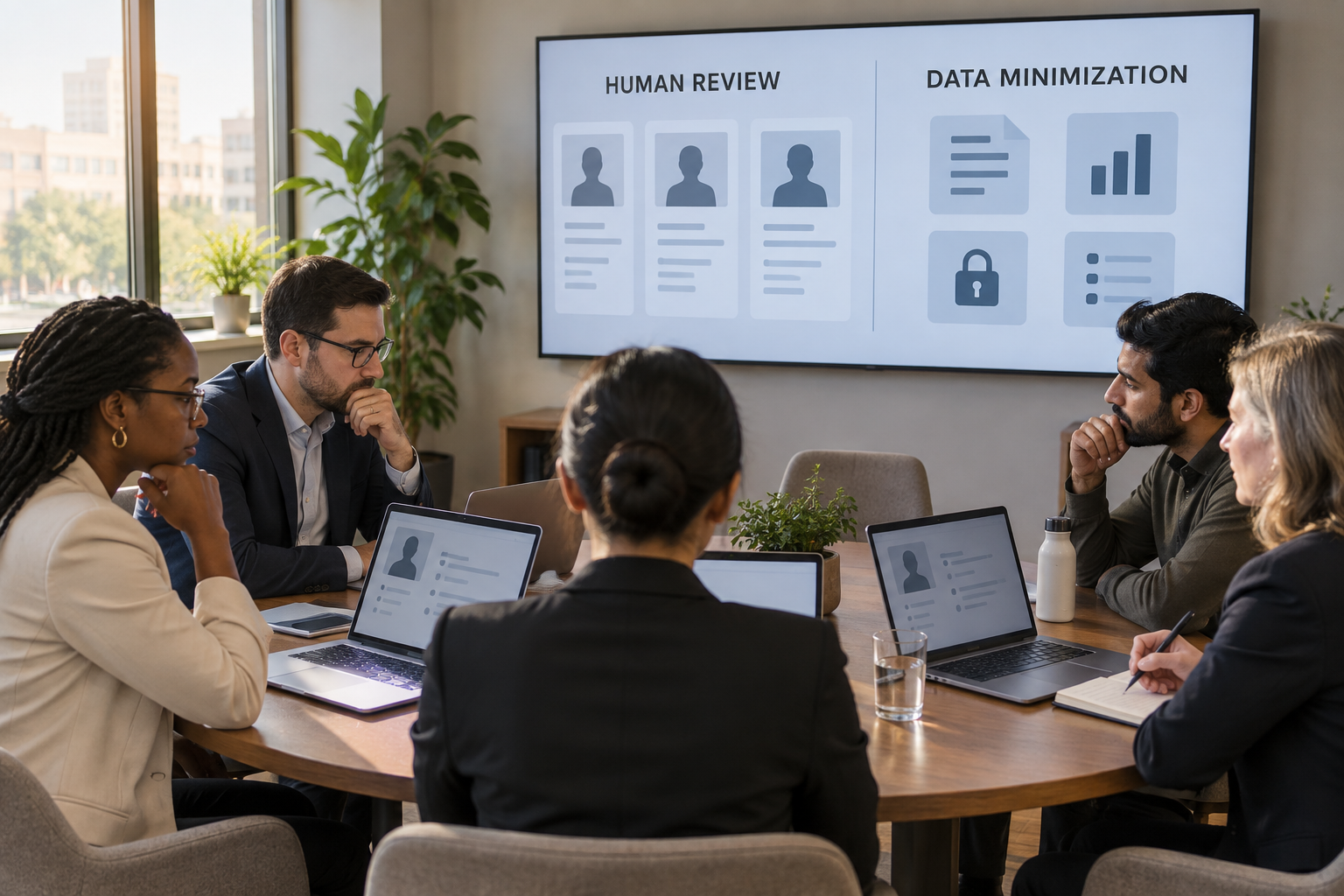
Parameters used: 1K resolution, 3:2 ratio, medium quality, opaque background, PNG output, one sample, and low moderation. This output also depicts a mixed hiring panel and makes the two requested headings cleanly readable. It interprets the wall display as a simplified interface with anonymous-profile cards, charts, a lock, and checklist symbols. That makes the governance message more immediate, although the result is more diagrammatic than the Qwen image.
GPT Image 2.5 Sunburst supports optional input images and masks, resolution tiers from 1K to 4K, quality settings, transparent or opaque backgrounds, PNG/JPEG/WEBP export, and up to ten images per run. Pick it when the visual should foreground interface-like structure, readable short headings, or a later masked edit. For a people-first editorial lead image, test it beside Qwen rather than assuming that a polished dashboard means a better HR decision process.
Run time and cost: what this run actually reported
Both Wiro tasks completed successfully and returned one PNG output. The completed task results available for these runs did not report elapsed seconds or a total cost. This article therefore does not assign a made-up time or price to either output. Resolution, quality, image count, reference-image use, and provider pricing can all affect the final charge; check the selected model’s current Wiro run configuration before committing a production batch.
How to use generative AI responsibly in HR
Use generated images and drafting tools to accelerate communication, not to make high-impact judgments. A recruiter can ask an LLM to turn role requirements into a first job-description draft, then verify the requirements, remove biased language, and approve the final text. A team can summarize anonymized feedback themes, then inspect the source sample and decide what action is fair. Candidate ranking, automated rejection, emotion inference, and attendance anomaly flags need stronger controls: documented purpose, access limits, retention rules, human appeal paths, and regular checks for disparate impact.
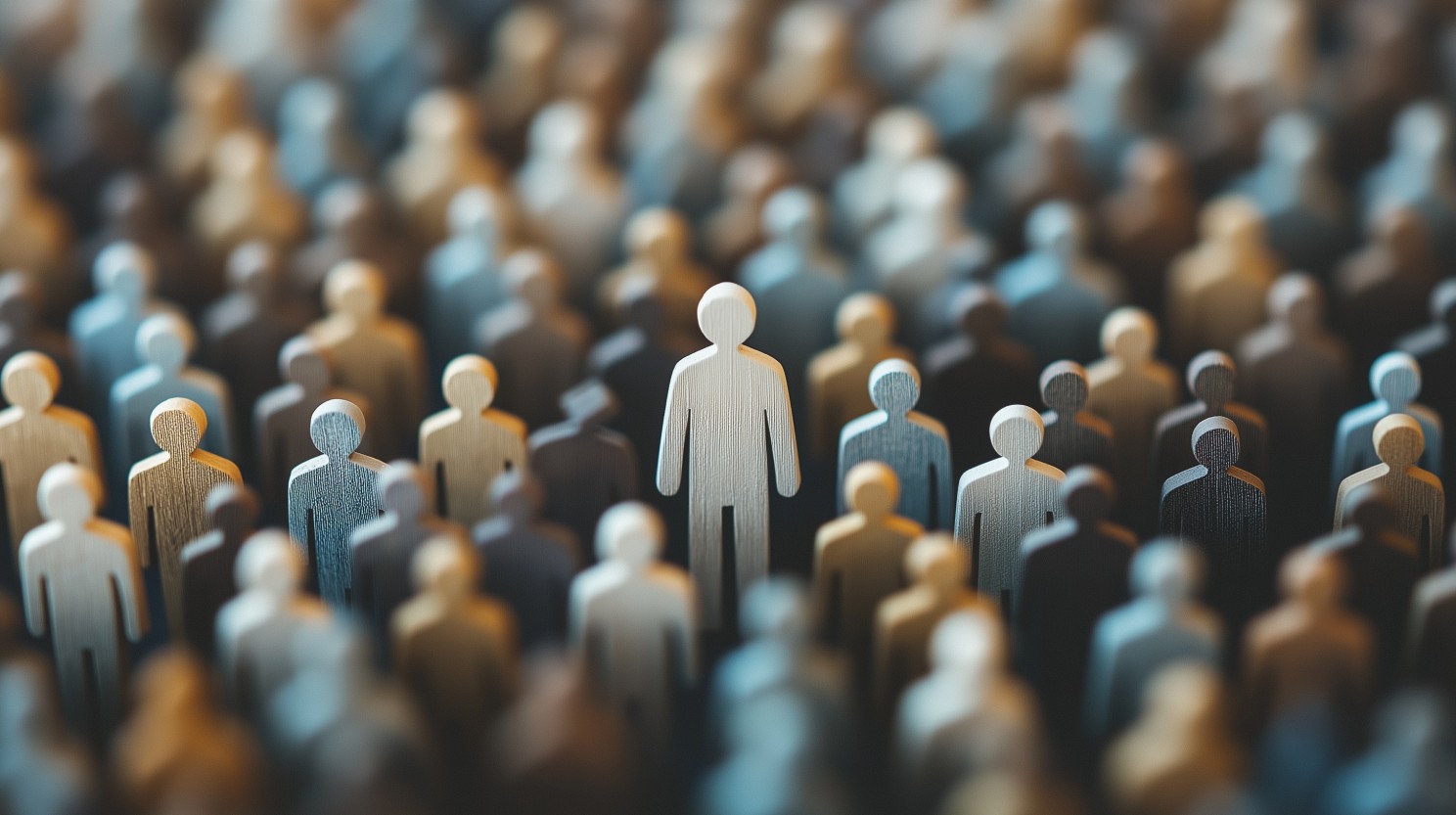
The images in this test deliberately place human review and data minimization in the frame because those are better operating habits than treating an output as a decision. An attractive visual is not evidence that an HR system is accurate, lawful, or appropriate for the people affected by it.
Model and research links
For implementation details, see the Qwen-Image GitHub repository, the Qwen-Image page on Hugging Face, and OpenAI’s image-generation announcement. Each source returned HTTP 200 when checked. These are background sources, not substitutes for testing a model in your own HR review process.
More from the Wiro blog
For related practical tests, read GPT Image 1.5: 5 Prompts for Clean Layouts, AI Agent Analytics: 7 Metrics Teams Should Track Before Scaling, and AI Agents for Follow-Ups: 6 Smart Workflows After Forms, Calls, and Demos.
Choosing a model for an HR visual
Choose Qwen Image 3.0 Pro for a realistic editorial scene, seeded repeatability, and a rich prompt that describes people, setting, and mood. Choose GPT Image 2.5 Sunburst for a structured visual, short readable headings, flexible export formats, or a workflow that may need reference images and masks. In either case, keep generated imagery separate from candidate evaluation, label synthetic materials when context requires it, and retain a human owner for the final message.
Wiro AI Team