Hunyuan Flux SRPO is the focus of this six-image test: one prompt, one output per test, with the same baseline settings wherever the image shape allowed it. The goal was not to crown a winner. It was to find the jobs this model handles well, the places where it needs help, and whether its text and material detail hold up when the brief gets specific.
Hunyuan Flux SRPO test setup
Hunyuan Flux SRPO on Wiro exposes text-to-image generation, optional image input, width and height, steps, guidance scale, strength, samples, and seed. The documentation describes the underlying model as FLUX.1 SRPO [dev], a 12 billion-parameter flow transformer. These tests used text prompts only, so the optional input image and strength control were not used.
| Setting | Value used | Why it matters |
|---|---|---|
| Steps | 20 | The documented default, used to keep all six tests comparable. |
| Guidance scale | 3.5 | The documented default; it keeps the prompt influential without turning every request into a rigid layout. |
| Samples | 1 | Each result is a single first-pass output, not a cherry-picked batch. |
| Seed | 0 | The default shown in the model documentation. |
| Canvas | 1024 px base, adjusted by subject | Landscape scenes used 1024 x 768, the portrait used 768 x 1024, and square subjects used 1024 x 1024. |
This is a practical prompt-following test, not a controlled benchmark. It checks six common production requests: short display text, product lighting, a crowded city scene, diagram-like line work, a human portrait, and transparent materials. Each prompt includes one detail likely to expose a weakness. That matters because attractive images alone do not show whether a model can follow a brief.
What the six Hunyuan Flux SRPO outputs show
1. Poster typography: readable headline, unstable small type
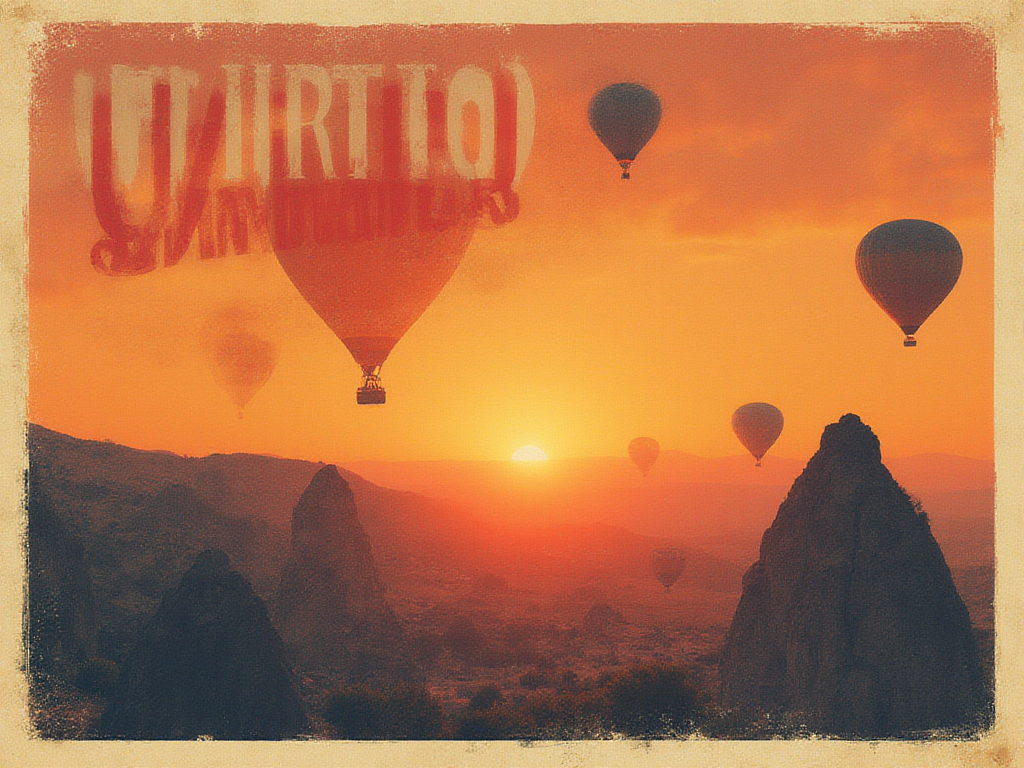
The first output puts the balloons, sunrise, and screenprint treatment into a clear poster composition. The large WIRO API headline is the strongest typography result in the set: it reads at normal viewing size and occupies the expected central area. The smaller line is less dependable, with synthetic spacing and letter shapes on inspection. Pick this approach for a concept poster or a social image with a short, replaceable headline. Do not send the output straight to print when exact spelling, kerning, or a brand typeface matters. Add final copy in a design tool.
2. Product photo: controlled highlights, unreliable product lettering
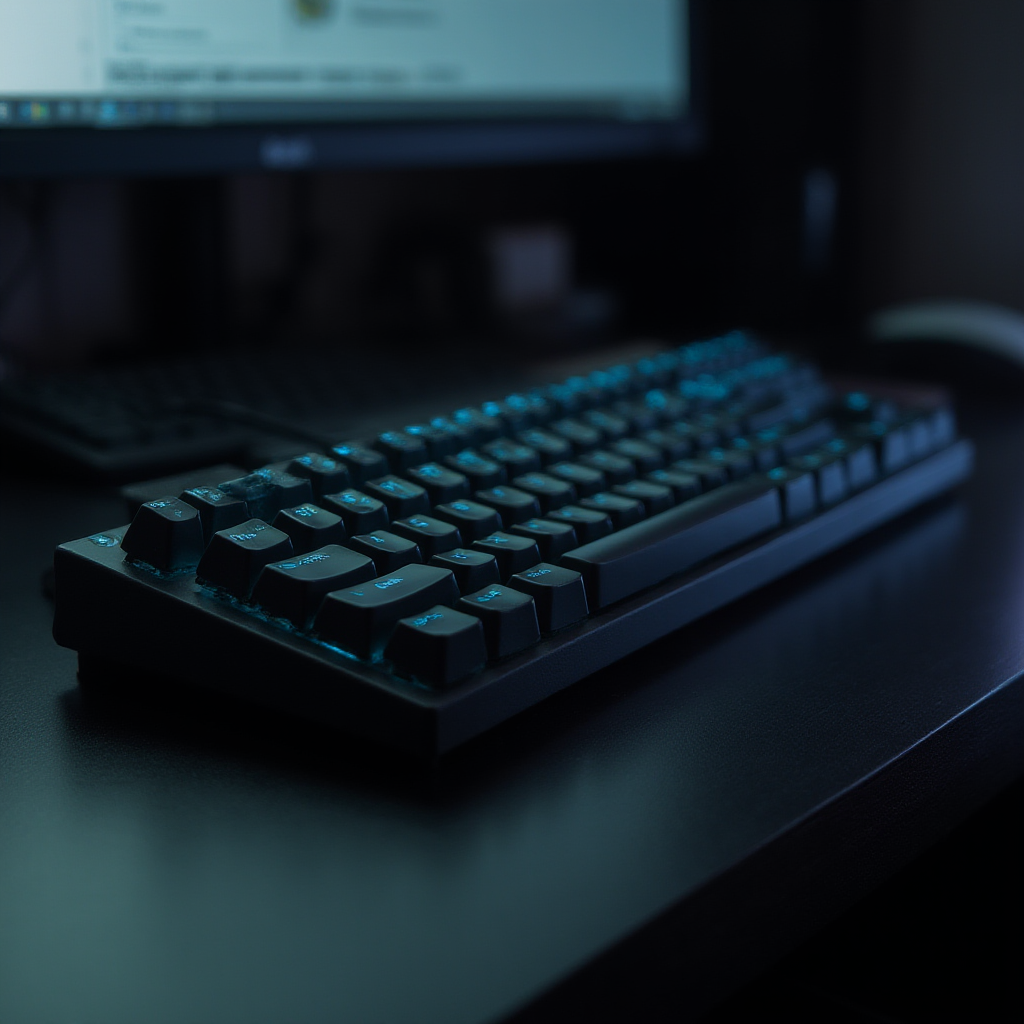
The keyboard stays recognizable as a single product instead of becoming a collection of disconnected keys. Softbox reflection on the desk and the shallow depth of field establish a credible studio-photo direction. Cyan keycaps give the request a strong color anchor. The failure is expected but still important: the individual legends are not dependable text. This makes the model useful for campaign mood boards, hero-image concepts, and fictional products. It is a poor fit for a product page that must show accurate keys, labels, ports, or regulated packaging.
3. Rainy market: scene depth survives the clutter
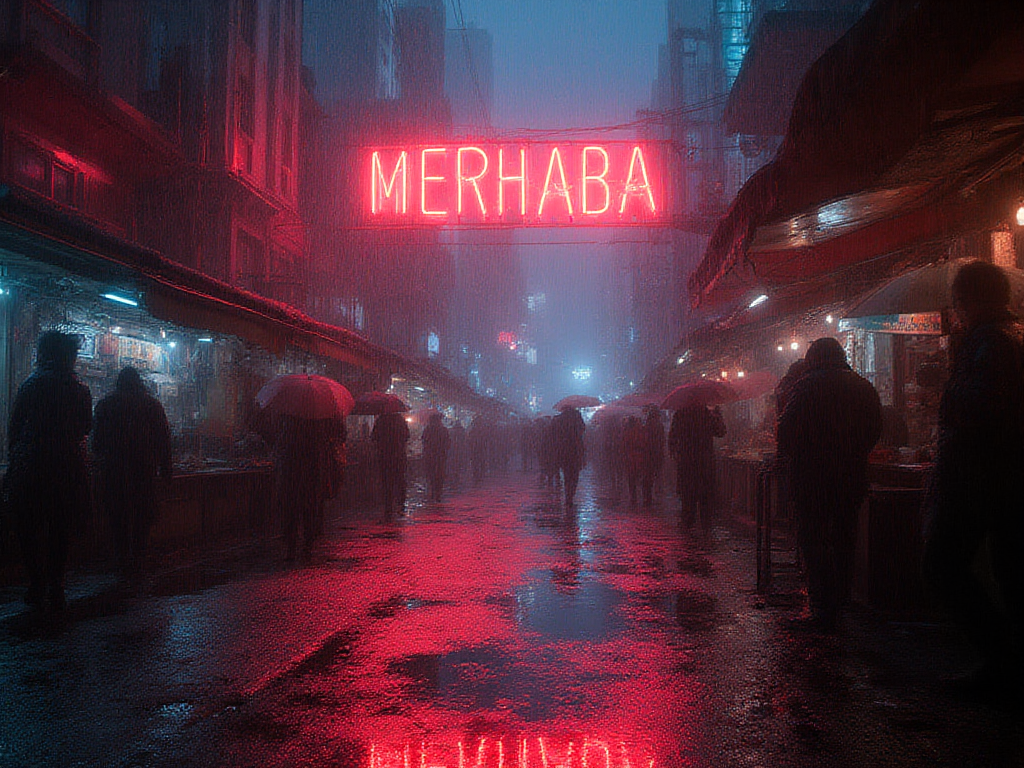
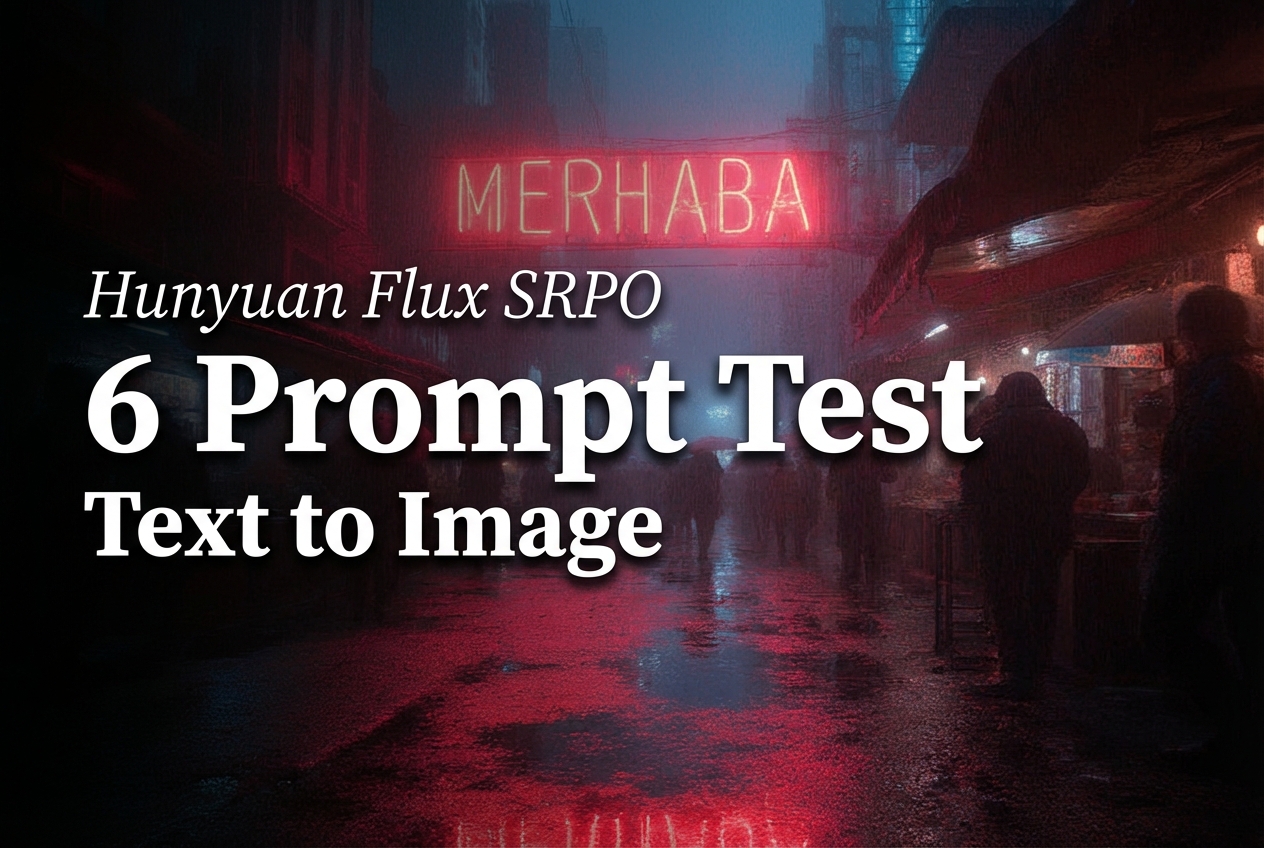
This is the best test of composition under pressure. It asks for people, umbrellas, signs, rain, puddles, reflections, depth, and a readable word in one frame. The output keeps a useful foreground-to-background structure instead of flattening into a wall of neon. The MERHABA sign lands near the requested word, though glow softens some letter edges. Choose Hunyuan Flux SRPO for atmospheric establishing shots where mood and depth matter more than literal signage. If the sign carries a location, offer, or safety message, replace it after generation.
4. Technical diagram: clean shapes, but not dependable labels

The model follows the white-background and isometric-illustration direction better than the label requirement. Lines remain clean, object groups stay separated, and the visual language does not drift toward photorealism. That makes it a workable starting point for a slide illustration or blog art. It does not make a finished architecture diagram. GPU, API, and DB must be checked or rebuilt as actual vector text. Teams that need precise topology, correct arrows, or repeatable symbols should use a diagramming tool first and treat generated art as decoration only.
5. Portrait: coherent face and lighting, slightly polished skin
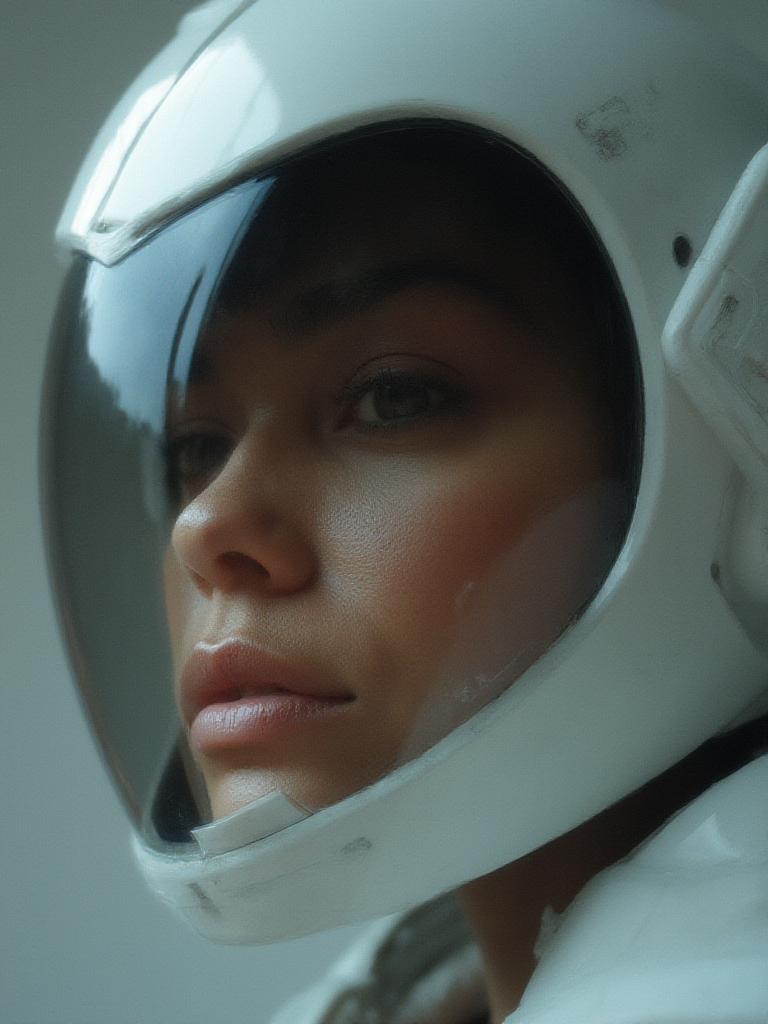
The portrait keeps the face, visor, rim light, and neutral background aligned with the request. The vertical crop gives the result room to read as a portrait rather than a fashion-wide shot. Skin and visor reflections are coherent at normal size, although small texture areas look smoother than a close camera photograph. Pick this model for character concepts, editorial art, and early visual direction. Avoid using an output as evidence of a real person, or as a product image where fine cosmetic, eyewear, or medical detail must be accurate.
6. Glass chess set: believable form, failed micro-engraving

The hard test asks for transparent geometry, reflections, caustics, and tiny text on a small surface. The chess pieces retain a believable glass-like read and the black table supports the dramatic lighting. The engraved FLUX text does not stay truly readable. That distinction is useful: Hunyuan Flux SRPO can sell the idea of glass and reflective luxury, but not a legible serial number or engraving. Use it for concept imagery and replace any small mark in post-production.
Run time and cost shown in the Wiro docs
The model documentation includes a completed example task with one PNG output. Its task record shows 6.0000 elapsed seconds and a total cost of $0.003510000000. That is the only run-time and cost figure available in the documentation reviewed for this post, so it should be treated as an example rather than a promise for every request. Queue time, output shape, steps, and worker availability can change the total. This post did not run a new paid batch, so it does not claim a new measured average.
For context on the FLUX family behind the documented FLUX.1 SRPO [dev] description, see the official Black Forest Labs FLUX repository. It provides the project’s open inference material and links to the FLUX.1 model family. The link returned HTTP 200 when checked for this update.
When to choose Hunyuan Flux SRPO
Choose Hunyuan Flux SRPO when the brief depends on lighting, scene mood, a clear subject, or a coherent art direction at a 1024-pixel base. The product image, night market, portrait, and chess set all show it can carry a focused visual idea without collapsing the central subject. Start with the documented defaults: 20 steps, 3.5 guidance, one sample, and a canvas that matches the placement. Change one variable at a time when iterating, especially aspect ratio.
Choose another workflow when exact text is the asset. The six tests agree on that point: a short headline can work, but small labels, legends, and engraving are not production-safe. For those cases, generate the art without essential copy and add it later. The same rule applies to diagrams with factual labels and product images where each key, button, or package claim must be true.
Readers comparing text rendering can also see LongCat-Image multilingual text rendering in six tests. For a separate speed-oriented FLUX-family comparison, read FLUX.2 Klein Base 4B vs 9B. For a different Tencent model and a panoramic use case, see HunyuanWorld text-to-panorama tests.
Run Hunyuan Flux SRPO on Wiro with one of the six prompts, then judge the result at the final placement size. That is where readable copy, product detail, and small reflective artifacts either hold up or need a second pass.