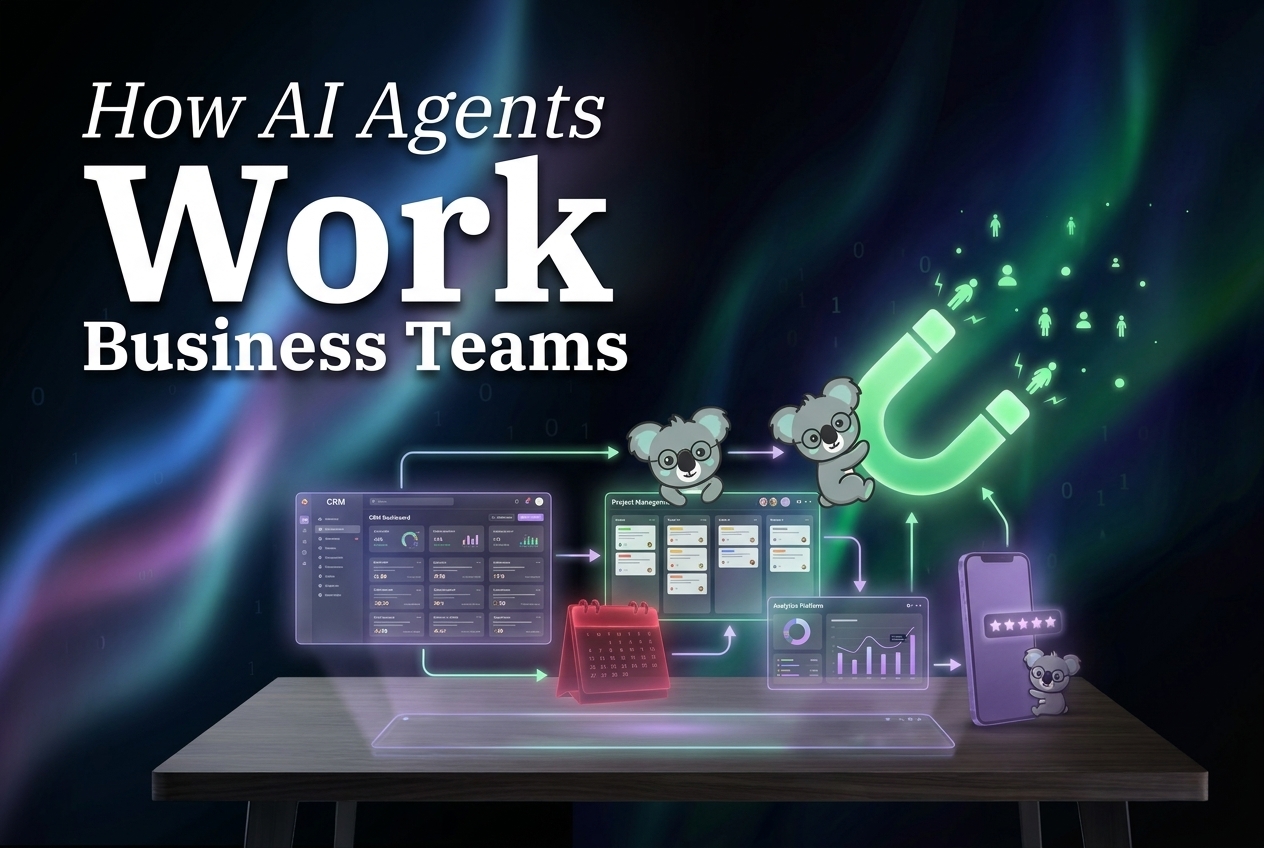
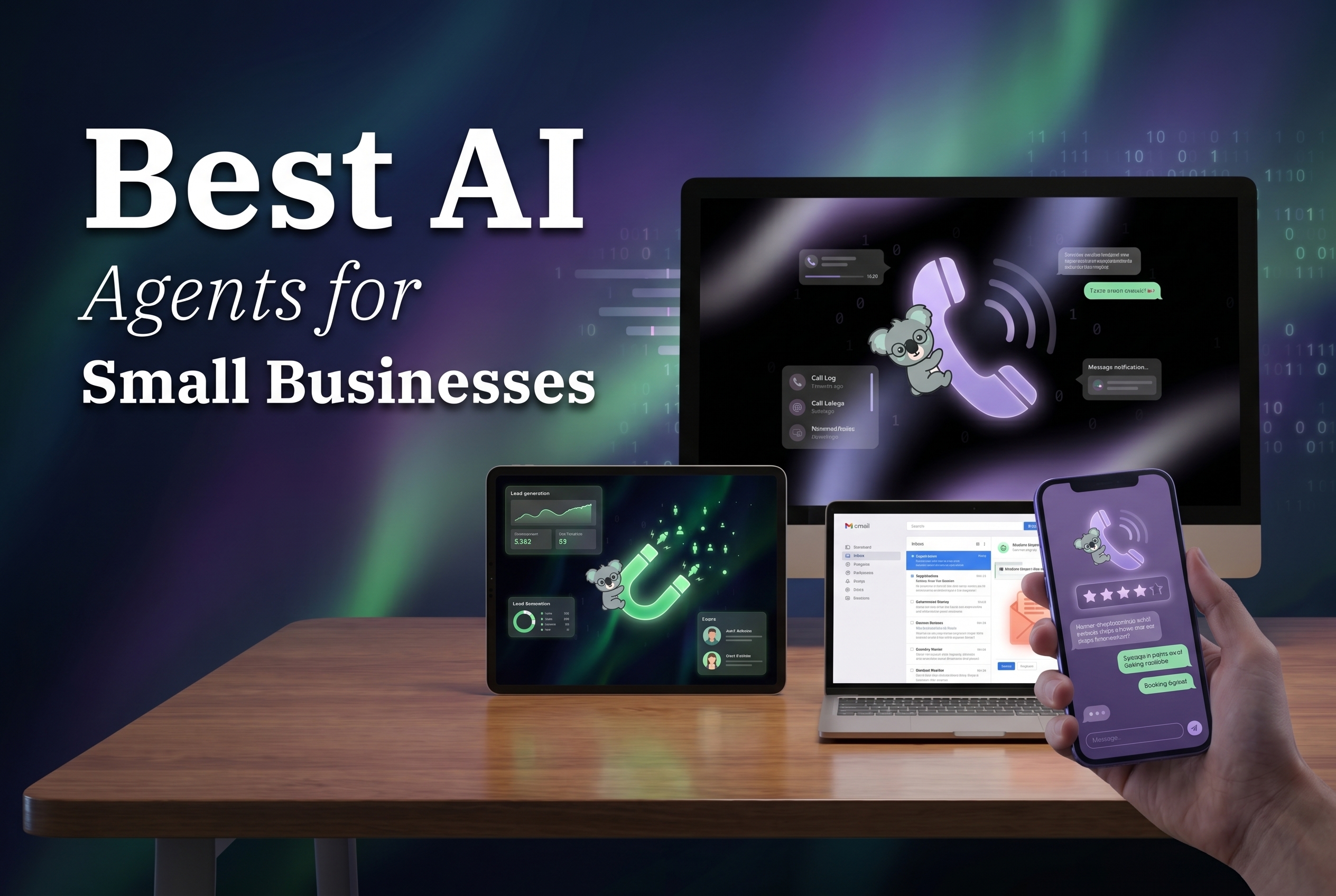
One AI agent for small businesses is often a better first move than buying ten separate AI tools. Small teams do not usually have a tooling problem. They have a workflow problem. The right first agent removes one repeated delay that costs time or money every week.
That is why the first decision should be about bottlenecks, not features. The team should ask which queue leaks the most value right now.
Why one AI agent for small businesses matters
Every extra tool creates setup, training, and handoff overhead. That overhead hits small teams harder than larger ones. One AI agent for small businesses works because it starts from the workflow that matters most and avoids unnecessary software sprawl.
The useful first agent might cover calls, lead capture, reviews, content, or basic lifecycle messaging. The exact choice matters less than picking one problem and solving it well.

Where the first agent should start
Start with the workflow that leaks money or creates the most repeated delay. For some businesses that is missed calls. For others it is lead follow-up, review response, or content that never ships. The best first agent sits at that pressure point.
- Front-desk and call coverage
- Lead capture and follow-up
- Review monitoring and reply prep
- Newsletter or lifecycle messaging
- Content production for growth
Once that first workflow proves value, the team can decide whether a second agent is worth it.
What small teams should avoid
The biggest mistake is buying a stack before the first workflow works. That creates more glue work, more subscriptions, and more confusion. Small teams should also avoid vague AI promises that do not map to a real daily task.
This is where pre-built agents help. They shorten the path from need to deployment and make it easier to learn what the business actually needs next.

How Wiro fits the first-agent decision
Wiro fits well because Browse gives small teams a menu of clear business workflows instead of one generic AI promise. Voice, lead generation, content, review support, and other paths are already framed as operating jobs.
That reduces the setup burden and makes it easier to pick one agent that actually matches the business bottleneck.
What to measure after launch
Measure time saved, missed opportunities recovered, response speed, and how much manual coordination disappears from the chosen workflow. Then check whether the team can stay lean without dropping service or growth work.
One AI agent for small businesses is enough when it removes a real weekly drag and proves the workflow can run better with less handholding. Compare Wiro’s options in Browse and keep rollout grounded with NIST AI RMF.