
Flux LoRA Fast was tested here for one narrow job: can a LoRA-driven Flux workflow make six distinct subjects feel like they belong to the same run of vintage matchbox labels? The target was not photorealism. It was repeatable packaging-style art with limited inks, an ornate frame, centered subjects, and wear that reads as printing rather than random noise.
Flux LoRA Fast on Wiro accepts a selected LoRA, a prompt, steps, guidance scale, sample count, seed, and output dimensions. That matters for a style test: the LoRA carries much of the visual identity, while the subject description still has to preserve a clear silhouette and a useful composition.
Flux LoRA Fast test setup
Every image used the same LoRA token, <lora:Vintage-Matchbox-Flux:1.0>, and a different subject. The purpose was to separate style consistency from subject handling. Each request generated one 1024 by 1024 image at 20 steps, guidance scale 3.5, and a random seed. Those are the documented defaults for this Wiro model. No image was manually retouched after generation.
| Setting | Value used | Why it matters |
|---|---|---|
| LoRA | Vintage-Matchbox-Flux at 1.0 | Pushes the base image model toward the label style. |
| Steps | 20 | A practical speed/detail setting for a first packaging pass. |
| Guidance scale | 3.5 | Keeps the prompt influential without forcing every detail too hard. |
| Size | 1024 x 1024 | Large enough to inspect borders, grain, and small shapes. |
| Samples | 1 per prompt | Shows a single honest result rather than a hand-picked batch. |
| Seed | Random | Tests whether the style holds across independent compositions. |
Flux is the family name behind the workflow, not a guarantee that every generated word or tiny ornament will be correct. Black Forest Labs describes FLUX.1 [dev] as a 12B-parameter rectified-flow transformer, and its official Hugging Face model card points to an open reference implementation. The relevant lesson for this test is simpler: strong prompting and a style adapter can give a fast visual direction, but a label intended for print still needs a human check for type, borders, and brand claims.
What the six outputs actually show
1. Koi fish: energetic subject, slightly busy frame
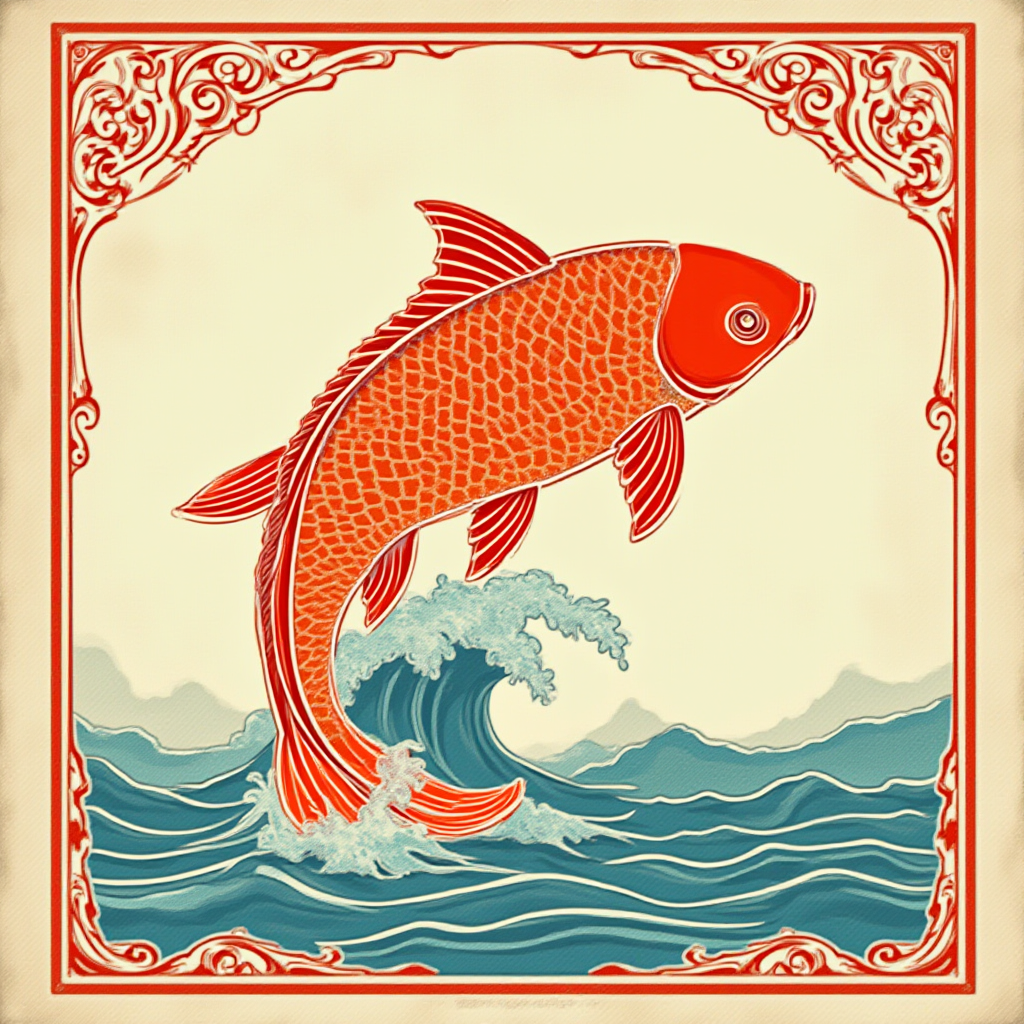
The koi stays the visual center, while the wave supplies movement without turning the composition into a full landscape. The border, reduced palette, and rough ink texture arrive together, which is the key success of this sample. It is a little busier than a real small-format label: a production designer would likely reduce the wave detail and reserve more blank space around a product name. Still, it proves that a living subject can retain the matchbox treatment.
2. Rocket launch: the clearest small-format composition

This is the strongest result for packaging logic. The rocket creates a simple vertical read, and the smoke plume uses negative space rather than fine detail. The decorative frame supports the image instead of competing with it. It also shows why object selection matters: a single strong silhouette lets the LoRA spend its visual budget on texture, color separation, and period cues. For a fast label concept, this is the output to emulate.
3. Coffee cup: best proof of everyday-object readability

The cup and saucer read immediately, even at reduced size. That is useful for café packaging, stickers, or a small event mark. The warm palette stays coherent and the steam adds just enough motion. The limitation is also clear: this output is illustration, not typography. Any real product name, roast detail, or legal copy should be added afterward in a design tool, not left to the generation.
4. Cactus at night: good style lock, looser rendering

The cactus, moon, and horizon give the model more scene elements to balance. It keeps the border and aged palette, but the interior feels more painterly than the other five. That is not a failure; it shows the tradeoff. Ask for a complete environment and Flux LoRA Fast may relax the hard-edged label language. For a stronger matchbox result, simplify this prompt to one cactus, one moon, and a flat horizon.
5. Bridge and skyline: silhouette carries the idea
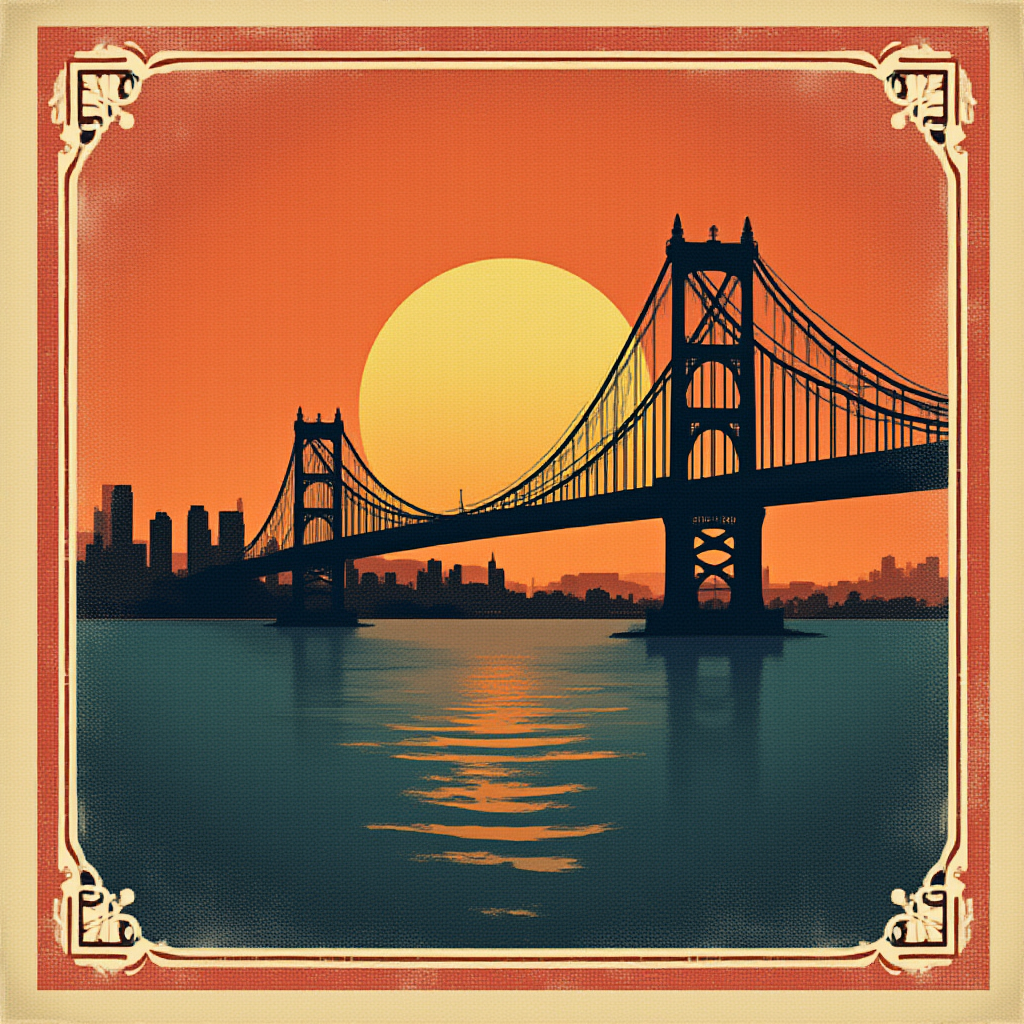
This prompt asks for a wider scene, but the bridge and skyline remain legible because the prompt explicitly calls for silhouette and simplified geometry. The halftone and limited inks help it resemble a printed souvenir label rather than a digital sunset. It would suit a city campaign or event badge, although a client who needs an accurate landmark should supply a reference image or finish the art manually.
6. Arctic fox: clean character art with a useful palette
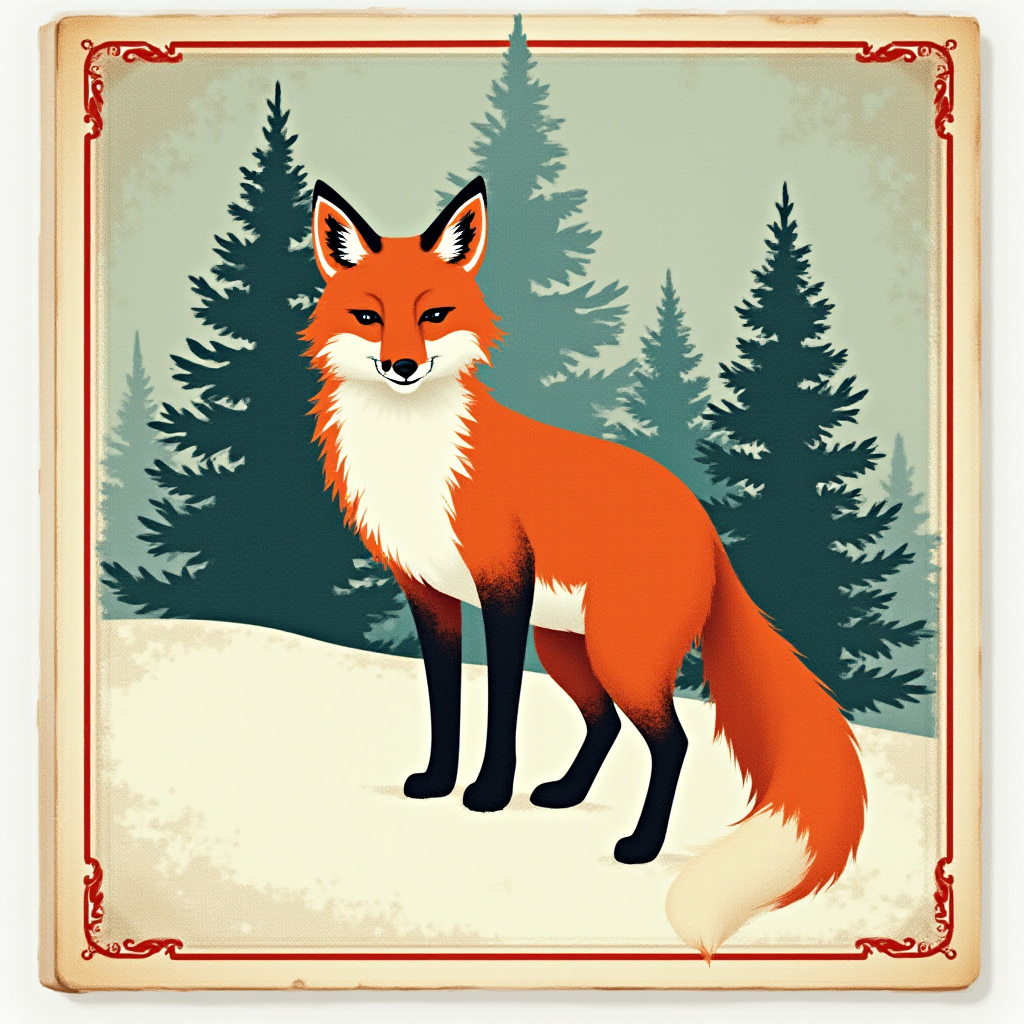
The fox is recognizable at once, and the cool colors make the snowy theme obvious without depending on a detailed background. The framing and linework stay close to the intended style. This is a good template for animal marks: name one dominant creature, keep the background secondary, state the palette, and ask for a centered composition. Fine fur detail is not the goal here, so the graphic simplification is a benefit.
Run time and cost on Wiro
The Wiro documentation includes a completed 1024-square sample with the same 20 steps, guidance 3.5, and one sample. Its recorded elapsed time is 6 seconds and its reported total cost is $0.003510. That is a documented example, not a price promise: queue time, selected settings, and platform pricing can change. For this six-image test, the comparable documented rate would imply roughly 36 seconds of generation time and $0.02106 before any retries, if each run matched that sample.
The speed is the reason to choose this workflow for exploration. Generate a small set of clean concept directions, select one, then refine the prompt or rebuild it as vector artwork. It is not the right last step for regulated packaging, exact product text, or a logo that must be legally distinct.
When to pick Flux LoRA Fast
Pick Flux LoRA Fast when a project needs a coherent visual style across many quick concept prompts. It works best here with one main subject, a restricted palette, explicit print texture, and clear composition language. The rocket, cup, and fox are the most reliable pattern: a simple icon-like subject plus a specific style brief.
Choose a slower, reference-led editing workflow when accurate lettering, fixed layout, or brand-safe placement matters more than speed. For a broader look at Flux model tradeoffs, see FLUX.2 Klein Base 4B vs 9B and Flux Kontext Max Multi. The official FLUX inference repository is also useful for readers who want to understand the open reference tooling behind the model family.
Try Flux LoRA Fast on Wiro for a fresh label brief, then treat the best output as a design direction rather than finished production artwork.