
Chatterbox Multilingual voice cloning is useful only if a reference voice still feels usable when the script, pacing, and language change. This six-output test keeps one reference clip fixed, then changes language, delivery, and guidance settings. The point was not to crown a winner from a few clips. It was to make the controls and trade-offs concrete.
What Chatterbox Multilingual voice cloning was tested for
Chatterbox Multilingual on Wiro accepts optional reference audio, text, a language selector, and four generation controls. The docs list 23 language choices: Arabic, Danish, German, Greek, English, Spanish, Finnish, French, Hebrew, Hindi, Italian, Japanese, Korean, Malay, Dutch, Norwegian, Polish, Portuguese, Russian, Swedish, Swahili, Turkish, and Chinese. The same reference clip was reused for all six outputs, so changes come from the target text and settings rather than a new speaker source.
The test probes three practical questions. First, can a neutral English service line stay controlled at the default-style settings? Second, what changes when the script asks for more dramatic delivery? Third, does setting cfg_weight=0, the documented language-transfer setting, provide a sensible baseline for Turkish, Japanese, and Spanish with the same cloned voice?
exaggeration controls expressiveness from 0.25 to 2.0; 0.5 is the documented neutral value and high values can become unstable. cfg_weight controls guidance and pace; 0.5 is the balanced recommendation, while 0 is the documented setting for language transfer. temperature controls variation. These are short scripts by design: pronunciation, pauses, number wording, and unintended continuation are easier to inspect when the listener has a clear target.
What the six outputs show
1. English support script: the controlled baseline
Text: Thanks for calling support. Please confirm the last four digits of the order number. Then say the delivery city.
Parameters: language=en; exaggeration=0.5; cfg_weight=0.5; temperature=0.8; top_p uses the documented default of 1.0.
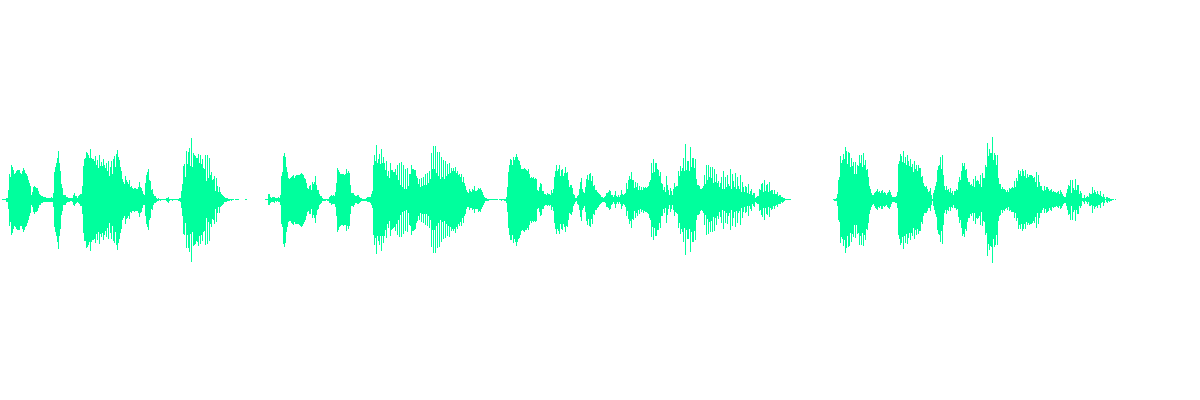
This is the reference point for the rest of the page. It asks for ordinary transactional speech, including a number-related instruction and a handoff between two sentences. Use this setting first for support calls, product explainers, or any case where steady pacing matters more than performance.
2. English podcast intro: pacing under denser phrasing
Text: Welcome back to the show. Today: why latency makes voice apps feel broken. Three quick points: timing, pauses, and turn taking.
Parameters: language=en; exaggeration=0.5; cfg_weight=0.4; temperature=0.8; top_p=1.0.
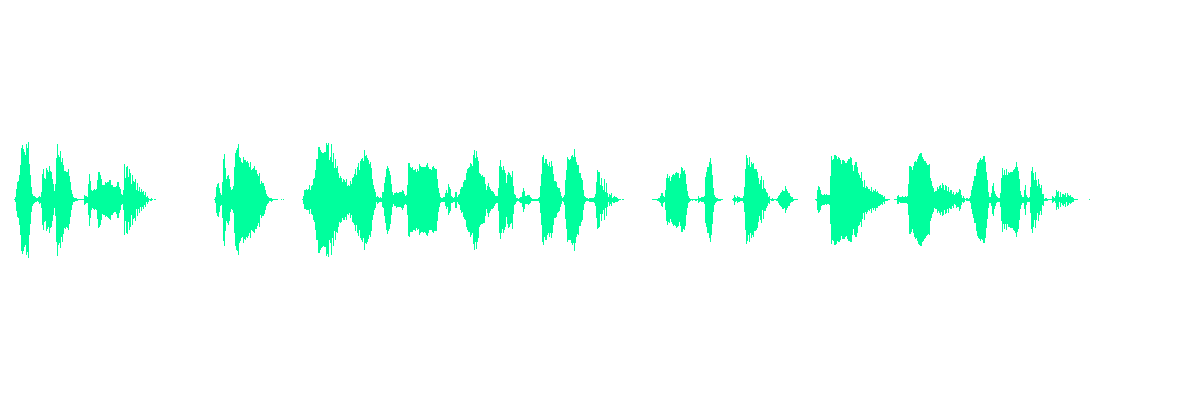
The lower guidance value tests whether a slightly looser pace suits a spoken intro. The punctuation and colon make this a useful listen for pause placement. It is not a latency benchmark: the clip is short and the recorded task time includes platform work around synthesis.
3. English emotional line: controlled expressiveness
Text: I should have called sooner. The silence made things worse. Please pause. Then say this line slowly: I am sorry.
Parameters: language=en; exaggeration=1.2; cfg_weight=0.3; temperature=0.9; top_p=1.0.
This is the stress test for the model’s signature control. Exaggeration rises from 0.5 to 1.2, guidance drops to 0.3, and temperature rises to 0.9. That combination is appropriate when a read needs more character, but it also deserves a human listen before publication. The model documentation warns that extreme exaggeration can become unstable.
4. Turkish: cross-language transfer baseline
Text: Merhaba. Bu test ayni sesi Turkce konusturuyor. Lutfen siparis numarasinin son dort hanesini soyle. Sonra teslimat sehrini soyle.
Parameters: language=tr; exaggeration=0.6; cfg_weight=0; temperature=0.8; top_p=1.0.
For a different target language, cfg_weight=0 is the meaningful variable here. The model docs call it the language-transfer setting. Listen for whether the cloned speaker identity remains useful without carrying the source accent too strongly into Turkish. The script includes a four-digit-order instruction to make pronunciation worth checking rather than relying on a greeting alone.
5. Japanese: a different writing system and rhythm
Text: こんにちは. このテストは同じ声で日本語を話します. 注文番号の下4けたを言ってください. それから配達先の都市を言ってください.
Parameters: language=ja; exaggeration=0.55; cfg_weight=0; temperature=0.8; top_p=1.0.
Japanese adds a stronger test of text handling and language rhythm than the Latin-script tests. The parameters remain close to neutral, with only a small lift in exaggeration. This output is a better fit for localization review than for judging raw emotional range: check phrasing, number reading, and whether a native speaker accepts the cadence.
6. Spanish: concise customer-service localization
Text: Hola. Este test usa la misma voz en espanol. Di los ultimos cuatro digitos del pedido. Luego di la ciudad de entrega.
Parameters: language=es; exaggeration=0.55; cfg_weight=0; temperature=0.8; top_p=1.0.
This final output repeats the same operational intent in Spanish. It gives a direct check on cross-language reuse for a common support pattern. It should not be treated as proof that every locale needs no review. Brand names, addresses, product vocabulary, and regional variants still need a native-speaker pass.
Run time and cost per output on Wiro
| Output | Recorded task elapsed time | Cost shown in available run data |
|---|---|---|
| English support | 44 seconds | Not shown |
| English podcast | 10 seconds | Not shown |
| English emotion | 7 seconds | Not shown |
| Turkish transfer | 10 seconds | Not shown |
| Japanese transfer | 9 seconds | Not shown |
| Spanish transfer | 10 seconds | Not shown |
The available records expose elapsed task time for these six runs, but neither the Wiro model documentation nor the records used for this post show a per-output price. No cost has been inferred from another task, model, or platform. The first run is also an outlier, so this small set should not be read as a guaranteed latency figure.
When to pick Chatterbox Multilingual
Pick Chatterbox Multilingual when one reference voice must travel across multiple supported languages and the project can include listening review. Start near exaggeration 0.5 and cfg_weight 0.5 for ordinary English. For a more expressive read, raise exaggeration carefully and lower guidance slightly. For a new target language with the same reference voice, start at cfg_weight 0, then adjust only after reviewing native pronunciation and accent transfer.
Choose a language-specific model instead when a particular locale, dialect, or specialized vocabulary matters more than one-voice coverage across markets. Choose a low-latency English-only model when real-time turn taking is the priority. For broader agent workflow context, see Realtime Voice Conversation: 3 Smart Wiro Setups in 2026, Realtime Speech to Text: 3 Smart Wiro Models in 2026, and AI Receptionist for Missed Calls: 6 Smart Intake Wins.
Source notes
For model-family details and supported deployment options, see Resemble AI’s Chatterbox page, the official Chatterbox GitHub repository, and the ResembleAI Chatterbox model card on Hugging Face. All three sources were reachable when this update was prepared.