ERNIE-Image-Turbo was tested with five prompts that put clean composition ahead of spectacle. The set asks a practical question: can a fast image model keep a single visual idea readable when lighting, materials, depth, or a crowded scene add pressure? These are preserved outputs from the original test, not a benchmark or a claim that one seed predicts every result.
ERNIE-Image-Turbo test setup
The five prompts deliberately move from controlled commercial work to a dense street scene. The cyclist checks depth and backlight. The skincare bottle checks reflections and material separation. The glass pavilion checks geometry against atmosphere. The neon alley checks color control and wet surfaces. The ramen-stall prompt is the hard case: several people, bowls, steam, signs, reflections, and an explicit request for legible text compete for the same frame.
The current Wiro model page documents a text prompt, optional negative prompt, inference steps, guidance scale, sample count, prompt enhancer, width, height, and seed. Its defaults are 8 steps, guidance scale 1.0, one sample, prompt enhancement on, 848 by 1264 pixels, and seed 0. The five stored images are 848 by 1264 portrait outputs, which matches that listed image size. The historical task records were not saved with this post, so the exact seed, negative prompt, prompt-enhancer setting, wall-clock time, and charge for each of these five images cannot be recovered honestly.
Eight steps are the point of this Turbo release. Baidu describes it as a distilled ERNIE-Image model aimed at fast generation and stronger aesthetics at 8 inference steps. The official ERNIE-Image announcement, the Hugging Face model card, and Baidu’s open-source repository were checked before this update. Each returned HTTP 200.
What the five ERNIE-Image-Turbo outputs show
1. Cyclist in a covered market: depth and backlight
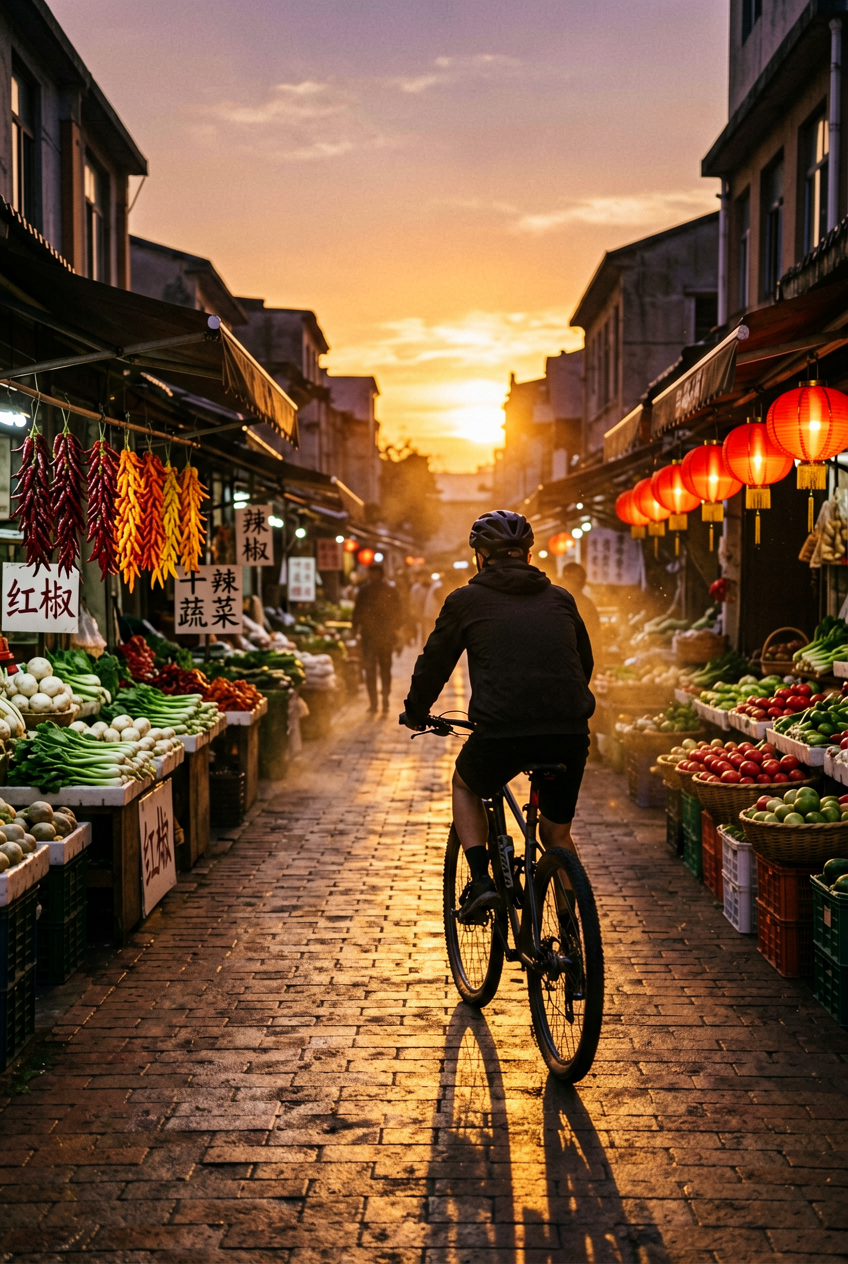
This is the clearest result in the set. The cyclist gives the image one obvious anchor, while the tiled ground, market roof, pedestrians, and diagonal light beams create depth behind it. The visual hierarchy stays intact: subject first, route second, atmosphere third. The output also makes the prompt’s warm amber palette legible without turning every surface orange. It is a good example of why a clear subject plus one lighting instruction often works better than a long list of objects.
2. Skincare bottle on black marble: commercial restraint
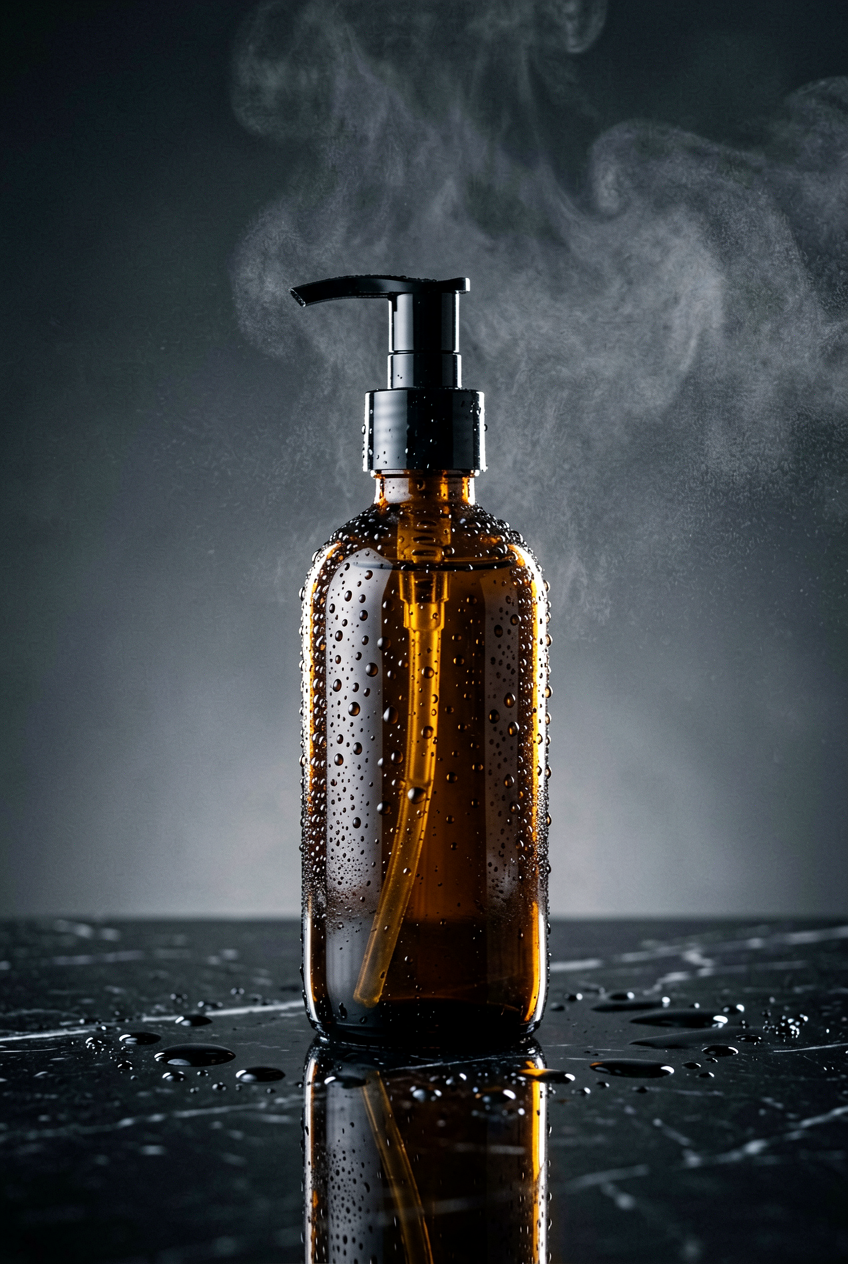
The bottle image has the most useful commercial composition. The black marble, droplets, mist, and rim light give the scene texture, but the prompt limits the number of competing objects. That restraint matters. The product remains the focal point and the reflections support it instead of becoming a separate scene. This is the kind of output to choose for an early product-concept board, a landing-page hero draft, or a social mockup where the product identity can still be replaced with approved artwork later.
3. Glass pavilion in the desert: geometry against atmosphere
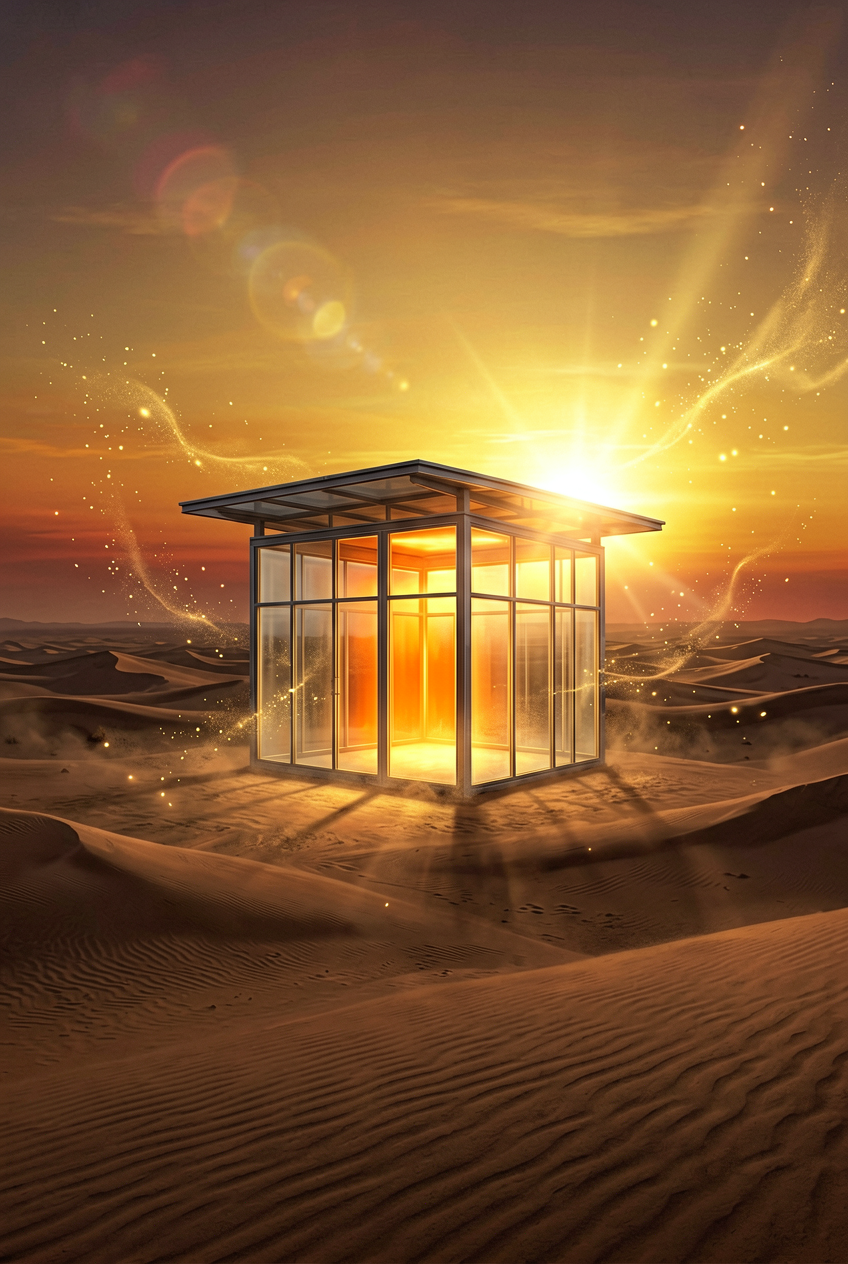
This prompt tests whether a designed structure survives a soft, dusty environment. The pavilion remains the central shape, while the sunset and suspended dust provide scale and mood. The result reads as concept art rather than a construction visualization, which is the right reading for the wording used. It would fit an architecture mood board, a game-world pitch, or an editorial illustration. It should not be treated as evidence that the model can follow measured architectural plans or preserve exact glass-panel geometry.
4. Neon alley with a red umbrella: color and surface cues
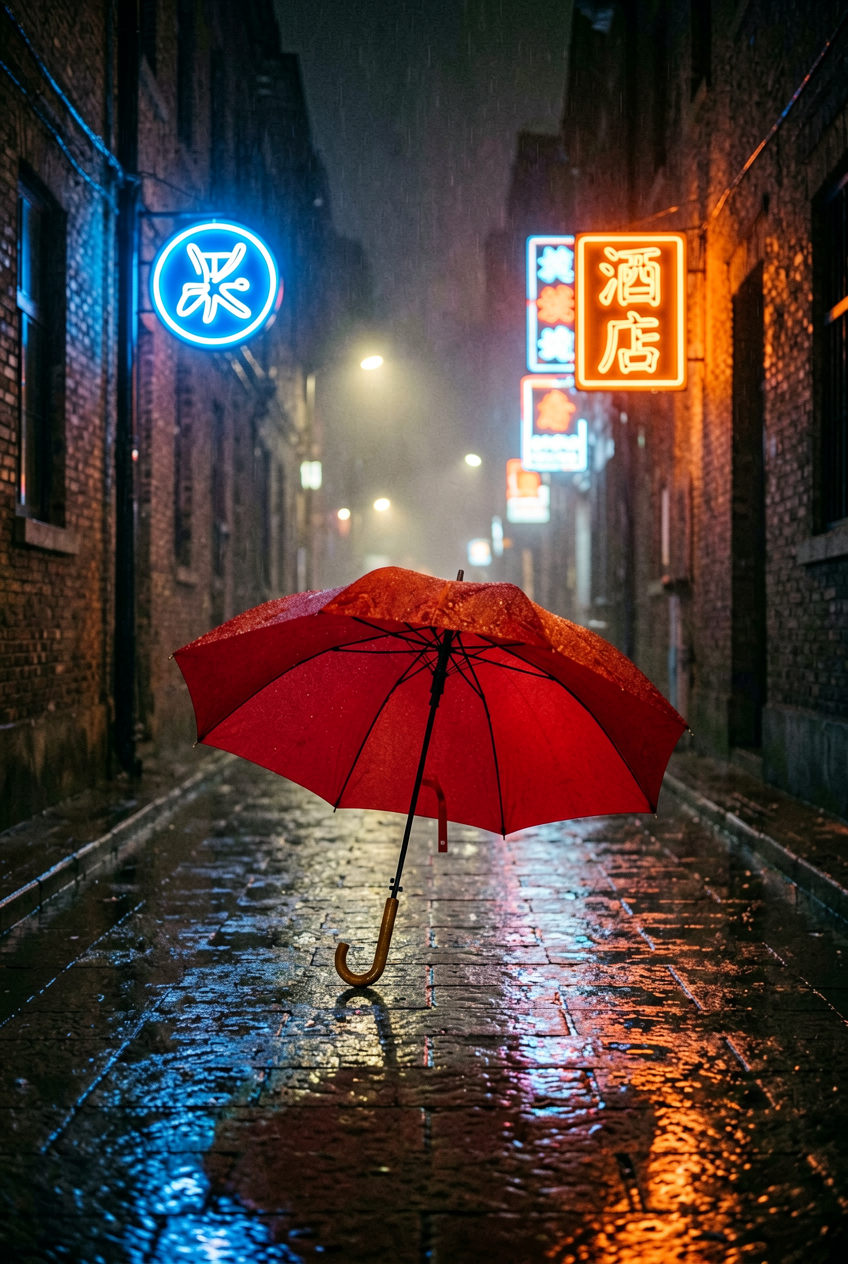
The red umbrella gives this scene a clean color anchor. Neon signs, fog, and wet pavement can easily collapse into a bright blur, but the image still reads as a street scene with a person-sized focal point. The strongest detail is the relationship between glow and pavement: reflections carry the light downward and make the alley feel deeper. This is a sensible prompt pattern for nightlife, music, or event visual exploration. It is less suited to work that needs exact storefront names or reliable signage.
5. Ramen stall at night: the deliberate failure case
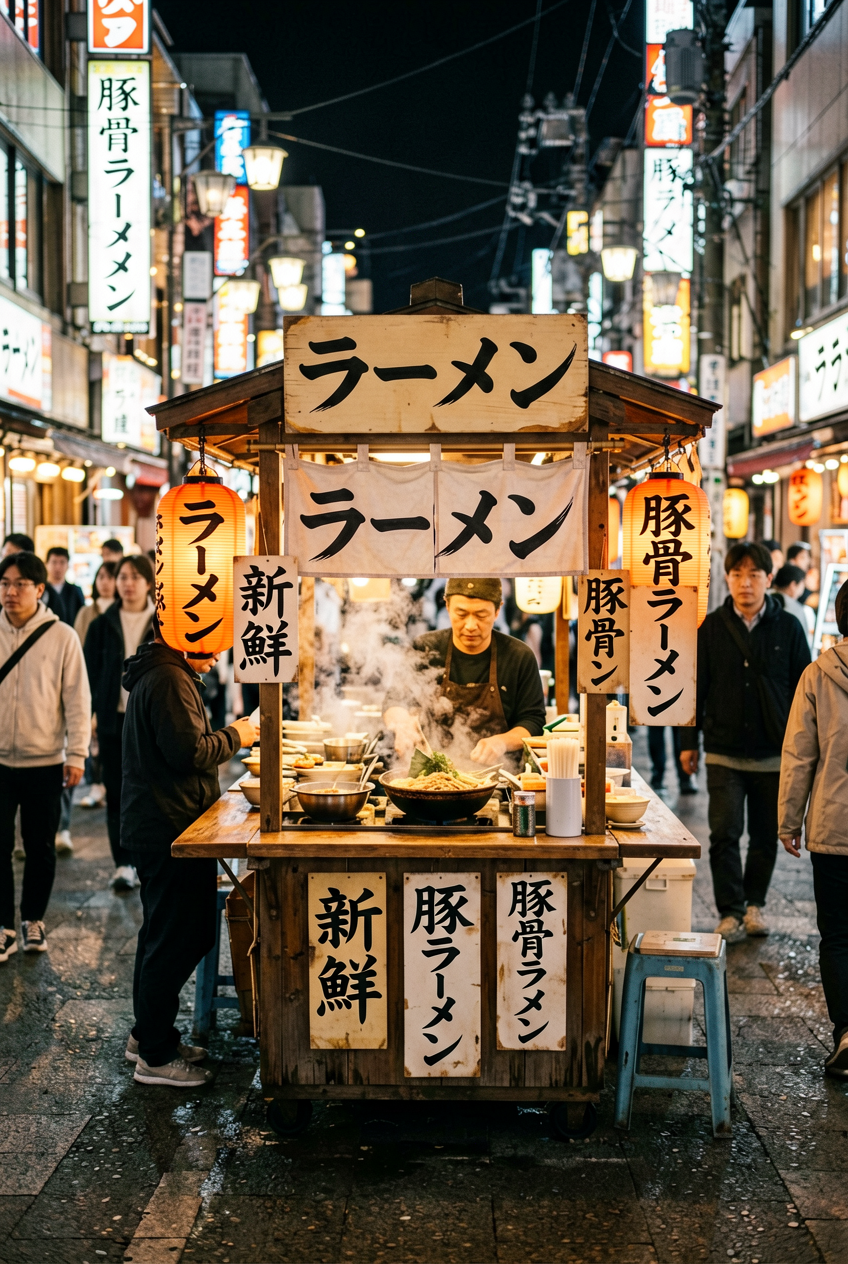
The ramen-stall image holds together as a lively night-market scene, but it also shows the boundary of this test. The atmosphere, bowls, steam, lights, and crowd create a convincing impression. The request that every handwritten sign remain legible is a much harder requirement. A viewer should treat signs in this kind of image as visual texture unless each string has been reviewed at full size. That is not a minor production detail for menus, prices, legal copy, or brand names. A separate text-rendering workflow is safer when exact wording carries meaning.
Parameters, run time, and cost on Wiro
| Item | What is documented or preserved | What is not claimed |
|---|---|---|
| Model controls | Prompt; negative prompt; steps; guidance scale; samples; prompt enhancer; width; height; seed | That every historical output used a particular unseen value |
| Listed defaults | 8 steps; scale 1.0; 1 sample; enhancer on; 848 x 1264; seed 0 | That defaults equal the original job configuration |
| Stored outputs | Five portrait PNGs at 848 x 1264 | Historic task time or task charge per image |
| Wiro documentation example | A sample task record shows 6.0 elapsed seconds and a $0.003510 total on a cancelled example task | A current completed-run price or a per-output cost for this post |
The model documentation does not provide a current fixed per-output Wiro rate for these stored images, and this post does not contain the original task records. The cancelled example is not used as a price quote. No cost is invented. The same rule applies to run time: the documentation illustrates a six-second task, while the five historical outputs here have no recoverable elapsed values. Queue conditions, image size, and provider load can also change a wall-clock result.
When ERNIE-Image-Turbo fits
Pick ERNIE-Image-Turbo when a fast portrait image needs one strong subject, a specific lighting setup, and a coherent mood. The cyclist, bottle, pavilion, and umbrella outputs all benefit from that formula. Keep the brief structured: identify the focal subject, choose one setting, define a light source or palette, then set the framing. Use a negative prompt only when there is a clear exclusion to make, rather than as a substitute for a precise positive prompt.
Choose a text-specialized image workflow when the deliverable depends on literal copy, a price list, many labels, or a dense UI. For a closer look at those constraints, read GLM-Image: Text Rendering in 6 Prompt Tests. For another fast text-to-image test focused on product, portrait, food, interior, and complex-scene prompting, see HiDream I1 Fast: 6 Prompt Tests.
The practical takeaway is simple. Use ERNIE-Image-Turbo for art direction, commercial concepts, and cinematic visual drafts where a human can review the final image. Do not use one attractive output as proof of exact typography, faithful product geometry, or repeatable performance across prompts. Run ERNIE-Image-Turbo on Wiro with the same five prompts, keep the settings visible, and change one variable at a time.